Description
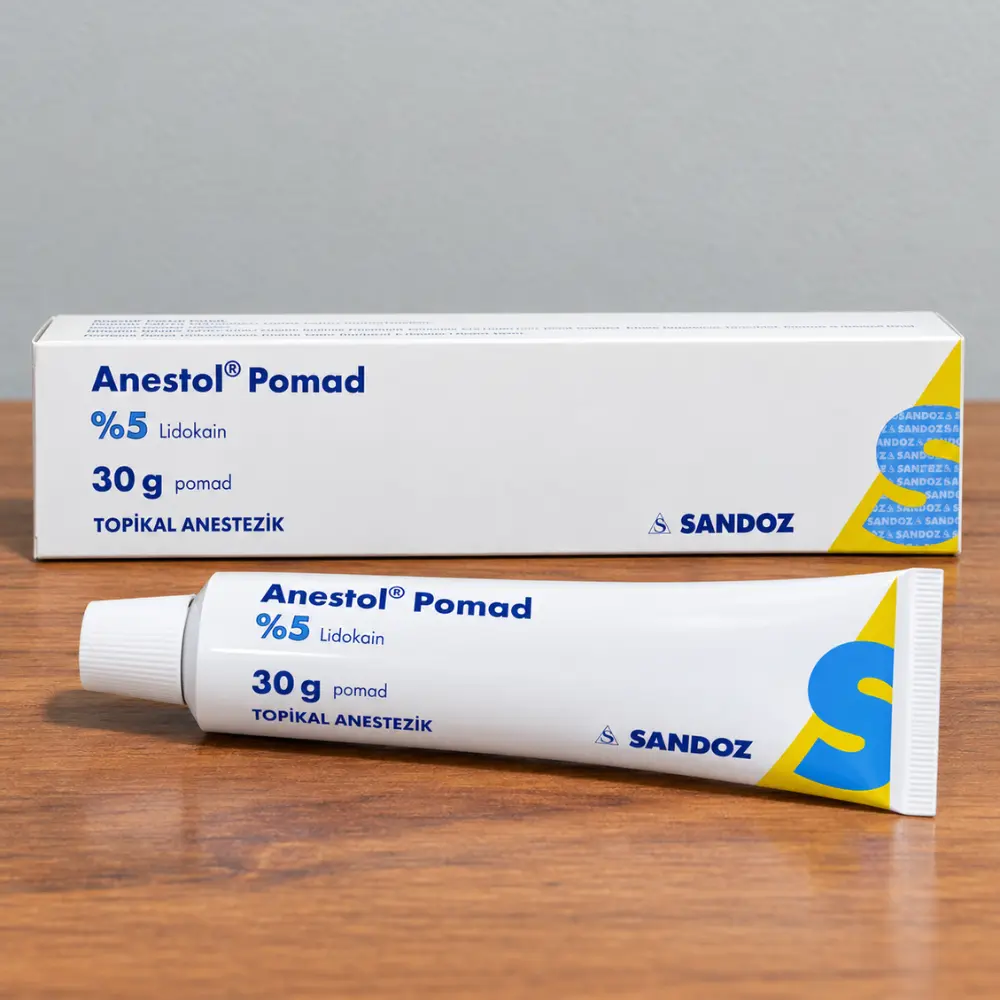
Anestol 30 Gm Cream — Lidocaine + Prilocaine Eutectic Mixture for Topical Surface Anaesthesia
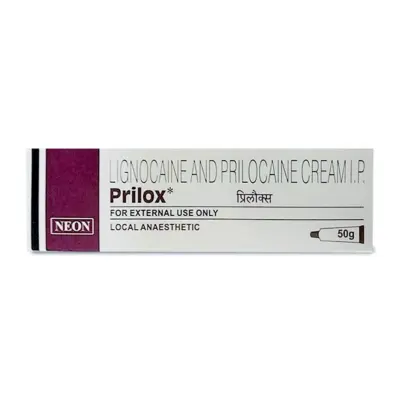
Anestol 30 Gm Cream is a eutectic mixture of local anaesthetics (EMLA-type cream) containing Lidocaine 2.5% (25 mg/g) and Prilocaine 2.5% (25 mg/g), supplied as a 30 gram tube. Applied to intact skin under an occlusive dressing, Anestol provides reliable surface anaesthesia of the skin before painful procedures such as venepuncture, cannulation, dermatological laser treatments, and minor surgical procedures. Anestol Cream is a pharmacy-supplied or prescription medicine depending on the clinical context and jurisdiction.
Composition
| Active Ingredient | Concentration | Drug Class |
|---|---|---|
| Lidocaine (Lignocaine) | 2.5% w/w (25 mg/g) | Amide Local Anaesthetic |
| Prilocaine | 2.5% w/w (25 mg/g) | Amide Local Anaesthetic |
The eutectic combination of lidocaine and prilocaine creates a mixture with a lower melting point than either compound alone, forming an oil that penetrates the skin barrier more effectively than either agent individually. Applied under occlusion to intact skin only.
How Anestol Cream Works — Mechanism of Action
Lidocaine and Prilocaine are both amide-class local anaesthetics that work by blocking sodium ion channels in nerve cell membranes:
- Sodium channel blockade: Both agents bind to voltage-gated Na⁺ channels inside the nerve axon → prevent depolarisation → block propagation of action potentials (nerve impulses) along sensory nerve fibres → loss of pain sensation in the treated skin area
- Eutectic effect: The 1:1 mixture of lidocaine and prilocaine forms a eutectic compound (oil) with a melting point of 18°C — this lipophilic oil penetrates the stratum corneum (skin’s outer lipid barrier) more readily than aqueous solutions of either drug alone
- Depth of penetration: Under occlusion for 60 minutes, the cream anaesthetises to approximately 3 mm; at 90–120 minutes, anaesthesia extends to 5 mm — adequate for venepuncture, IV cannula insertion, and superficial dermatological procedures
- Onset and duration: Anaesthesia begins approximately 60 minutes after application; maximum effect at 90 minutes; residual anaesthesia persists for 1–2 hours after removal of the cream
Clinical Indications
- Venepuncture and IV cannulation: Anaesthetising the skin before blood draws or insertion of peripheral venous cannulas — especially in children and needle-anxious adults
- Dermatological procedures: Before minor skin biopsies, shave excisions, superficial cryotherapy, laser hair removal, dermal filler injections, and other superficial aesthetic and dermatological treatments
- Genital mucosa anaesthesia: Some formulations are approved for surface anaesthesia of the genital mucosa prior to minor procedures (at reduced application times)
- Allergy skin testing: To reduce discomfort of multiple skin prick or intradermal tests
- Superficial surgical procedures: Prior to removal of superficial skin lesions, warts (by curettage), and molluscum contagiosum
Dosage and Administration
- Apply to intact skin only: Do NOT apply to open wounds, mucous membranes (unless a mucosa-specific formulation), eye area, or in or around the ears.
- Standard application:
- Apply a thick layer of Anestol cream (approximately 1.5–2 g) to the skin area where the procedure will be performed.
- Cover the cream immediately with a transparent occlusive dressing (e.g. Tegaderm or similar) to prevent evaporation and enhance penetration. Press firmly around the edges to seal.
- Leave on for 60 minutes minimum (up to 90 minutes for deeper procedures) before the procedure. For children having venepuncture, 45–60 minutes is usually sufficient.
- Remove the dressing and cream immediately before the procedure. Wipe gently with a clean gauze swab.
- Perform the procedure within 1 hour of cream removal.
- Maximum application area and dose: Do not apply to more than the area required. In adults, single applications up to 60 g over a large area may be used for laser procedures; in children, dose is weight-based and area-limited (see Special Populations).
- Children — weight-based dose and area limits must be strictly observed (see below).
Special Populations
- Children — weight-based dosing (critical):
Body Weight Maximum Cream Dose Maximum Skin Area Application Time Up to 10 kg 1 g (10 mg prilocaine) 10 cm² Max 1 hour 10–20 kg 2 g 20 cm² Max 4 hours 20–30 kg 10 g 100 cm² Max 4 hours >30 kg 20 g 200 cm² Max 4 hours - Neonates and infants under 3 months: Avoid unless under strict clinical supervision — risk of methaemoglobinaemia is significantly higher in neonates whose foetal haemoglobin reduces prilocaine’s safe metabolic margin.
- Pregnancy: Limited data. Brief use over a small area during the second or third trimester is unlikely to pose significant risk; use with caution and only if necessary.
- Breastfeeding: Minimal systemic absorption from topical use. Generally considered safe for limited use.
- Elderly: No dose adjustment required for skin application. Monitor for systemic effects if large areas are treated.
- G6PD deficiency: Patients with glucose-6-phosphate dehydrogenase deficiency are at higher risk of methaemoglobinaemia from prilocaine. Use with caution.
Precautions
- Intact skin only: Application to broken, irritated, or eczematous skin causes rapid systemic absorption and significantly increases risk of toxicity.
- Avoid eyes and ear canals: Corneal irritation and middle ear damage have been reported. If accidental eye contact occurs, rinse thoroughly with water.
- Methaemoglobinaemia: Prilocaine is metabolised to o-toluidine, which can oxidise haemoglobin to methaemoglobin. Risk is highest in: neonates, infants, patients with congenital methaemoglobinaemia, G6PD deficiency, and those taking drugs that also cause methaemoglobinaemia (sulfonamides, dapsone, nitrofurantoin, some antimalarials).
- Avoid contact with other local anaesthetics: Systemic levels from multiple concomitant local anaesthetic sources can accumulate to toxic levels.
- Not for ophthalmic, otic, or IV use.
Contraindications
- Hypersensitivity to lidocaine, prilocaine, or any amide-class local anaesthetic
- Congenital or idiopathic methaemoglobinaemia
- Application to mucous membranes unless specific mucosal formulation intended for that use
- Application near or in the eyes or ear canals
- Neonates born prematurely (gestational age <37 weeks)
Side Effects
Common (≥1/100): Transient local reactions at application site — pallor (blanching), erythema (redness), oedema (swelling). These are expected effects of local vasoconstriction and dilation during anaesthesia and resolve within 1–2 hours.
Uncommon (≥1/1,000): Localised urticaria, pruritus at application site, mild burning sensation during application.
Rare but serious: Methaemoglobinaemia (cyanosis, fatigue, confusion, grey-blue skin colouration) — most common in neonates, infants, and G6PD-deficient patients. Systemic local anaesthetic toxicity (seizures, cardiac arrhythmia) if absorbed in excessive amounts from damaged skin or in overdose.
Seek immediate medical attention if skin turns blue-grey or the patient develops confusion, difficulty breathing, or loss of consciousness after cream application — these signs may indicate methaemoglobinaemia.
Drug Interactions
- Drugs causing methaemoglobinaemia (dapsone, sulfonamides, nitrofurantoin, antimalarials, phenytoin): Combined risk of methaemoglobinaemia, especially in infants.
- Other local anaesthetics or class I antiarrhythmics (lignocaine IV, mexiletine): Risk of cumulative systemic toxicity if large skin areas are treated concurrently.
- CYP3A4 inhibitors: May increase systemic lidocaine exposure from topical use if large areas are involved.
Storage Instructions
- Store at room temperature (15–30°C). Do not freeze. Protect from direct sunlight.
- Keep tube tightly closed when not in use.
- Keep out of reach of children.
- Do not use past the expiry date on the tube.
- Discard tube contents if discoloured, separated, or abnormal in appearance.
Frequently Asked Questions
How long before a blood test should I apply Anestol Cream?
Apply Anestol Cream at least 60 minutes before the planned venepuncture or cannulation. Apply a thick layer to the target area, cover with an occlusive dressing, and leave undisturbed for 60 minutes. Remove the cream and dressing just before the procedure. The anaesthesia lasts approximately 1 hour after removal.
Is Anestol Cream safe for children?
Yes, with appropriate dose and area limits. Anestol Cream is widely used in paediatrics to reduce pain from blood tests and cannulation. However, the dose and skin area must be kept within weight-based limits (see the dosing table above). It should not be used in premature neonates, and strict limits apply to infants under 3 months. Parents should always follow the healthcare professional’s instructions on how much cream to apply and for how long.
What is the white patch that forms on the skin after Anestol?
The white or pale skin appearance (pallor) under and around the application site is an expected and normal effect. It is caused by local vasoconstriction (narrowing of superficial blood vessels) produced by the prilocaine component. It indicates the cream has been absorbed and is working. Redness (erythema) may follow once anaesthesia sets in. Both effects are temporary and resolve within 1–2 hours.
Can I apply Anestol Cream to a wound or abrasion?
No. Anestol Cream is for intact, unbroken skin only. Applying it to open wounds, cuts, broken skin, or eczema dramatically increases systemic absorption, raising the risk of toxicity, including seizures and methaemoglobinaemia. If wound anaesthesia is needed, use a wound-appropriate local anaesthetic as directed by a healthcare professional.
What is methaemoglobinaemia and why is it a risk with Anestol?
Methaemoglobinaemia is a condition in which some of the haemoglobin (oxygen-carrying protein in red blood cells) is converted to a form called methaemoglobin, which cannot carry oxygen effectively. Prilocaine (one of Anestol’s active ingredients) is metabolised to o-toluidine, which can cause this conversion. It is rare at standard adult doses applied correctly to intact skin, but is a significant risk in neonates, infants under 3 months, and people with G6PD deficiency. Signs include blue-grey skin discolouration, fatigue, and difficulty breathing — seek emergency medical help immediately if these occur.
References
- NHS — Lidocaine Skin Cream (EMLA). National Health Service, UK.
- MedlinePlus — Lidocaine and Prilocaine Topical. U.S. National Library of Medicine.
- FDA Prescribing Information — EMLA Cream (Lidocaine 2.5% and Prilocaine 2.5%). U.S. Food and Drug Administration.
- EMA — EMLA: European Medicines Agency Assessment Information. European Medicines Agency.
Disclaimer: This product information is provided for general educational purposes only. Anestol 30 Gm Cream is a local anaesthetic preparation for topical application to intact skin only. It must not be applied to open wounds, mucous membranes (unless a mucosal-specific formulation), eyes, or ear canals. Use in infants and young children must follow weight-based dosing limits. This content does not constitute medical advice and must not be used to self-diagnose or self-treat. IndoGenMed.org supplies this product to licensed healthcare professionals and registered pharmacies only.
Reviews
There are no reviews yet.