Description
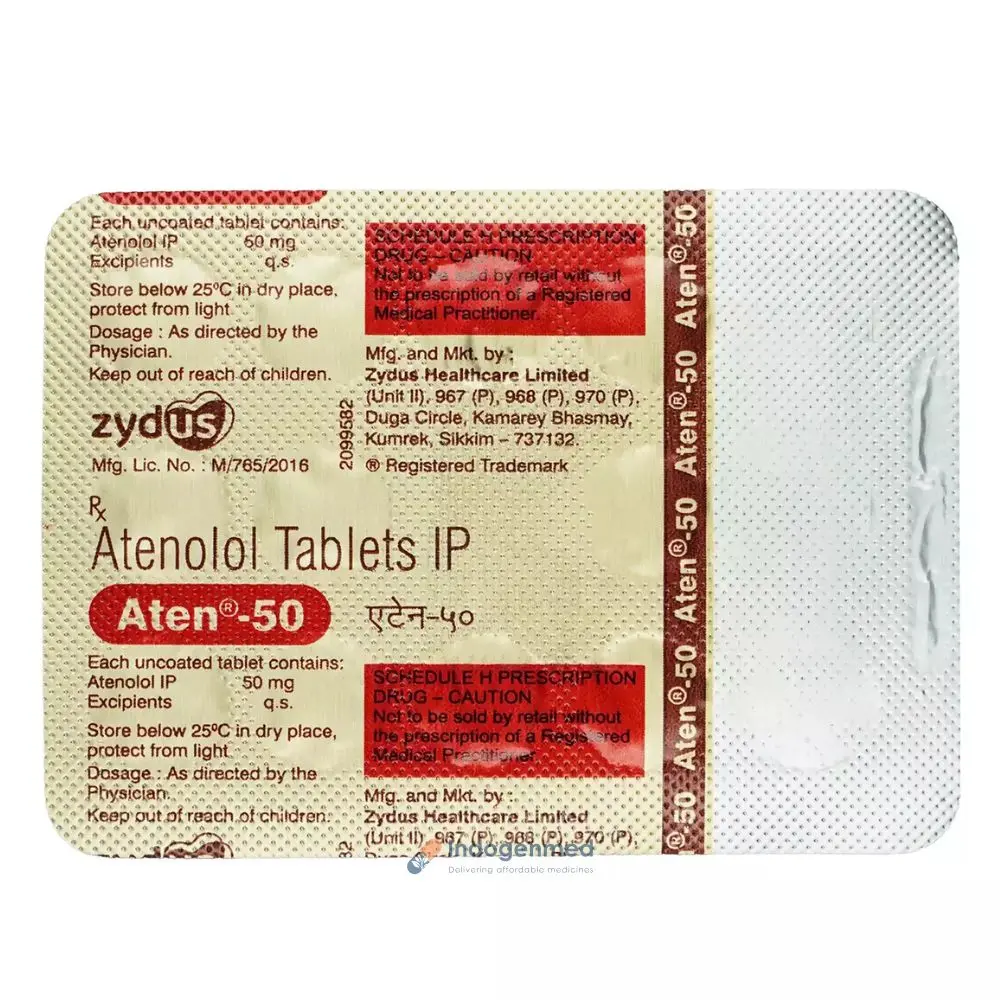
Aten 50 Mg Tablets
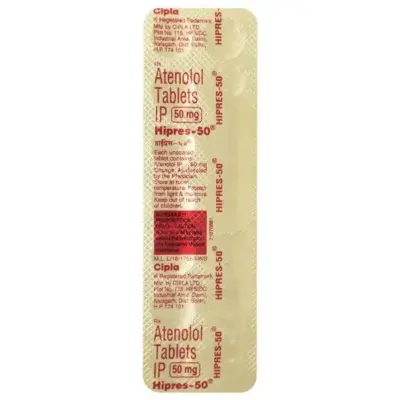
Aten 50 Mg Tablets contain atenolol 50 mg, a beta-blocker that slows the heart rate and reduces the force of heart contractions. Atenolol is prescribed for high blood pressure (hypertension), angina pectoris and certain heart rhythm disorders. The 50 mg strength is one of the most commonly prescribed doses, and it is taken once daily. It should only be started or changed under medical supervision.
Composition
| Ingredient | Strength |
|---|---|
| Atenolol | 50 mg per tablet |
| Excipients | As listed on the pack insert |
Product Details
Aten 50 Mg Tablets are oral tablets. Atenolol is a prescription-only medicine in most countries, so a valid prescription and the advice of a qualified doctor or pharmacist are needed before use.
Mechanism of Action
Atenolol is a cardioselective beta-1 adrenergic receptor blocker. It acts mainly on the heart, reducing the effect of adrenaline and noradrenaline. This lowers heart rate, reduces the force of contraction, and decreases the heart’s oxygen demand. In hypertension, the blood pressure lowering effect is thought to involve reduced cardiac output and reduced renin release from the kidney. In angina, the lower heart rate and oxygen demand reduce the frequency of chest pain.
Indications
- Hypertension (high blood pressure), alone or with other antihypertensive medicines
- Angina pectoris
- Certain heart rhythm disorders, particularly fast heart rates in some patients
- Acute heart attack, in selected patients under hospital supervision
Dosage and Administration
For hypertension, the usual dose is 50 mg once daily. The prescriber may increase this up to 100 mg daily if blood pressure is not controlled. For angina, the usual dose is 50 to 200 mg daily, and the prescriber will adjust it to the response. Atenolol is taken once daily, at about the same time each day, with or without food. Patients with reduced kidney function usually need a lower maximum dose, and the prescriber will check the dose against kidney function. Do not stop atenolol suddenly, as this can cause a rapid rise in heart rate, blood pressure or chest pain. Any reduction should be gradual and supervised.
Special Populations
Older adults: dose selection should be cautious, with monitoring of heart rate and blood pressure, particularly for dizziness and falls.
Kidney impairment: atenolol is eliminated by the kidneys, so the maximum dose is reduced in moderate to severe impairment.
Pregnancy: use only if clearly needed, as atenolol can affect fetal growth. Discuss with a doctor before use.
Breastfeeding: atenolol passes into breast milk, so use requires medical advice.
Children: use is only under specialist supervision.
Precautions
- Atenolol can mask the warning signs of low blood sugar (such as a racing heart and tremor), so people with diabetes on insulin or sulfonylureas should monitor their glucose closely.
- People with asthma or COPD should use it only if there is no reasonable alternative, as it can trigger bronchospasm.
- Those with peripheral vascular disease (poor circulation to the hands and feet) may experience worsening symptoms.
- Report slow pulse, fainting, worsening breathlessness or swelling of the ankles promptly.
- Tell your surgeon or anaesthetist that you take a beta-blocker before any operation.
Contraindications
- Known hypersensitivity to atenolol or any excipient
- Sinus bradycardia (very slow heart rate), second- or third-degree heart block, or sick sinus syndrome without a pacemaker
- Cardiogenic shock, or uncompensated heart failure
- Severe peripheral arterial disease
- Untreated phaeochromocytoma (an adrenal tumour), unless alpha-blockade is given first
- Metabolic acidosis
Side Effects
Common: tiredness, dizziness, cold hands and feet, slow heart rate, headache.
Uncommon: sleep disturbance, nightmares, diarrhoea, nausea, worsening of circulatory problems.
Rare: depression, breathing difficulty in people with asthma, skin rash, visual disturbance.
Seek urgent medical help for fainting, severe dizziness, chest pain that is new or worse, slow pulse, or breathing difficulty.
Drug Interactions
- Verapamil and diltiazem (calcium channel blockers): risk of excessive slowing of the heart; combination needs caution.
- Other antihypertensives, including diuretics and alpha-blockers: additive blood pressure lowering.
- Clonidine: taking a beta-blocker while stopping clonidine can cause a dangerous rise in blood pressure.
- Insulin and oral diabetes medicines: may mask warning signs of hypoglycaemia.
- NSAIDs such as ibuprofen: may reduce the blood pressure lowering effect.
- Digoxin: additive slowing of the heart rate.
- Adrenaline and similar drugs: may cause severe hypertension when used with a beta-blocker.
Always tell your doctor or pharmacist about every medicine, herbal product and supplement you take.
Storage
Store in the original package in a dry place below 25 to 30 degrees Celsius, protected from light and moisture. Keep out of the reach of children. Do not use after the expiry date on the pack.
Related Products
- Aten 25 Mg Tablets: a lower dose for patients who need less blood pressure lowering or who are sensitive to the medicine.
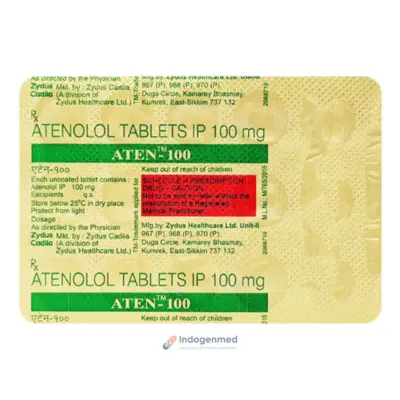
- Aten 100 Mg Tablets: the highest strength in the Aten range, used when the prescriber needs a higher daily dose.
Frequently Asked Questions
Can I stop taking Aten 50 Mg when my blood pressure improves?
No. Stopping atenolol suddenly can cause a rebound rise in blood pressure and heart rate. Speak to your doctor about a gradual reduction.
When should I take it?
Take it at the same time each day. Missing a dose is less serious than stopping for good, but do not double the next dose.
Does it cause weight gain?
Weight gain is not a common effect, but fluid retention can occur. Report sudden weight gain or ankle swelling to your doctor.
Can I drink alcohol?
Alcohol can increase dizziness and lower blood pressure further. Limit alcohol and check with your doctor.
References
- NHS: Atenolol. https://www.nhs.uk/medicines/atenolol/
- electronic Medicines Compendium (emc): Atenolol summary of product characteristics. https://www.medicines.org.uk/emc
- U.S. National Library of Medicine, DailyMed: Atenolol labelling. https://dailymed.nlm.nih.gov
Disclaimer
This information is for general education and does not replace advice from a qualified doctor or pharmacist. Check dosing, contraindications and interactions against the pack insert and the prescriber’s instructions. Do not start, stop or change this medicine without medical advice.
Reviews
There are no reviews yet.