Description
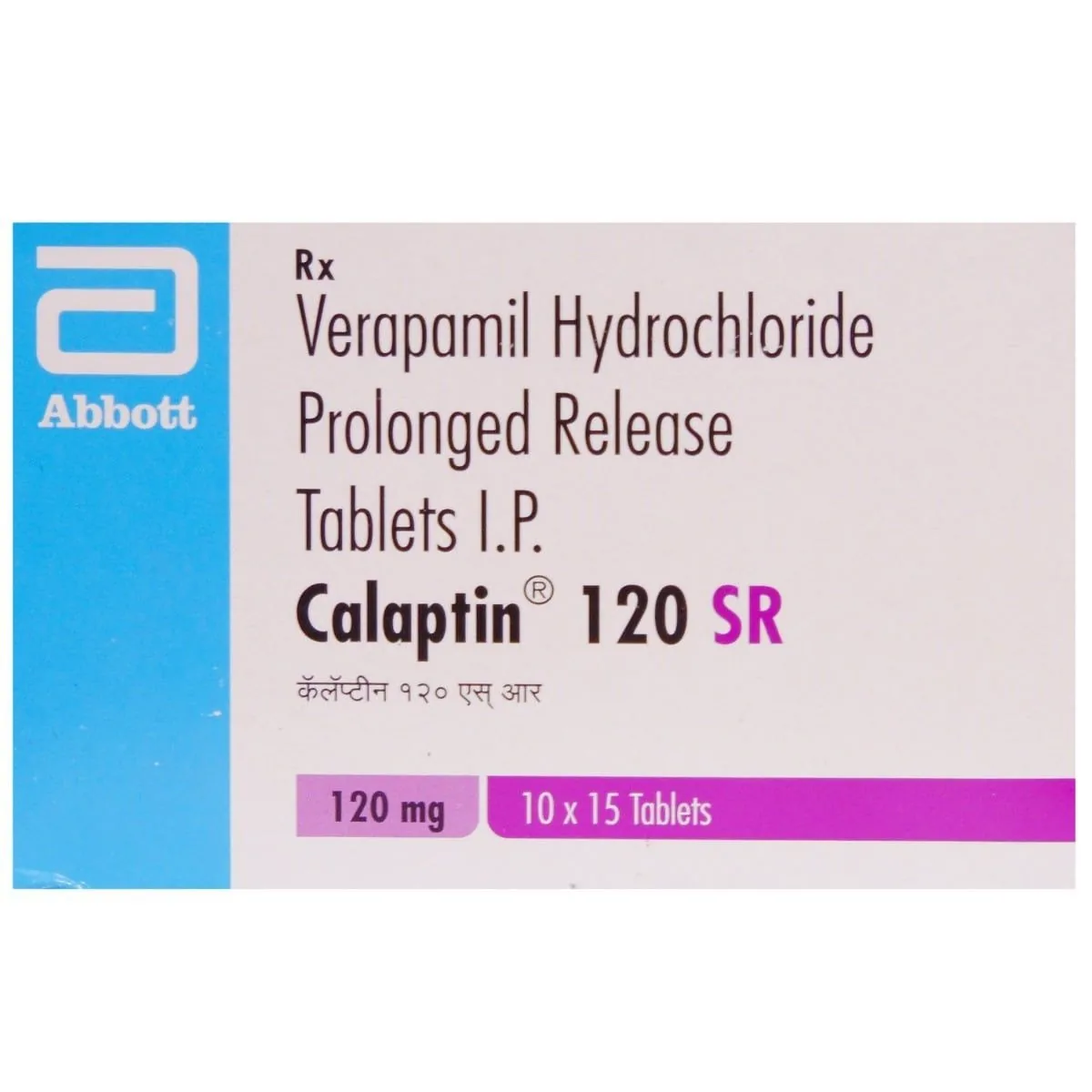
What Is Calaptin SR 120 mg Tablets?
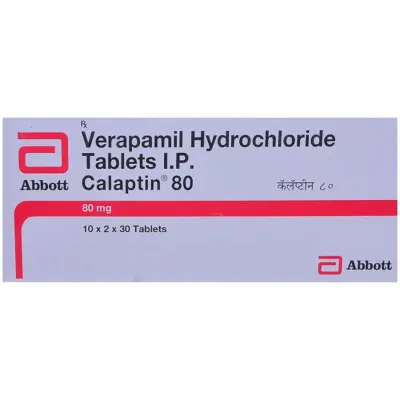
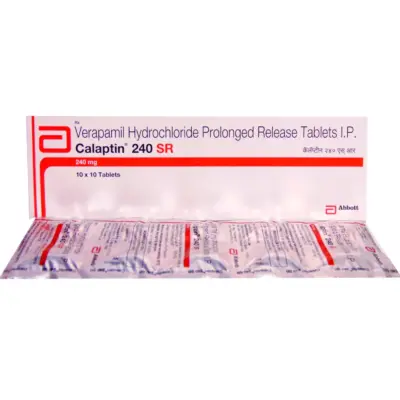
Calaptin SR 120 mg Tablets contain verapamil hydrochloride 120 mg in a sustained-release (SR) formulation. Verapamil is a phenylalkylamine calcium channel blocker (CCB) and the only Class IV antiarrhythmic agent in clinical use. The SR formulation provides extended drug release over 12–24 hours, allowing once or twice daily dosing with more stable plasma drug levels and reduced peak-related adverse effects (particularly constipation and hypotension) compared to immediate-release verapamil tablets.
Verapamil SR 120 mg is a step-up dose in the titration strategy for hypertension, stable angina, and rate control of supraventricular arrhythmias. The 120 mg SR dose is particularly useful when patients require more than the initial 120 mg immediate-release daily equivalent but benefit from the tolerability advantages of sustained-release delivery. Calaptin is a well-established brand of verapamil used extensively in South and Southeast Asia.
Mechanism of Action
Verapamil selectively blocks L-type voltage-gated calcium channels in cardiac and vascular smooth muscle cells. Unlike dihydropyridine CCBs (amlodipine, nifedipine) which primarily affect vascular smooth muscle, verapamil has pronounced effects on both the myocardium and blood vessels.
Cardiac Effects
- SA node: Reduces spontaneous depolarisation rate → decreases heart rate (negative chronotropy)
- AV node: Slows AV nodal conduction velocity and increases AV nodal refractory period → antiarrhythmic effect in supraventricular tachycardias (Class IV); this effect is use-dependent — it is enhanced during rapid heart rates, making verapamil particularly effective for rate control in AF/flutter
- Myocardium: Reduces contractile force (negative inotropy) → decreases myocardial oxygen demand, relevant in angina management
Vascular Effects
- Relaxes vascular smooth muscle → arterial vasodilation → reduces systemic vascular resistance and blood pressure
- Coronary vasodilation → increases coronary blood flow → beneficial in Prinzmetal (vasospastic) angina
- Unlike dihydropyridines, verapamil causes minimal reflex tachycardia because its direct negative chronotropic effect offsets the baroreceptor-mediated sympathetic response to vasodilation
Pharmacokinetics of SR Formulation
The sustained-release matrix of Calaptin SR delays and extends verapamil absorption, reducing peak plasma concentrations and prolonging the time to peak (Tmax). Verapamil is extensively metabolised by CYP3A4 in the liver (first-pass effect is significant — oral bioavailability is 20–35% for immediate-release; SR formulations reduce first-pass variability). The active metabolite norverapamil retains approximately 20% of verapamil’s pharmacological activity. Elimination half-life: 6–12 hours for immediate-release; effectively longer with SR due to prolonged absorption phase.
Indications
- Hypertension — reduces blood pressure through arterial vasodilation and modest reduction in cardiac output; suitable as monotherapy or in combination (avoid with beta-blockers — see Interactions)
- Stable angina pectoris — reduces anginal episodes by decreasing heart rate, contractility, and afterload (triple oxygen-sparing effect); suitable for patients who cannot tolerate beta-blockers
- Prinzmetal (vasospastic) angina — first-line pharmacotherapy; coronary vasodilation directly addresses the coronary spasm
- Supraventricular tachycardias (SVT) — including AVNRT (AV nodal re-entrant tachycardia) and AVRT (AV re-entrant tachycardia) — rate control and rhythm conversion; oral verapamil for chronic SVT prevention
- Atrial fibrillation and atrial flutter — rate control — slows ventricular rate by increasing AV nodal refractoriness; suitable when beta-blockers are contraindicated or not tolerated
- Hypertrophic obstructive cardiomyopathy (HOCM) — reduces outflow tract obstruction and improves diastolic filling; negative inotropy is beneficial in HOCM (unlike in systolic HF where it is detrimental)
Dosage and Administration
Hypertension: Calaptin SR 120 mg once or twice daily initially; may increase to 240 mg SR once daily or 120–180 mg SR twice daily based on blood pressure response. Maximum daily dose 480 mg.
Stable angina: 120–240 mg SR twice daily; titrate to response. Some patients require up to 480 mg/day in divided doses.
Rate control in AF/flutter (chronic oral): 120–360 mg SR daily in divided doses; titrate to achieve resting heart rate <80 bpm.
SVT prevention (chronic oral): 120–480 mg daily in divided doses; use the lowest effective dose.
HOCM: 120–480 mg/day in divided doses; begin at 120 mg once daily and titrate slowly over several weeks.
Hepatic impairment: Verapamil is extensively hepatically metabolised; reduce dose by 30–50% in significant hepatic impairment. Start at 120 mg once daily and titrate with caution.
Renal impairment: No significant dose adjustment required for mild-moderate renal impairment. Use with caution in severe renal impairment and monitor for drug accumulation.
Elderly: More susceptible to hypotension and constipation. Begin at 120 mg once daily and titrate slowly. Assess renal and hepatic function.
Administration: Swallow Calaptin SR tablets whole — do not crush or chew, as this destroys the sustained-release matrix and causes dose-dumping. May be taken with or without food; taking with food reduces peak plasma concentration variability.
Contraindications
- Severe bradycardia (resting heart rate <50 bpm) or sick sinus syndrome without a functioning pacemaker
- Second- or third-degree AV block without a functioning pacemaker
- Heart failure with reduced ejection fraction (HFrEF) — verapamil’s negative inotropy worsens systolic heart failure; contraindicated in HFrEF (EF <40%). Note: dihydropyridine CCBs are preferred when CCB therapy is needed in HFrEF
- Atrial fibrillation or flutter with an accessory pathway (Wolff-Parkinson-White syndrome, Lown-Ganong-Levine syndrome) — verapamil can accelerate conduction through the accessory pathway, causing ventricular fibrillation; this is an absolute contraindication
- Concurrent intravenous beta-blocker therapy — the combination of IV verapamil with IV beta-blockers is potentially fatal (severe bradycardia, AV block, asystole)
- Broad complex tachycardia of unknown origin — if the tachycardia is ventricular in origin, verapamil is contraindicated and can cause haemodynamic collapse
- Hypersensitivity to verapamil or any excipient
Warnings and Precautions
Heart Failure
Verapamil is contraindicated in HFrEF. In patients with preserved ejection fraction (HFpEF) or HOCM, verapamil can be used but requires careful monitoring. Any deterioration in symptoms of fluid retention (dyspnoea, oedema) warrants reassessment.
Bradycardia and AV Block
Verapamil can cause clinically significant bradycardia or AV block, particularly in patients with pre-existing SA or AV node disease, in the elderly, and in those receiving other negatively chronotropic drugs (digoxin, amiodarone). Regular monitoring of pulse rate and ECG is recommended in high-risk patients.
Hypotension
The vasodilatory and negative inotropic effects of verapamil can cause hypotension, particularly at initiation and during dose increases. Use with caution in patients with pre-existing hypotension or borderline cardiac output.
Interaction Warning — Beta-Blockers
Oral verapamil and oral beta-blockers can be used together in some patients for hypertension or angina, but require careful monitoring for bradycardia, AV block, and heart failure. This combination should be used only under specialist supervision. IV verapamil must never be given to a patient receiving IV beta-blockers — the combination can cause fatal bradycardia and complete AV block.
Adverse Effects
- Very common (≥10%): Constipation — the most common and characteristic adverse effect of verapamil; occurs in up to 25% of patients; due to smooth muscle relaxation in the gut; SR formulations have lower rates than immediate-release
- Common (1–10%): Bradycardia, AV block (first-degree), hypotension, flushing, peripheral oedema (ankle swelling), headache, dizziness, nausea
- Less common (0.1–1%): Second/third-degree AV block, worsening heart failure, hepatotoxicity (transaminase elevation — usually reversible), gingival hyperplasia (with long-term use)
- Rare (<0.1%): Hypersensitivity reactions, skin rash, erythromelalgia, paralytic ileus (severe constipation leading to bowel obstruction)
Drug Interactions
Beta-Blockers
Combined oral use increases the risk of bradycardia, AV block, hypotension, and heart failure. IV verapamil + IV beta-blocker is absolutely contraindicated. Oral combination requires specialist monitoring.
Digoxin
Verapamil inhibits P-glycoprotein–mediated renal tubular secretion of digoxin, increasing digoxin plasma levels by 50–75%. This interaction is clinically significant — digoxin toxicity (bradycardia, AV block, nausea, visual disturbances) can occur. Reduce digoxin dose by 30–50% when verapamil is initiated and monitor digoxin levels.
CYP3A4 Inhibitors and Inducers
Verapamil is metabolised by CYP3A4. CYP3A4 inhibitors (clarithromycin, erythromycin, ketoconazole, grapefruit juice) increase verapamil plasma levels and the risk of adverse effects. CYP3A4 inducers (rifampicin, phenytoin, carbamazepine, St John’s Wort) substantially reduce verapamil levels and can abolish its therapeutic effect.
Statins — Simvastatin and Lovastatin
Verapamil is a moderate CYP3A4 inhibitor and also inhibits P-glycoprotein. It significantly increases plasma concentrations of simvastatin and lovastatin, increasing the risk of myopathy and rhabdomyolysis. Simvastatin dose must not exceed 10–20 mg/day with verapamil. Pravastatin and rosuvastatin (not CYP3A4-metabolised) are safer alternatives.
Colchicine
Verapamil inhibits P-glycoprotein–mediated colchicine efflux, increasing colchicine plasma levels. This interaction can cause severe colchicine toxicity (myopathy, neuropathy, bone marrow suppression). Reduce colchicine dose significantly or avoid the combination.
Antihypertensive Agents
Additive blood pressure-lowering effects with ACE inhibitors, angiotensin receptor blockers, diuretics, and other antihypertensives. Usually beneficial but requires monitoring for hypotension, particularly at initiation.
Storage
Store Calaptin SR 120 mg Tablets below 30°C in a dry place, protected from light and moisture. Keep in the original blister pack until use. Store out of the reach of children. Do not use after the expiry date printed on the pack. Do not crush or split SR tablets.
Related Products
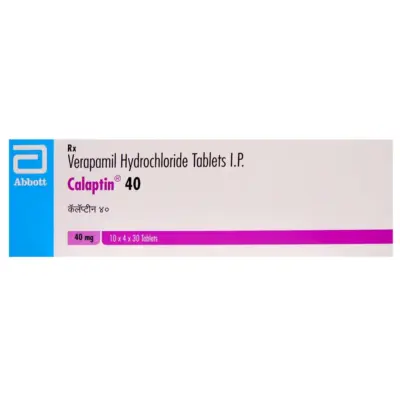
- Venpres 40 mg Tablets (Verapamil HCl 40 mg immediate-release — for titration and low-dose initiation)
- Ciplar 10 mg Tablets (Propranolol — non-selective beta-blocker for hypertension, angina, and arrhythmias)
- Rami-Race 5 mg Tablets (Ramipril — ACE inhibitor for hypertension, heart failure, and CV risk reduction)
- Ismo 20 mg Tablets (Isosorbide mononitrate — antianginal for stable angina and ischaemic heart disease)
References
- DailyMed. Verapamil hydrochloride extended-release tablets — prescribing information. U.S. National Library of Medicine. Available at: https://dailymed.nlm.nih.gov/dailymed/
- MedlinePlus. Verapamil. U.S. National Library of Medicine. Available at: https://medlineplus.gov/druginfo/meds/a684030.html
- Mayo Clinic. Verapamil (Oral Route). Available at: https://www.mayoclinic.org/
- Ommen SR, et al. 2020 AHA/ACC Guideline for the Diagnosis and Treatment of Patients With Hypertrophic Cardiomyopathy. J Am Coll Cardiol. 2020;76(25):e159–e240. PMID: 32638927
- Electronic Medicines Compendium (EMC). Verapamil 120 mg sustained-release tablets — Summary of Product Characteristics. Available at: https://www.medicines.org.uk/emc/
Reviews
There are no reviews yet.