Description
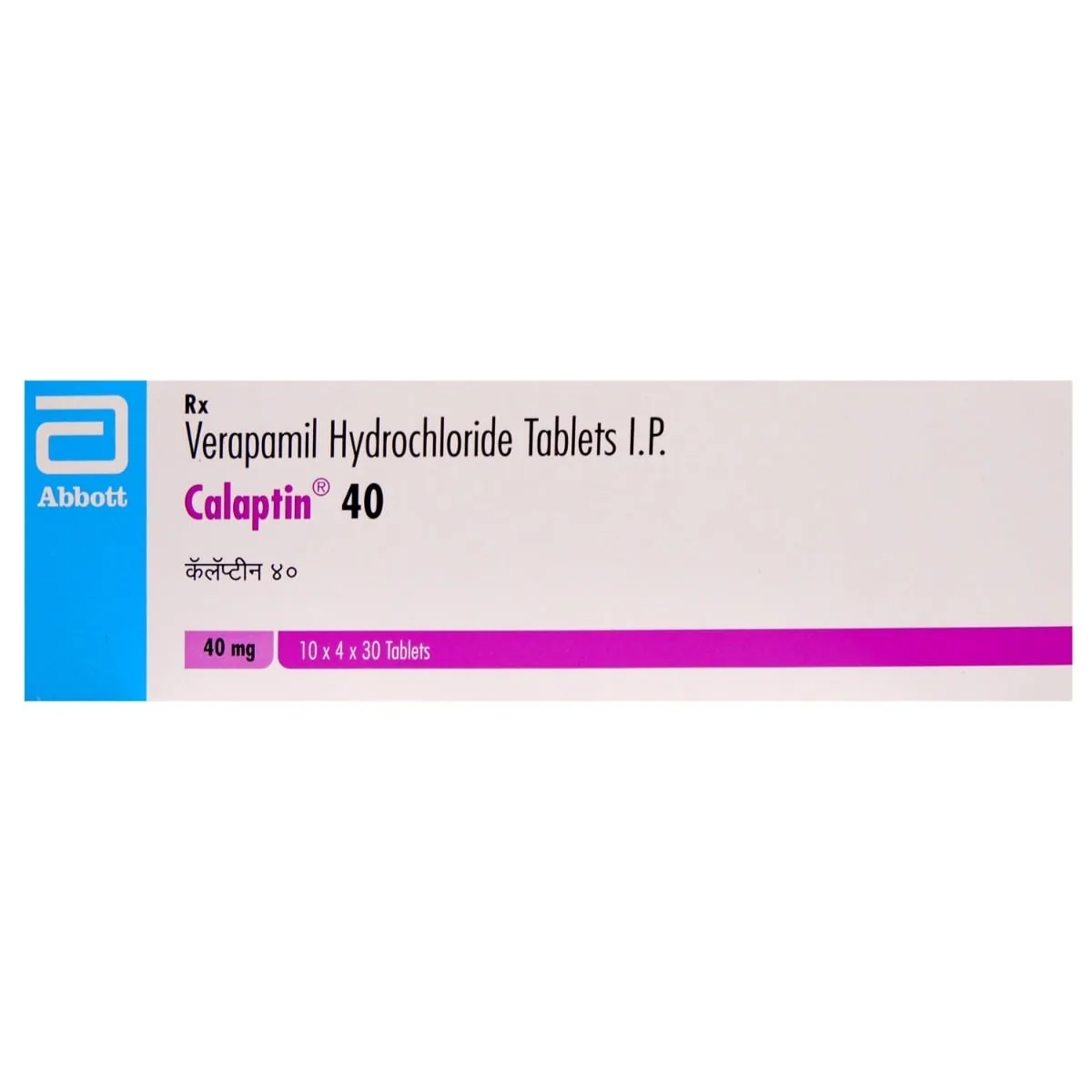
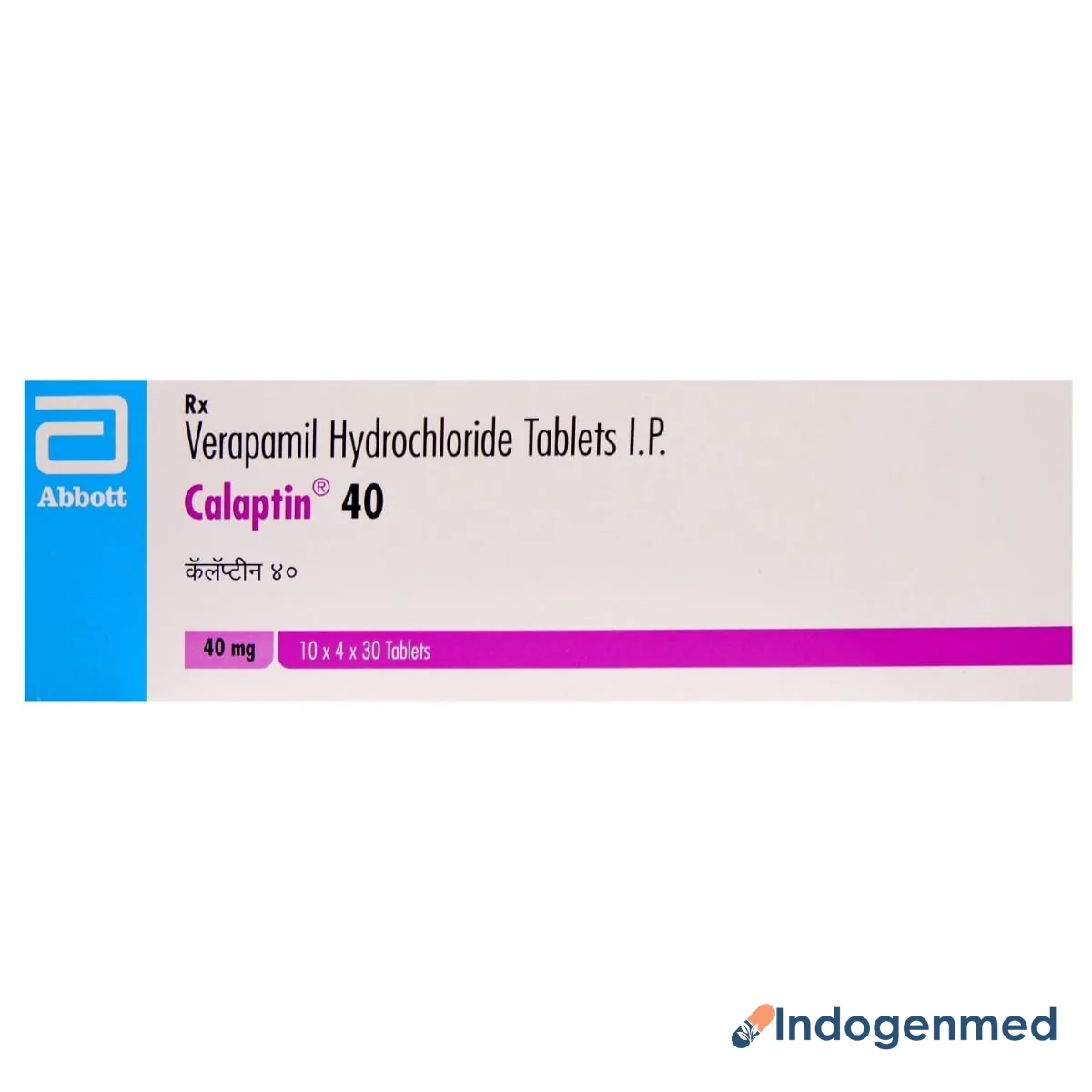
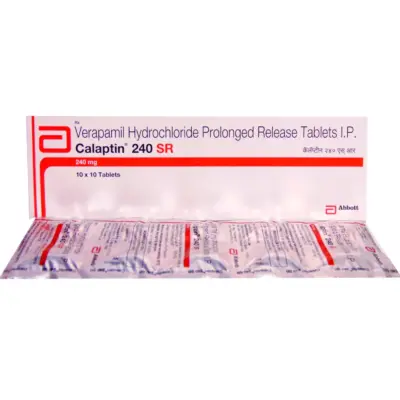
Calaptin 40 Mg Tablets
Calaptin 40 Mg Tablets contain verapamil hydrochloride 40 mg, a phenylalkylamine calcium channel blocker (CCB) used in the treatment of angina, hypertension, and certain cardiac arrhythmias. Verapamil acts primarily on the heart and coronary arteries, distinguishing it from dihydropyridine calcium channel blockers (such as amlodipine) which act predominantly on peripheral vasculature. The 40 mg immediate-release formulation allows flexible titration and dosing three times daily for cardiovascular conditions requiring precise dose management.
Composition
| Active Ingredient | Strength |
|---|---|
| Verapamil Hydrochloride | 40 mg per tablet |
About the Manufacturer
Calaptin is manufactured by Abbott India Limited, the Indian subsidiary of Abbott Laboratories, a global healthcare leader headquartered in Abbott Park, Illinois, USA. Abbott India produces a comprehensive range of branded generics and specialty medicines across therapeutic areas including cardiovascular, women’s health, and gastroenterology, distributed throughout India and internationally.
Mechanism of Action
Verapamil inhibits the transmembrane influx of calcium ions through voltage-gated slow (L-type) calcium channels in cardiac muscle cells, smooth muscle cells of the coronary and peripheral vasculature, and the specialised conduction tissues of the sinoatrial (SA) and atrioventricular (AV) nodes. By reducing intracellular calcium, verapamil produces the following key effects: negative chronotropy (slows heart rate), negative dromotropy (slows AV nodal conduction), negative inotropy (reduces myocardial contractility), and coronary vasodilation (increases coronary blood flow). These combined effects reduce myocardial oxygen demand and increase oxygen supply, making verapamil effective in both angina and certain tachyarrhythmias.
Indications
- Stable angina pectoris (exertional angina)
- Vasospastic angina (Prinzmetal’s angina)
- Hypertension — usually in higher doses (80–120 mg three times daily); often used as an add-on where beta-blockers are contraindicated
- Supraventricular tachycardias (SVT), including paroxysmal SVT — rate control in atrial fibrillation and atrial flutter
- Cluster headache prophylaxis (specialist use, off-label in some regions)
Dosage & Administration
- Swallow tablets whole with water
- Take with or after food to reduce gastrointestinal side effects
- Angina: 80–120 mg three times daily (starting at 40 mg three times daily in the elderly or those with hepatic impairment)
- Hypertension: 80 mg three times daily initially; may be increased to 160 mg three times daily
- Supraventricular tachycardia: 40–120 mg three times daily (oral), depending on response
- Never stop verapamil abruptly — taper under medical supervision
Special Populations
- Elderly: Start at the lowest dose (40 mg three times daily); slower titration may be required due to reduced hepatic clearance
- Hepatic impairment: Verapamil is extensively metabolised by the liver (first-pass metabolism ~80%); severe hepatic impairment requires significant dose reduction (10–30% of normal dose). Use with caution
- Renal impairment: No major dose adjustment required, but monitor more closely
- Pregnancy: Limited data; verapamil crosses the placenta. Use only if the potential benefit outweighs risk; foetal bradycardia has been reported
- Breastfeeding: Verapamil is excreted in breast milk; caution is advised
Precautions
- Verapamil has negative inotropic effects — use with great caution in patients with impaired left ventricular function (EF <40%); it is generally contraindicated in decompensated heart failure
- Cardiac conduction: use with caution in patients with first-degree AV block; contraindicated in higher-degree AV block
- Never combine verapamil with IV beta-blockers — risk of profound bradycardia, AV block, and asystole
- Neuromuscular transmission: use with caution in patients with myasthenia gravis or Duchenne’s muscular dystrophy — verapamil may worsen neuromuscular blockade
- Elevated liver enzymes: a reversible hepatocellular reaction (elevation in AST, ALT, alkaline phosphatase) has been reported; monitor liver function in long-term use
Contraindications
- Cardiogenic shock
- Acute myocardial infarction complicated by bradycardia, hypotension, or left ventricular failure
- Second- or third-degree AV block (without functioning pacemaker)
- Sick sinus syndrome (without pacemaker)
- Atrial flutter or fibrillation associated with an accessory bypass tract (e.g., Wolff–Parkinson–White syndrome) — risk of ventricular fibrillation
- Decompensated heart failure (unless due to SVT amenable to verapamil)
- Symptomatic hypotension (systolic BP <90 mmHg)
- Symptomatic bradycardia (resting heart rate <50 bpm)
- Concurrent IV beta-blocker therapy
- Known hypersensitivity to verapamil or any excipient
Side Effects
- Very common: Constipation (up to 30% of patients — most common GI side effect)
- Common: Nausea, dizziness, headache, flushing, bradycardia, oedema, fatigue
- Less common: Hypotension, heart failure worsening, AV block, elevated liver enzymes, rash
- Rare: Gingival hyperplasia, gynaecomastia (with long-term use), galactorrhoea (due to prolactin elevation), alopecia
Drug Interactions
- Beta-blockers (oral): Additive effect on AV nodal conduction, heart rate, and blood pressure; monitor carefully if co-prescribed orally; IV beta-blockers are contraindicated with verapamil
- Digoxin: Verapamil increases serum digoxin levels by 50–75%; reduce digoxin dose and monitor digoxin levels
- Colchicine, simvastatin, lovastatin: Verapamil is a CYP3A4 and P-gp inhibitor — significantly increases plasma levels of these drugs, raising the risk of toxicity (myopathy, rhabdomyolysis with statins; colchicine toxicity)
- Carbamazepine, phenobarbital, rifampicin, phenytoin: CYP3A4 inducers — reduce verapamil plasma levels and efficacy
- Antihypertensives, anaesthetics: Additive hypotensive effect
- Dantrolene (IV): Risk of cardiovascular collapse when combined with calcium channel blockers; avoid
- Lithium: Verapamil may reduce lithium levels; risk of neurotoxicity; monitor carefully
Storage
Store below 30°C in a dry place, protected from light and moisture. Keep tablets in the original packaging. Keep out of reach of children. Do not use after the expiry date printed on the pack.
Related Products
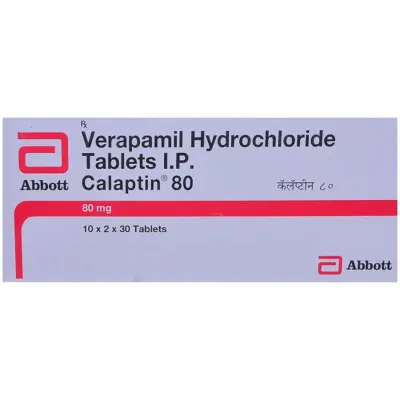
- Calaptin 80 Mg Tablets – verapamil 80 mg for higher-dose therapy
- Corbis 5 Mg Tablets – bisoprolol 5 mg cardioselective beta-blocker
- Amlip 5 Mg Tablets – amlodipine 5 mg dihydropyridine calcium channel blocker
- Valzaar 160 Mg Tablets – valsartan 160 mg for hypertension
Frequently Asked Questions
- What is Calaptin 40 Mg used for?
- Calaptin 40 Mg is used to treat angina (chest pain due to reduced blood flow to the heart), hypertension (high blood pressure), and certain abnormal heart rhythms such as supraventricular tachycardia (SVT) and to control heart rate in atrial fibrillation. It belongs to a class of medicines called calcium channel blockers.
- How is Calaptin 40 Mg different from Calaptin 80 Mg?
- Both tablets contain the same active ingredient, verapamil hydrochloride. The 40 mg strength is a lower starting dose used for initial treatment or for patients who need careful titration — such as the elderly or those with liver disease. As treatment progresses, the dose may be increased to 80 mg or 120 mg per dose under medical supervision, with the 80 mg tablet being the standard maintenance dose for many indications.
- Can I take verapamil and a beta-blocker together?
- Oral verapamil and oral beta-blockers can be used together in some carefully selected patients under close medical supervision, but this combination requires great caution because both drugs slow the heart rate and AV nodal conduction — the combination can cause dangerous bradycardia or heart block. Intravenous beta-blockers must NEVER be given with verapamil. This combination should only ever be used under specialist cardiac supervision with careful monitoring.
- Why does verapamil cause constipation?
- Constipation is the most common side effect of verapamil, affecting up to 30% of patients. This occurs because calcium channels are also involved in the smooth muscle activity that drives intestinal peristalsis. By blocking calcium influx into gut smooth muscle, verapamil slows intestinal motility. Increasing dietary fibre, fluid intake, and gentle exercise can help. If constipation is troublesome, speak to your doctor about laxatives or whether an alternative calcium channel blocker might be more suitable.
- Can I take verapamil if I have heart failure?
- Verapamil is generally contraindicated in patients with decompensated heart failure because its negative inotropic effect (reducing the pumping strength of the heart) can worsen cardiac function. It may be used with extreme caution under close specialist supervision in compensated heart failure when the heart rhythm condition being treated has no better alternative. This decision must always be made by a cardiologist.
References
- NHS – Verapamil
- MedlinePlus – Verapamil
- FDA – Calan (Verapamil) Prescribing Information
- EMA – Verapamil Information
Disclaimer: This page is for informational purposes only and does not constitute medical advice. Calaptin 40 Mg Tablets must be prescribed and monitored by a qualified healthcare professional. Never stop calcium channel blockers abruptly without medical guidance. If you experience chest pain, severe dizziness, fainting, or very slow heart rate, seek immediate medical attention.


Reviews
There are no reviews yet.