Description
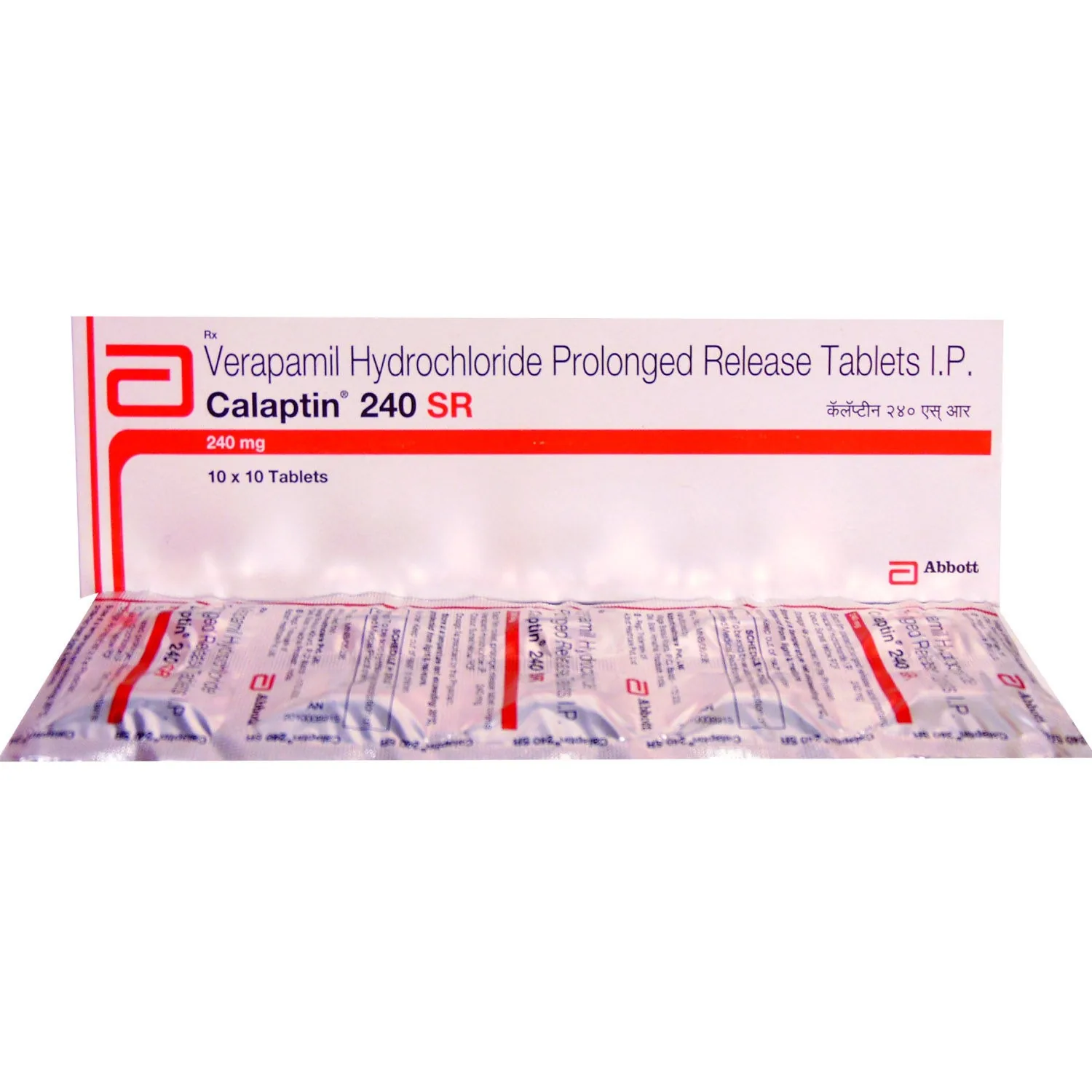
What Is Calaptin SR 240 mg Tablets?
Calaptin SR 240 mg Tablets contain verapamil hydrochloride 240 mg in a sustained-release (SR) formulation. Verapamil is a phenylalkylamine calcium channel blocker (CCB) and the only Class IV antiarrhythmic in clinical use. The 240 mg SR tablet is the most widely used verapamil dose for the long-term management of hypertension and stable angina, providing once-daily or twice-daily dosing with a smoother pharmacokinetic profile than immediate-release preparations.
Verapamil acts by blocking L-type (long-lasting) voltage-gated calcium channels in cardiac and vascular smooth muscle. Its predominant cardiac effects — slowing of the sinoatrial (SA) node and prolongation of atrioventricular (AV) nodal conduction — form the basis of its antiarrhythmic activity in supraventricular tachycardias, rate control in atrial fibrillation, and prevention of paroxysmal SVT. Calaptin is a well-established brand of verapamil used extensively across South and Southeast Asia. The SR formulation provides delayed and sustained drug release, reducing peak-to-trough fluctuations and minimising peak-related adverse effects such as flushing and reflex tachycardia.
Mechanism of Action
Cardiac Effects
Verapamil inhibits the transmembrane influx of calcium ions through L-type calcium channels in cardiac muscle and the specialised conduction system:
- Sinoatrial (SA) node: Reduces the rate of spontaneous depolarisation → negative chronotropy (reduced heart rate)
- Atrioventricular (AV) node: Exhibits use-dependent blockade — the more rapidly the AV node fires, the greater the degree of blockade; this property makes verapamil effective for rate control in atrial fibrillation and flutter, and for terminating or preventing re-entrant SVT circuits that use the AV node
- Myocardium: Reduces calcium availability for excitation-contraction coupling → negative inotropy (reduced myocardial contractility); clinically significant negative inotropy contraindicates verapamil in heart failure with reduced ejection fraction (HFrEF)
- Class IV antiarrhythmic: Prolongs the effective refractory period of the AV node without affecting the His-Purkinje system
Vascular Effects
Verapamil relaxes vascular smooth muscle through calcium channel blockade, reducing systemic vascular resistance (afterload) and contributing to its antihypertensive and antianginal effects. Coronary vasodilation is also prominent, increasing coronary blood flow and making verapamil effective in both stable (effort) angina and Prinzmetal (vasospastic) angina. Unlike dihydropyridine CCBs (amlodipine, nifedipine), verapamil produces minimal reflex tachycardia because its direct negative chronotropic effect offsets any baroreceptor-mediated sympathetic activation.
SR Pharmacokinetics
The sustained-release formulation delays the time to peak plasma concentration (Tmax) and reduces peak-to-trough fluctuations compared with immediate-release verapamil. Verapamil undergoes extensive first-pass hepatic metabolism (bioavailability approximately 20–35% after oral dosing); the active metabolite norverapamil retains approximately 20% of the parent compound’s cardiovascular activity and accumulates with repeated dosing. CYP3A4 is the primary metabolic enzyme; CYP3A4 inhibitors and inducers produce clinically significant pharmacokinetic interactions. SR tablets must be swallowed whole — do NOT crush, break, or chew.
Indications
- Hypertension — Calaptin SR 240 mg is a first-line option for sustained blood pressure control; the SR formulation supports once-daily dosing for mild-to-moderate hypertension and twice-daily dosing when higher efficacy is required
- Stable (effort) angina — reduces myocardial oxygen demand through heart rate reduction and afterload reduction; appropriate for patients who cannot tolerate beta-blockers or who have vasospastic angina
- Prinzmetal (vasospastic) angina — coronary vasodilation relieves and prevents coronary artery spasm
- Supraventricular tachycardia (SVT) prevention — prevents recurrent paroxysmal SVT (AVNRT, AVRT) in patients not requiring acute IV termination
- Ventricular rate control in atrial fibrillation/flutter — the AV nodal blocking effect slows ventricular response in persistent AF; used as an alternative to beta-blockers for rate control
- Hypertrophic obstructive cardiomyopathy (HOCM) — negative inotropy reduces dynamic LV outflow tract obstruction; improves symptoms and exercise tolerance in patients who cannot take beta-blockers
Dosage and Administration
Hypertension: The usual starting dose is 120–240 mg once daily (SR formulation). Many patients are adequately controlled on 240 mg once daily. Where additional control is needed, increase to 240 mg twice daily or up to a maximum of 480 mg/day in divided doses. Allow at least 1–2 weeks between dose adjustments.
Stable and vasospastic angina: 120–240 mg twice daily (SR formulation), titrated for symptom control. Maximum: 480 mg/day.
Rate control in atrial fibrillation: 120–360 mg/day in SR formulation, divided once or twice daily. Titrate to achieve target ventricular rate (resting <80 bpm; moderate exercise <110 bpm).
SVT prevention: 120–480 mg/day in SR formulation, divided as appropriate.
HOCM: Start at 120–240 mg once daily; titrate slowly to 240–480 mg/day based on tolerability and symptoms. Avoid high doses in patients with significant outflow tract obstruction as hypotension may worsen obstruction.
Renal impairment: No significant dose adjustment required for mild-to-moderate renal impairment; verapamil is primarily hepatically metabolised. Use with caution in severe renal impairment and monitor for accumulation of metabolites.
Hepatic impairment: Verapamil bioavailability is significantly increased in hepatic impairment due to reduced first-pass extraction. Reduce the dose by approximately 30–50% and start at 120 mg once daily; titrate cautiously. Use with particular caution in severe hepatic disease.
Elderly: Start at 120 mg once daily; older patients may have reduced first-pass metabolism and increased sensitivity to hypotensive and bradycardic effects. Titrate slowly.
Administration: Swallow Calaptin SR 240 mg tablets whole. Do NOT crush, split, or chew — this destroys the sustained-release matrix and may cause dose dumping with potential toxicity. May be taken with or without food; taking with food may reduce gastrointestinal side effects.
Contraindications
- Heart failure with reduced ejection fraction (HFrEF) — verapamil’s negative inotropic effect may precipitate or worsen decompensated HF; also contraindicated in left ventricular systolic dysfunction with or without clinical HF symptoms
- Bradycardia (resting heart rate <50 bpm) or sick sinus syndrome without a functioning pacemaker
- Second- or third-degree AV block (except in patients with a functioning ventricular pacemaker)
- Atrial fibrillation or flutter with an accessory pathway (Wolff-Parkinson-White syndrome, Lown-Ganong-Levine syndrome) — verapamil can accelerate conduction through the accessory pathway, causing ventricular fibrillation; absolutely contraindicated
- IV beta-blockers given concurrently — combined IV use can cause profound bradycardia, AV block, and asystole; this combination is absolutely contraindicated parenterally
- Broad complex tachycardia of unknown origin — if the tachycardia is ventricular in origin, verapamil may cause haemodynamic collapse
- Severe hypotension (systolic blood pressure <90 mmHg) or cardiogenic shock
- Hypersensitivity to verapamil or any excipient
Warnings and Precautions
Heart Failure
Verapamil must not be used in patients with impaired left ventricular function (ejection fraction <40%) or clinical HF. Its negative inotropic effect can precipitate acute decompensation. In HOCM, the negative inotropic effect is usually beneficial, but severe dynamic obstruction and high-dose verapamil can paradoxically worsen haemodynamics in some patients.
Bradycardia and AV Block
Verapamil can cause symptomatic bradycardia and AV conduction disturbances, particularly in patients with pre-existing SA or AV node disease. Monitor pulse rate regularly. Withhold verapamil if resting heart rate falls below 50 bpm and seek cardiology review. The risk is substantially increased when verapamil is combined with beta-blockers — this combination requires specialist assessment, with IV combination absolutely contraindicated.
Hypotension
Blood pressure reduction is expected; excessive hypotension can occur, particularly on first dosing or dose escalation. Monitor blood pressure after dose changes, especially in elderly patients and those on other antihypertensives. Verapamil-induced hypotension can usually be managed with dose reduction.
Constipation
Constipation is the most common adverse effect of verapamil and affects up to 25% of patients. This results from calcium channel blockade in smooth muscle of the gastrointestinal tract, reducing peristalsis. In most patients, dietary fibre intake, adequate hydration, and mild laxatives manage this effectively. In rare cases, severe constipation, paralytic ileus, or intestinal obstruction may occur.
Adverse Effects
- Very common (≥10%): Constipation (most characteristic — up to 25%), bradycardia
- Common (1–10%): Hypotension (orthostatic and systemic), AV block (first-degree), oedema (peripheral), headache, dizziness, nausea, flushing
- Less common (0.1–1%): Second- or third-degree AV block, worsening HF, hepatitis/elevated liver enzymes (usually reversible), gingival hyperplasia (rare with chronic use), Raynaud’s phenomenon worsening
- Rare (<0.1%): Paralytic ileus, gynaecomastia (with long-term use), alopecia, erythromelalgia, severe hepatotoxicity, photosensitivity
Drug Interactions
Beta-Blockers
Oral combination with beta-blockers requires caution: additive negative chronotropy and negative inotropy increase the risk of bradycardia, AV block, and hypotension. The combination is used under specialist supervision in some patients with angina or hypertension but must be avoided when LV function is impaired. IV verapamil combined with IV beta-blockers is absolutely contraindicated and can cause asystole.
Digoxin
Verapamil inhibits P-glycoprotein–mediated digoxin renal tubular secretion, increasing digoxin plasma concentrations by approximately 50–75%. This combination also causes additive AV nodal slowing, compounding the risk of bradycardia and AV block. Reduce digoxin dose by approximately 50% when initiating verapamil and monitor digoxin levels closely.
CYP3A4 Inhibitors and Inducers
Verapamil is both a CYP3A4 substrate and a moderate CYP3A4 inhibitor. Potent CYP3A4 inhibitors (clarithromycin, itraconazole, grapefruit juice, ritonavir) can increase verapamil plasma levels significantly, increasing the risk of adverse effects. CYP3A4 inducers (rifampicin, carbamazepine, phenytoin, St John’s Wort) substantially reduce verapamil levels, potentially abolishing efficacy.
Grapefruit Juice
Grapefruit juice inhibits intestinal CYP3A4, increasing verapamil bioavailability by approximately 40–50%. Patients taking Calaptin SR should avoid regular consumption of grapefruit juice.
Statins — Simvastatin and Lovastatin
Verapamil is a moderate CYP3A4 inhibitor and significantly increases simvastatin and lovastatin plasma concentrations, raising the risk of myopathy and rhabdomyolysis. The maximum recommended dose of simvastatin is 10 mg/day in patients taking verapamil (some guidelines allow 20 mg/day); lovastatin should similarly be limited. Consider switching to a statin not metabolised by CYP3A4 (pravastatin, rosuvastatin, fluvastatin).
Colchicine
Verapamil inhibits both CYP3A4 and P-glycoprotein, reducing colchicine elimination and significantly increasing the risk of colchicine toxicity (neuromuscular toxicity, pancytopenia). This combination requires close monitoring and dose reduction of colchicine; it should be avoided in renal or hepatic impairment.
Antihypertensives and Vasodilators
Additive blood pressure lowering occurs with other antihypertensives, diuretics, nitrates, and alpha-blockers. Usually clinically beneficial; monitor for excessive hypotension.
Storage
Store Calaptin SR 240 mg Tablets below 25°C in a dry place, protected from light and moisture. Keep in the original blister pack until use. Store out of the reach of children. Do not use after the expiry date printed on the pack.
Related Products
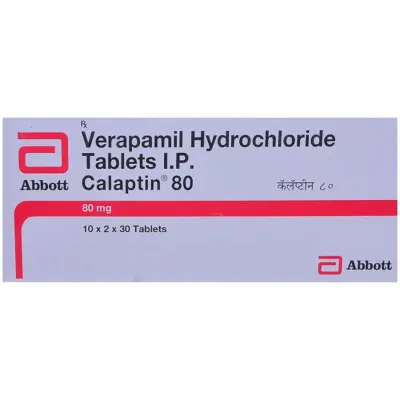
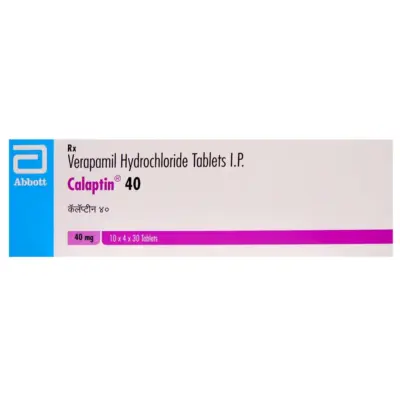
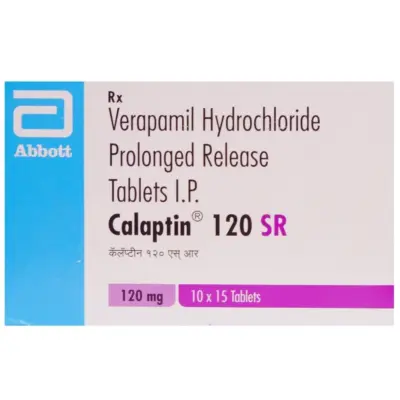
- Calaptin SR 120 mg Tablets (Verapamil SR 120 mg — lower starting dose for hypertension, angina, and SVT)
- Ciplar 10 mg Tablets (Propranolol — non-selective beta-blocker for hypertension, angina, and arrhythmias)
- Cardivas 6.25 mg Tablets (Carvedilol — vasodilatory beta-blocker for HFrEF, hypertension, and post-MI)
- Rami-Race 5 mg Tablets (Ramipril — ACE inhibitor for hypertension and cardiovascular risk reduction)
References
- DailyMed. Verapamil hydrochloride extended-release tablets — prescribing information. U.S. National Library of Medicine. Available at: https://dailymed.nlm.nih.gov/dailymed/
- MedlinePlus. Verapamil. U.S. National Library of Medicine. Available at: https://medlineplus.gov/druginfo/meds/a684030.html
- Mayo Clinic. Verapamil (Oral Route). Available at: https://www.mayoclinic.org/
- Ommen SR, et al. 2020 AHA/ACC Guideline for the Diagnosis and Treatment of Patients with Hypertrophic Cardiomyopathy. J Am Coll Cardiol. 2020;76(25):e159–e240. PMID: 32638927
- Electronic Medicines Compendium (EMC). Verapamil 240 mg prolonged-release tablets — Summary of Product Characteristics. Available at: https://www.medicines.org.uk/emc/
Reviews
There are no reviews yet.