Description
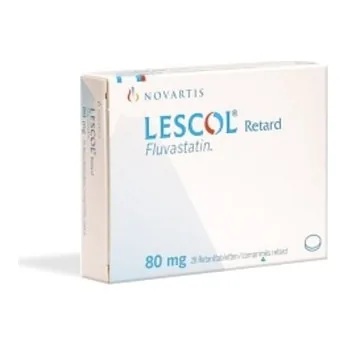
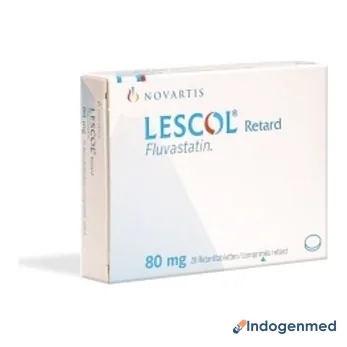
Lescol 80 Mg Tablets – Fluvastatin Sodium Extended-Release
Lescol 80 Mg Tablets contain Fluvastatin Sodium equivalent to 80 mg of fluvastatin in an extended-release formulation. Fluvastatin is a fully synthetic, water-soluble HMG-CoA reductase inhibitor (statin) used to lower elevated total cholesterol, LDL-cholesterol, apolipoprotein B, and triglycerides, and to raise HDL-cholesterol. The extended-release (XL) formulation delivers the full 80 mg dose in a single once-daily tablet, providing consistent plasma levels and improved tolerability compared to immediate-release formulations. Lescol is prescribed as an adjunct to dietary modification for the management of primary hypercholesterolaemia and mixed dyslipidaemia, and for reducing cardiovascular risk in high-risk patients. It is also indicated to slow progression of atherosclerotic coronary artery disease.
Composition
Each extended-release tablet contains:
- Fluvastatin Sodium – equivalent to Fluvastatin 80 mg
- Extended-release matrix: hydroxypropyl methylcellulose (HPMC)
- Other excipients: microcrystalline cellulose, potassium hydrogen carbonate, magnesium stearate, hypromellose, macrogol, yellow ferric oxide, titanium dioxide
How Fluvastatin Works
Fluvastatin competitively inhibits HMG-CoA reductase, the rate-limiting enzyme in the mevalonate pathway that catalyses the conversion of HMG-CoA to mevalonic acid — the committed step in hepatic cholesterol biosynthesis. By inhibiting this enzyme, fluvastatin reduces intracellular cholesterol in hepatocytes, triggering an up-regulation of hepatic LDL receptors. This receptor up-regulation enhances the uptake and clearance of circulating LDL particles from the bloodstream, thereby lowering plasma LDL-cholesterol concentrations.
Compared to some other statins, fluvastatin is notable for being fully synthetic and possessing a relatively shorter half-life and lower systemic exposure, partly explaining its favourable safety profile at the cellular level. It undergoes extensive first-pass hepatic metabolism via CYP2C9, with minimal systemic bioavailability (about 24–29%), concentrating its effects in the liver where cholesterol synthesis predominantly occurs. The extended-release formulation further reduces peak plasma concentrations while maintaining therapeutic trough levels, which may be associated with improved tolerability.
Uses of Lescol 80 Mg Tablets
- Primary hypercholesterolaemia: Reduction of elevated total cholesterol and LDL-cholesterol in adults with Type IIa and IIb (mixed) hyperlipidaemia.
- Cardiovascular risk reduction: Reducing the risk of major cardiovascular events including myocardial infarction and coronary revascularisation procedures in patients with coronary artery disease.
- Slowing atherosclerosis progression: To retard progression of coronary artery disease in patients with elevated cholesterol.
- Post-coronary intervention: Reducing the risk of cardiac events following percutaneous coronary interventions (PCI) such as coronary angioplasty with or without stenting (LIPS trial indication).
- Paediatric heterozygous familial hypercholesterolaemia: In children aged 9 years and older after failure of dietary measures (with physician guidance).
Dosage and Administration
- Adults: 80 mg once daily in the evening. Swallow whole — do not crush, chew, or break the tablet.
- May be taken with or without food; taking in the evening aligns with peak nocturnal cholesterol synthesis.
- Response should be assessed after 4–6 weeks of therapy; dose adjustments of immediate-release fluvastatin may be considered if the 80 mg XL does not achieve target lipid levels.
- Elderly patients: No dose adjustment required; clinical experience supports use in patients over 65 years.
- Renal impairment: No dose adjustment generally needed as fluvastatin is predominantly eliminated hepatically.
- Hepatic impairment: Contraindicated in active liver disease.
Side Effects
- Common: Headache, dyspepsia, abdominal pain, nausea, insomnia, myalgia (muscle aches).
- Musculoskeletal: Myopathy — muscle pain, weakness, or tenderness with raised creatine kinase (CK); rhabdomyolysis (rare but serious — requires immediate discontinuation).
- Hepatic: Elevated liver transaminases (ALT/AST); clinical hepatitis is rare but has been reported.
- Neurological: Memory impairment and confusion have been reported with statins as a class; generally reversible on discontinuation.
- Other class effects: New-onset diabetes mellitus; mild increases in blood glucose in predisposed individuals.
Precautions and Warnings
- Myopathy risk: Report unexplained muscle pain, weakness, or dark urine promptly. Discontinue if CK is markedly elevated or myopathy is diagnosed.
- Liver function: Obtain liver function tests before initiating therapy. Avoid if active liver disease or unexplained persistent elevations of transaminases are present.
- Pregnancy and breastfeeding: Fluvastatin is contraindicated during pregnancy and breastfeeding. Use effective contraception; discontinue before attempting conception.
- Thyroid function: Hypothyroidism predisposes to myopathy in patients on statins; correct thyroid status before initiating.
- Alcohol: Excessive alcohol intake increases risk of hepatotoxicity when combined with fluvastatin.
- Swallow tablet whole: Breaking or crushing the extended-release tablet destroys the modified-release matrix and may result in dose dumping.
Drug Interactions
- CYP2C9 inhibitors (fluconazole, amiodarone, fluvoxamine): Can significantly increase fluvastatin plasma levels, raising risk of myopathy; use with caution or avoid.
- Fibrates (gemfibrozil, fenofibrate): Combined use increases myopathy/rhabdomyolysis risk; monitor closely.
- Ciclosporin: Markedly elevates fluvastatin exposure; combined use is contraindicated or requires dose reduction with close monitoring.
- Colestyramine (colestipol): Binds fluvastatin in the gastrointestinal tract, reducing absorption; administer fluvastatin at least 4 hours after the resin.
- Warfarin and other coumarin anticoagulants: Fluvastatin may increase anticoagulant effect by inhibiting warfarin metabolism via CYP2C9; monitor INR.
- Rifampicin: A CYP2C9 inducer; reduces fluvastatin plasma levels, possibly reducing efficacy.
Contraindications
- Active liver disease or unexplained persistent elevations of serum transaminases
- Pregnancy and breastfeeding
- Hypersensitivity to fluvastatin, fluvastatin sodium, or any excipient
- Concurrent use with fusidic acid (risk of serious myopathy)
Storage Instructions
Store below 25°C, protected from light and moisture. Keep in the original packaging. Keep out of reach of children. Do not use after the expiry date printed on the carton.
Fluvastatin and Cardiovascular Protection
Fluvastatin was one of the first statins to demonstrate benefits beyond simple cholesterol reduction. The Lescol Intervention Prevention Study (LIPS) enrolled 1,677 patients who had undergone successful coronary angioplasty and randomised them to fluvastatin 80 mg XL or placebo. After a median follow-up of approximately four years, fluvastatin significantly reduced the risk of major adverse cardiac events, including fatal and non-fatal myocardial infarction and repeat coronary revascularisation procedures. These results extended the evidence base for statin therapy beyond primary and secondary prevention of atherosclerosis to the peri-interventional cardiovascular setting.
The pleiotropic effects of statins — including anti-inflammatory, endothelial-stabilising, and plaque-stabilising actions that are independent of LDL reduction — are well recognised. In the case of fluvastatin, its high selectivity for the liver and low systemic bioavailability may contribute to its tolerability, making it a useful option for patients who experience muscular side effects with more systemically bioavailable statins such as simvastatin or atorvastatin.
Related Products
- Januvia 25 Mg Tablets – Sitagliptin for type 2 diabetes (frequently co-prescribed with statins in metabolic syndrome)
- Irovel H 150/12.5 Mg Tablets – Irbesartan + Hydrochlorothiazide for hypertension
- Lefumide 20 Mg Tablets – Leflunomide for autoimmune/rheumatic conditions
References
- MedlinePlus. Fluvastatin. U.S. National Library of Medicine. medlineplus.gov
- Mayo Clinic. Fluvastatin (Oral Route) – Before Using. mayoclinic.org
- electronic Medicines Compendium (eMC). Lescol XL 80 mg Prolonged-release Tablets – Summary of Product Characteristics. medicines.org.uk/emc
Reviews
There are no reviews yet.