Description
What Is Syncapone 12.5/50/200 mg Capsules?
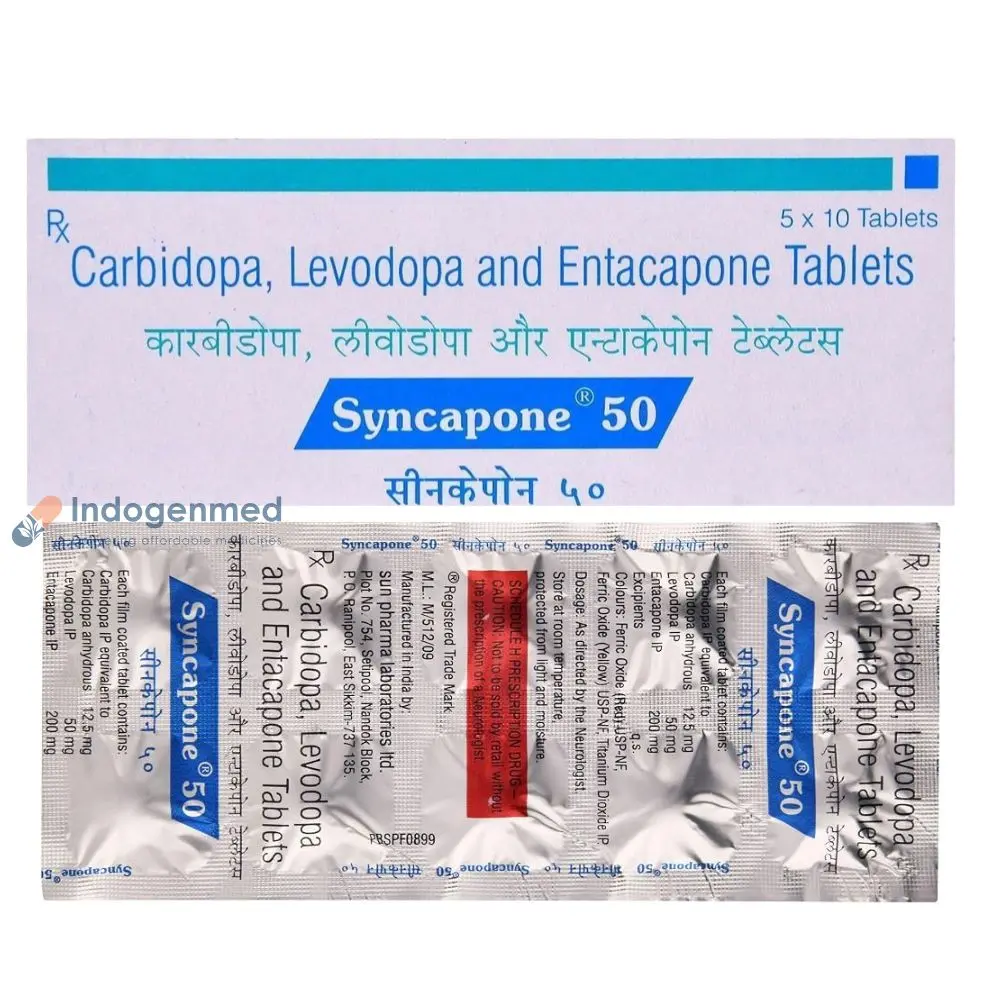
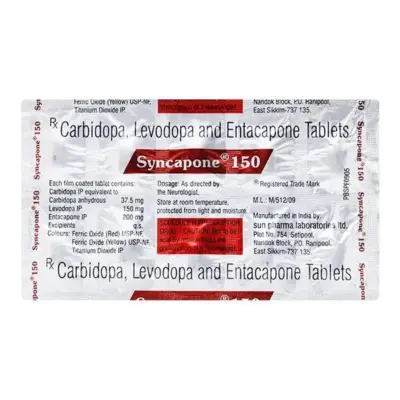
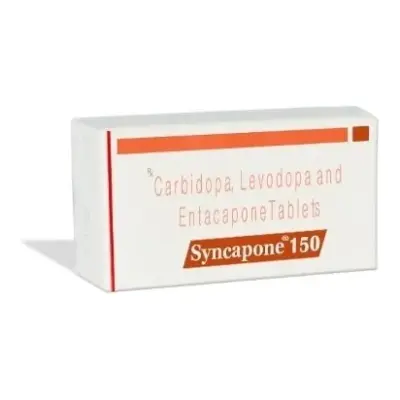
Syncapone 12.5/50/200 mg Capsules is a fixed-dose triple-combination oral medication used in the management of Parkinson’s disease. Each capsule contains three active ingredients: carbidopa 12.5 mg, levodopa 50 mg, and entacapone 200 mg. This formulation is equivalent to the internationally recognised Stalevo 50 combination and is manufactured for patients who experience end-of-dose wearing-off on standard carbidopa/levodopa therapy.
Parkinson’s disease is a progressive neurodegenerative disorder characterised by the depletion of dopaminergic neurons in the substantia nigra pars compacta of the midbrain. The resulting dopamine deficiency manifests as the cardinal motor symptoms of the disease: resting tremor, bradykinesia (slowness of movement), rigidity, and postural instability. Levodopa remains the most effective symptomatic treatment available, but its efficacy is limited over time by the development of motor fluctuations — most notably, the wearing-off phenomenon, in which the effect of each dose wanes before the next dose is due.
Syncapone addresses this limitation by combining levodopa with two mechanistically complementary inhibitors — carbidopa (a peripheral aromatic amino acid decarboxylase inhibitor) and entacapone (a catechol-O-methyltransferase inhibitor) — that together maximise the amount of levodopa reaching the brain and extend the duration of its action.
Mechanism of Action
The therapeutic rationale for Syncapone lies in the complementary pharmacological actions of its three components:
Levodopa
Levodopa (L-DOPA) is the metabolic precursor to dopamine. Unlike dopamine itself, levodopa can cross the blood-brain barrier via the large neutral amino acid transporter system. Once inside the central nervous system, it is decarboxylated by aromatic amino acid decarboxylase (AAAD, also called dopa decarboxylase) in remaining dopaminergic neurons and other cells to form dopamine. The replenishment of dopamine in the striatum relieves the motor symptoms of Parkinson’s disease.
However, when levodopa is administered alone, more than 95% of the dose is metabolised peripherally before it can reach the brain — primarily by peripheral AAAD in the gut wall and other tissues, which converts it to dopamine in the bloodstream, causing nausea, vomiting, and cardiovascular side effects. This necessitates very high doses to achieve therapeutic brain concentrations, which amplifies peripheral side effects.
Carbidopa
Carbidopa is a peripherally acting inhibitor of AAAD. Because it cannot cross the blood-brain barrier in clinically relevant amounts, carbidopa selectively inhibits the peripheral (non-CNS) conversion of levodopa to dopamine. By blocking peripheral decarboxylation, carbidopa:
- Increases the fraction of the levodopa dose that reaches the brain by approximately 4- to 10-fold.
- Markedly reduces nausea, vomiting, and cardiovascular side effects caused by peripheral dopamine.
- Allows the total daily levodopa dose to be substantially reduced.
- Reduces the latency to onset of therapeutic effect.
In Syncapone, the carbidopa:levodopa ratio is 1:4 (12.5 mg:50 mg), which is consistent with established carbidopa/levodopa formulations (the Sinemet/Madopar ratio). A minimum daily carbidopa dose of approximately 70 mg is required to fully saturate peripheral AAAD and achieve optimal levodopa bioavailability.
Entacapone
Even with carbidopa on board, a substantial portion of levodopa is metabolised by a second peripheral enzyme: catechol-O-methyltransferase (COMT). COMT converts levodopa to 3-O-methyldopa (3-OMD), an inactive metabolite that also competes with levodopa for entry into the brain via the amino acid transporter. Entacapone is a selective, reversible, peripherally acting COMT inhibitor. By blocking peripheral COMT, entacapone:
- Increases the plasma half-life of levodopa from approximately 1.3 hours to approximately 2.4 hours.
- Increases the area under the plasma concentration-time curve (AUC) of levodopa by approximately 35%.
- Reduces peak-to-trough fluctuations in plasma levodopa levels, providing a smoother, more sustained dopaminergic effect.
- Significantly reduces wearing-off time in patients with motor fluctuations.
Entacapone 200 mg must be administered with each dose of levodopa to be effective, as its inhibitory effect is dose-dependent and time-limited. This requirement for co-administration with every levodopa dose makes the fixed-dose combination format of Syncapone clinically important for adherence and convenience.
Indications
Syncapone 12.5/50/200 mg is indicated for the treatment of Parkinson’s disease in adults who experience end-of-dose motor fluctuations (wearing-off) on a stable regimen of carbidopa/levodopa without entacapone, and who are already stabilised on the equivalent individual doses of carbidopa, levodopa, and entacapone administered separately.
It is not indicated for:
- De novo treatment of Parkinson’s disease.
- Patients who are not experiencing motor fluctuations on their current levodopa regimen.
- Patients with dyskinesia not controlled on current therapy (the increased levodopa bioavailability from entacapone may worsen dyskinesia).
Dosage and Administration
Syncapone is available as capsules for oral administration. The dose is individualised based on the patient’s existing carbidopa/levodopa regimen. Each capsule contains carbidopa 12.5 mg + levodopa 50 mg + entacapone 200 mg.
Syncapone capsules should be swallowed whole with water. They may be taken with or without food, although a high-fat, high-protein meal may reduce levodopa absorption. Patients transitioning from separate carbidopa/levodopa plus entacapone should take Syncapone at the same dosing frequency as their prior regimen, with one capsule replacing each dose of levodopa.
The maximum recommended dose of entacapone is 200 mg per dose and 1600 mg per day (8 doses). Exceeding this limit does not increase efficacy and may increase the risk of adverse events.
Contraindications
- Concomitant use of non-selective monoamine oxidase inhibitors (MAOIs) — risk of hypertensive crisis. Selective MAO-B inhibitors (rasagiline, selegiline) may be used with caution.
- Narrow-angle glaucoma (due to levodopa’s effect on intraocular pressure).
- History of neuroleptic malignant syndrome (NMS) or non-traumatic rhabdomyolysis.
- Known hypersensitivity to any component of the formulation.
- Severe hepatic impairment.
Warnings and Precautions
Dyskinesia: Entacapone increases the bioavailability of levodopa and may exacerbate pre-existing levodopa-induced dyskinesia. The levodopa dose may need to be reduced.
Hallucinations and psychosis: Dopaminergic therapy may cause hallucinations, confusion, and psychotic episodes, particularly in elderly patients or those with pre-existing cognitive impairment.
Orthostatic hypotension: Levodopa can cause symptomatic orthostatic hypotension, especially early in therapy or after dose increases.
Urine discolouration: Entacapone may cause reddish-brown discolouration of the urine. This is harmless but should be mentioned to patients to avoid alarm.
Diarrhoea: Entacapone has been associated with diarrhoea, which typically appears 4–12 weeks after initiation and usually resolves spontaneously.
Impulse control disorders: Dopamine agonists and dopaminergic therapy are associated with impulse control disorders (pathological gambling, hypersexuality, compulsive eating). Patients should be monitored.
Abrupt withdrawal: Syncapone should not be discontinued abruptly. Sudden withdrawal of levodopa can cause a neuroleptic malignant-like syndrome (akinetic crisis, hyperthermia, rigidity, and altered consciousness).
Adverse Effects
The most common adverse effects reflect the dopaminergic and COMT-inhibitor properties of the components:
- Very common (≥10%): Dyskinesia, nausea, urine discolouration (orange-reddish)
- Common (1–10%): Diarrhoea, dizziness, insomnia, somnolence, hallucinations, orthostatic hypotension, constipation, dry mouth, fatigue
- Uncommon: Confusion, falls, palpitations, elevated liver enzymes
- Rare: Rhabdomyolysis, neuroleptic malignant syndrome on abrupt withdrawal
Drug Interactions
- MAOIs: Non-selective MAOIs are contraindicated. Selective MAO-B inhibitors may be used at standard doses with caution.
- Iron salts: Iron chelates levodopa and reduces its absorption. Administer iron supplements at least 2 hours apart from Syncapone.
- High-protein meals: Large neutral amino acids in protein compete with levodopa for intestinal absorption and blood-brain barrier transport. Consistent dietary protein distribution is recommended.
- Antihypertensives: Additive hypotensive effects are possible.
- Antipsychotics (D2 antagonists): May reduce the efficacy of levodopa by blocking striatal dopamine receptors.
- Drugs metabolised by COMT: Entacapone inhibits COMT and may increase plasma levels of drugs that are COMT substrates (e.g., dobutamine, adrenaline, isoprenaline).
Special Populations
Pregnancy: Animal studies have shown fetotoxic effects with levodopa. Syncapone should not be used during pregnancy unless the potential benefit justifies the risk.
Renal impairment: No dose adjustment required for mild-to-moderate renal impairment. Use with caution in severe renal impairment.
Hepatic impairment: Entacapone is metabolised hepatically. Syncapone is contraindicated in severe hepatic impairment.
Storage
Store below 30°C in a dry place, away from direct sunlight and heat. Keep out of reach of children.
Related Products
Syncapone is used in patients with Parkinson’s disease who experience wearing-off on carbidopa/levodopa therapy. Patients beginning levodopa therapy are often initiated on standard carbidopa/levodopa formulations. Syndopa 25/250 mg Tablets (carbidopa 25 mg + levodopa 250 mg) is a commonly used higher-dose carbidopa/levodopa combination for patients with more advanced disease. For patients in early Parkinson’s, clinicians may first use dopamine agonists or MAO-B inhibitors before initiating levodopa therapy.
References
- U.S. Food and Drug Administration. Stalevo (carbidopa, levodopa, and entacapone) — Full Prescribing Information. DailyMed, National Library of Medicine. Available at: https://dailymed.nlm.nih.gov
- National Library of Medicine. MedlinePlus Drug Information: Carbidopa, Entacapone, and Levodopa. Available at: https://medlineplus.gov
- Olanow CW, et al. An algorithm (decision tree) for the management of Parkinson’s disease treatment guidelines. Neurology. 2001;56(11 Suppl 5):S1–S88.
- Mayo Clinic. Carbidopa, Entacapone, and Levodopa (Oral Route) — Description and Brand Names. Available at: https://www.mayoclinic.org


Reviews
There are no reviews yet.