Description
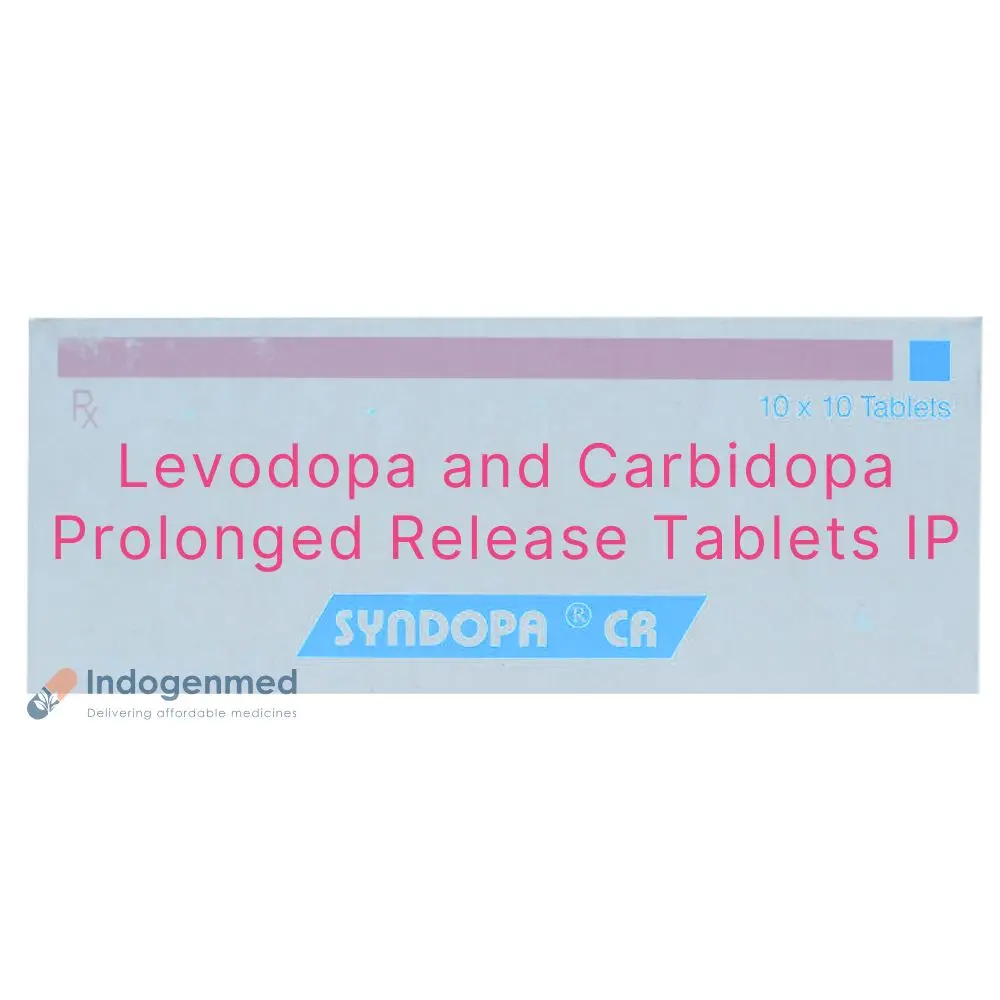
What Is Syndopa 25+250 mg Tablets?
Syndopa 25+250 mg Tablets contain a fixed-dose combination of carbidopa 25 mg + levodopa 250 mg — the highest-strength standard formulation of the cornerstone pharmacological treatment for Parkinson’s disease. Levodopa remains the most effective drug available for Parkinson’s disease more than 60 years after its introduction, and is the gold standard against which all other antiparkinsonian agents are measured. Carbidopa is a peripheral DOPA decarboxylase inhibitor (DDC inhibitor) co-administered exclusively to prevent the peripheral conversion of levodopa to dopamine before it crosses the blood-brain barrier, dramatically reducing the dose of levodopa required for therapeutic effect while substantially reducing peripheral dopaminergic side effects (nausea, vomiting, cardiovascular effects). The 25 mg carbidopa + 250 mg levodopa formulation is a standard high-dose preparation used when patients have been titrated beyond the low-dose initiation range and require a higher per-tablet levodopa load. Syndopa is a widely distributed Indian brand of carbidopa/levodopa tablets manufactured for IndoGenMed’s target markets. The combination is on the WHO List of Essential Medicines and is a cornerstone of Parkinson’s disease management guidelines worldwide.
Mechanism of Action
Levodopa
Levodopa (L-3,4-dihydroxyphenylalanine; L-DOPA) is the immediate biosynthetic precursor to dopamine. It crosses the blood-brain barrier via the large neutral amino acid (LNAA) transport system, which does not transport dopamine itself. Once in the brain, levodopa is decarboxylated by aromatic amino acid decarboxylase (AADC) in dopaminergic neurons and, as degeneration progresses, in serotoninergic neurons and glial cells, to produce dopamine. The replenished striatal dopamine restores dopaminergic neurotransmission in the nigrostriatal pathway, thereby alleviating the cardinal motor features of Parkinson’s disease (bradykinesia, rigidity, rest tremor, and postural instability) that result from progressive degeneration of substantia nigra pars compacta dopaminergic neurons.
Carbidopa
When levodopa is administered alone, more than 95% is decarboxylated in the peripheral tissues (gut, liver, kidney) to dopamine before reaching the brain. This peripheral conversion wastes drug, requires very large doses, and produces systemic dopaminergic effects (nausea, vomiting, orthostatic hypotension, cardiac arrhythmias). Carbidopa is a hydrazine-substituted analogue of levodopa that irreversibly inhibits AADC in peripheral tissues but does not cross the blood-brain barrier, leaving central AADC activity intact. By blocking peripheral conversion, carbidopa increases the bioavailability of levodopa available for central uptake by 4–5 fold, allows the levodopa dose to be reduced by approximately 75% (from ~4–8 g/day without carbidopa to ~600–900 mg/day with carbidopa), and markedly reduces peripheral dopaminergic adverse effects.
At least 70–75 mg of carbidopa per day is required to fully saturate peripheral AADC and achieve complete peripheral blockade. With the 25:250 ratio, a patient on 3 tablets/day receives 750 mg carbidopa — well above the saturation threshold. The 10:100 ratio (Syndopa Plus or generic carbidopa 10 mg/levodopa 100 mg) is used for initiation and low-dose titration.
Indications
- Parkinson’s disease (idiopathic Parkinson’s disease): Primary indication. Syndopa 25+250 mg is used in the established and advanced stages of Parkinson’s disease, once the patient has been titrated beyond the initiation dose range (typically using 10:100 mg tablets). It is used as monotherapy or in combination with dopamine agonists, MAO-B inhibitors (rasagiline, selegiline), COMT inhibitors, amantadine, and other adjunctive agents
- Post-encephalitic parkinsonism: Parkinsonism occurring after viral encephalitis
- Symptomatic parkinsonism: Including parkinsonism secondary to carbon monoxide intoxication or manganism — though response is variable and inferior to idiopathic Parkinson’s disease
- Restless legs syndrome (off-label): Low-dose levodopa/carbidopa has been used for restless legs syndrome, though dopamine agonists are now generally preferred for this indication due to the risk of augmentation with levodopa
Dosage and Administration
Carbidopa/levodopa therapy requires individualisation and careful dose titration under specialist supervision. The following provides general guidance.
Standard Oral Dosing
- Initiating therapy (levodopa-naïve patients): Do NOT start with 25+250 mg tablets. Begin with a lower-dose preparation (10:100 mg carbidopa/levodopa) at 1 tablet 2–3 times daily, with weekly dose increases as tolerated. Reserve the 25+250 mg formulation for patients who have been titrated up and require this strength
- Converting from lower-dose preparations: Syndopa 25+250 mg is typically used when patients require levodopa doses in the 300–1000 mg/day range (as levodopa). One tablet three times daily provides 750 mg levodopa + 75 mg carbidopa — the minimum recommended carbidopa daily dose for complete peripheral AADC inhibition
- Dosing frequency: Three to four times daily at equally spaced intervals (e.g., every 4–6 hours) is standard for immediate-release preparations. More frequent dosing (5–6 times daily or more) may be needed in advanced Parkinson’s disease to manage motor fluctuations (wearing-off)
- Administration with food: Levodopa is absorbed via the LNAA transporter in the small intestine, which is competitively inhibited by dietary large neutral amino acids (leucine, isoleucine, valine, tyrosine, phenylalanine). High-protein meals significantly delay and reduce levodopa absorption and can cause unpredictable motor fluctuations. Administer 30–60 minutes before meals (or at least 1 hour after) for most consistent absorption. A low-protein diet or protein redistribution (most daily protein at the evening meal) may help in patients with severe protein-related fluctuations
Motor Fluctuation Management
After several years of levodopa therapy, most patients develop motor complications:
- Wearing-off (end-of-dose deterioration): Motor improvement predictably wanes before the next dose. Management: increase dosing frequency, add a COMT inhibitor (entacapone — extends levodopa action), add an MAO-B inhibitor (rasagiline, selegiline), or switch to controlled-release formulation
- Dyskinesias (peak-dose): Involuntary movements at peak levodopa plasma concentrations. Management: reduce individual dose and increase frequency, add amantadine, consider apomorphine or advanced therapies
Contraindications
- Known hypersensitivity to levodopa, carbidopa, or any formulation excipient
- Concomitant non-selective MAO inhibitors (phenelzine, tranylcypromine): Risk of hypertensive crisis. Discontinue non-selective MAOIs at least 14 days before starting levodopa/carbidopa. Note: selective MAO-B inhibitors (rasagiline, selegiline) used in Parkinson’s disease are not contraindicated
- Narrow-angle glaucoma (relative contraindication — dopamine activates adrenergic pathways; use with caution; open-angle glaucoma is not a contraindication)
- Undiagnosed skin lesions — levodopa/carbidopa may activate melanoma; do not use in patients with known or suspected malignant melanoma
Warnings and Precautions
Neuropsychiatric Effects
Dopaminergic therapy can cause or exacerbate hallucinations, psychosis, confusion, agitation, and impulse control disorders (pathological gambling, hypersexuality, compulsive eating, compulsive shopping). These effects are more common in elderly patients, those with pre-existing cognitive impairment, and with higher doses. If neuropsychiatric symptoms develop, review and reduce the dose; adjunctive antipsychotic therapy with quetiapine or clozapine (not typical antipsychotics, which block dopamine receptors and worsen motor symptoms) may be required.
Orthostatic Hypotension
Levodopa/carbidopa can cause orthostatic hypotension, particularly during initiation and dose increases. Monitor blood pressure on standing, especially in elderly patients. Advise patients to rise slowly and avoid prolonged standing. Reduce dose if symptomatic hypotension persists.
Dyskinesia
Peak-dose dyskinesias (involuntary choreoathetoid movements) are a common consequence of long-term levodopa therapy, occurring in 50–80% of patients after 5–10 years. These are dose-dependent and concentration-driven — higher peak plasma levodopa levels increase dyskinesia severity. Dose reduction, amantadine, or advanced therapies (continuous enteral levodopa infusion, deep brain stimulation) are management options.
Protein Meal Interactions
High-protein meals significantly reduce levodopa absorption and can cause unpredictable switching between ON and OFF states. Patients with motor fluctuations should be counselled on protein redistribution or the timing of doses relative to meals.
Melanoma Risk
Patients with Parkinson’s disease have a higher incidence of melanoma than the general population. Levodopa may stimulate melanogenesis. Conduct periodic skin examinations; refer to dermatology for any suspicious skin lesions.
Adverse Effects
- Very common (>10%): Dyskinesias (after long-term use), nausea, insomnia, dizziness; wearing-off motor fluctuations
- Common (1–10%): Vomiting, orthostatic hypotension, constipation, dry mouth, abnormal dreams, somnolence, hallucinations, confusion
- Uncommon: Cardiac arrhythmias, agitation, anxiety, impulse control disorders (gambling, hypersexuality), excessive daytime sleepiness (sudden onset — “sleep attacks”)
- Rare: Neuroleptic malignant syndrome-like reaction on abrupt withdrawal, melanoma activation, haemolytic anaemia (Coombs-positive)
Drug Interactions
- Non-selective MAO inhibitors (phenelzine, tranylcypromine): CONTRAINDICATED — risk of severe hypertensive crisis. Discontinue at least 14 days before starting levodopa
- Antipsychotics (haloperidol, risperidone, olanzapine, chlorpromazine — dopamine D2 receptor antagonists): Block the therapeutic effect of levodopa; avoid if possible. Quetiapine and clozapine have lowest D2 affinity and are preferred if antipsychotic is required in Parkinson’s disease
- Metoclopramide: Central dopamine D2 antagonist; reduces levodopa efficacy and worsens parkinsonism — AVOID. Use domperidone (peripherally restricted) for nausea instead
- Iron salts (ferrous sulphate, ferric compounds): Chelate levodopa and carbidopa in the GI tract, reducing absorption by up to 50%. Separate administration by at least 2 hours
- High-protein foods: Competitive absorption via LNAA transporter — administer 30–60 minutes before or 1 hour after protein-rich meals
- Antihypertensives: Additive hypotensive effect, particularly with initiation; monitor blood pressure
- COMT inhibitors (entacapone, tolcapone): Beneficial combination — COMT inhibitors extend levodopa plasma half-life by blocking peripheral COMT-mediated conversion of levodopa to 3-O-methyldopa; reduce wearing-off and may allow reduction in levodopa dose
- MAO-B inhibitors (rasagiline, selegiline): Selective MAO-B inhibition is used therapeutically in combination with levodopa; selegiline is amphetamine-metabolised (mild stimulant effects); high-dose selegiline with high-dose levodopa increases risk of side effects — monitor
Use in Special Populations
Elderly: Parkinson’s disease predominantly affects the elderly. Older patients are more susceptible to neuropsychiatric side effects, orthostatic hypotension, and falls. Start at lower doses and titrate more slowly. Regular monitoring of blood pressure, cognitive status, and fall risk is essential.
Renal impairment: No dose adjustment required. Levodopa and carbidopa are not significantly renally excreted.
Hepatic impairment: Use with caution in severe hepatic impairment; clinical monitoring is recommended though formal dose adjustments are not established.
Pregnancy: Parkinson’s disease is rare in women of childbearing age. Levodopa/carbidopa should be used in pregnancy only if the potential benefit justifies the risk; animal data show skeletal and visceral anomalies at high doses. Seek specialist advice.
Breastfeeding: Levodopa is excreted in breast milk. Avoid use during breastfeeding due to potential for inhibition of lactation and effects on the infant.
Storage
Store Syndopa 25+250 mg Tablets below 25°C in a dry place, protected from light. Keep the container tightly closed. Keep out of reach and sight of children. Do not use after the expiry date on the blister or carton.
Related Products
- Serobid 25 mcg Inhaler (salmeterol 25 mcg MDI — long-acting beta-2 agonist for COPD and asthma; often co-prescribed in elderly Parkinson’s patients who also have respiratory disease)
- Razo-D 30+20 mg Tablets (rabeprazole 20 mg + domperidone 30 mg — domperidone is the preferred prokinetic/antiemetic for nausea associated with levodopa therapy; does not cross the blood-brain barrier and does not worsen parkinsonism, unlike metoclopramide)
References
- DailyMed. Carbidopa and levodopa tablets — prescribing information. U.S. National Library of Medicine. Available at: https://dailymed.nlm.nih.gov/dailymed/
- MedlinePlus. Carbidopa and Levodopa. U.S. National Library of Medicine. Available at: https://medlineplus.gov/druginfo/meds/a601068.html
- Mayo Clinic. Carbidopa And Levodopa (Oral Route) — Description and Brand Names. Available at: https://www.mayoclinic.org/
- Electronic Medicines Compendium (EMC). Sinemet 25 mg/250 mg tablets (carbidopa/levodopa) — Summary of Product Characteristics. Available at: https://www.medicines.org.uk/emc/
- National Institute for Health and Care Excellence (NICE). Parkinson’s disease in adults — guideline NG71. 2017 (updated 2022). Available at: https://www.nice.org.uk/guidance/ng71



Reviews
There are no reviews yet.