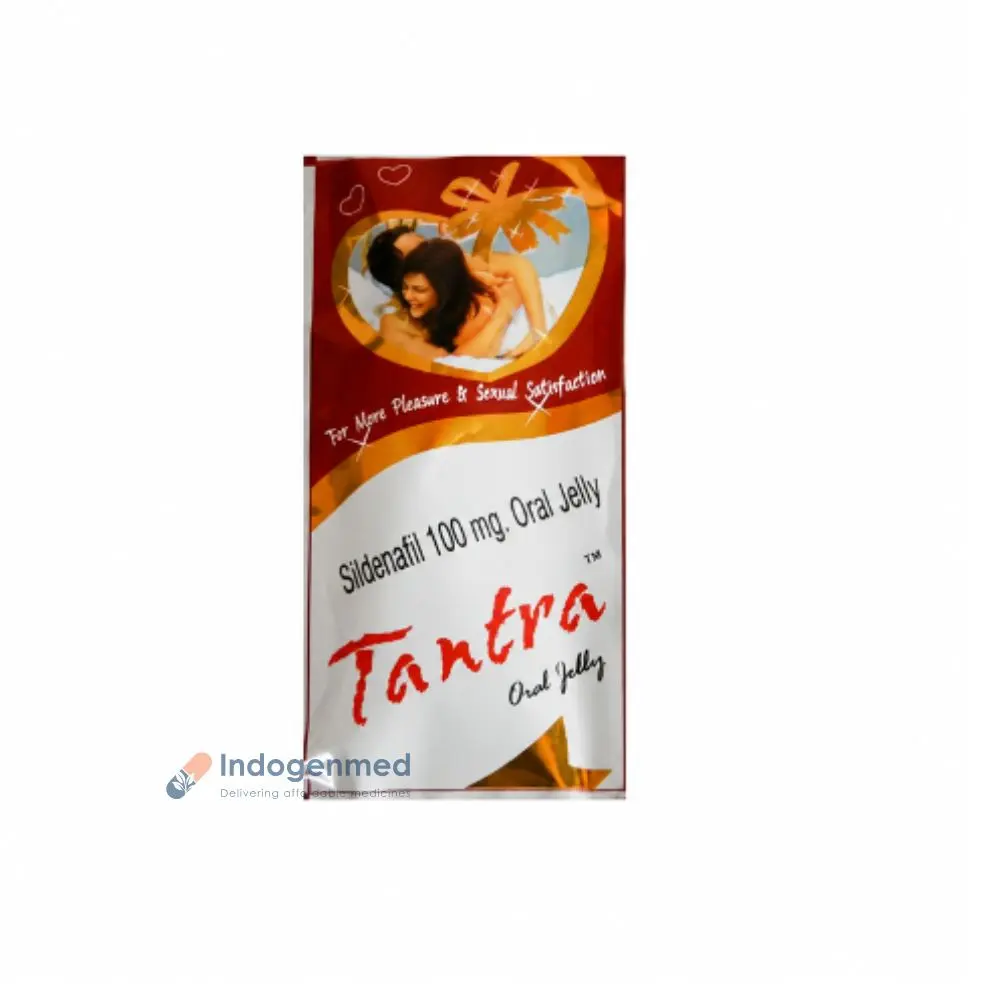
Description
What Is Tantra 5 gm Cream?
Tantra 5 gm Cream contains lidocaine 2.5% and prilocaine 2.5% as the active ingredients in a eutectic emulsion, commonly known as EMLA (Eutectic Mixture of Local Anaesthetics). Each gram of cream contains 25 mg lidocaine and 25 mg prilocaine. The eutectic mixture has a lower melting point than either component alone, allowing both anaesthetics to exist as a liquid oil phase at room temperature, which enhances dermal penetration and provides effective surface anaesthesia of intact skin.
Tantra 5 gm is a topical anaesthetic preparation used to provide local anaesthesia of normal, intact skin before painful procedures such as venepuncture, intravenous cannulation, superficial surgical procedures, and laser treatments. It is also used for topical anaesthesia of genital mucous membranes prior to minor procedures.
The cream must be applied under an occlusive dressing for a sufficient contact time (minimum 60 minutes for most procedures on intact skin) to achieve adequate epidermal and dermal anaesthesia. This distinguishes it from surface anaesthetics that act only on mucous membranes — the occlusive application allows penetration through the full thickness of the epidermis.
Mechanism of Action
Tantra Cream achieves anaesthesia through the combined action of lidocaine and prilocaine, both of which are amide-type local anaesthetics.
Sodium Channel Blockade
Both lidocaine and prilocaine inhibit the initiation and propagation of nerve action potentials by blocking voltage-gated sodium (Na⁺) channels in the axon membrane. In the resting state, sodium channels are closed. During depolarisation, they open rapidly, allowing sodium influx that generates the action potential. Local anaesthetics enter the sodium channel pore from the intracellular side and bind to the channel in its open or inactivated state, stabilising it in a non-conducting configuration. This prevents the rapid sodium influx needed for action potential propagation.
Differential Nerve Block
Small-diameter, unmyelinated C fibres (which conduct pain and temperature) are blocked more readily than larger, myelinated A fibres (which conduct touch, pressure, and proprioception). This means that the cream preferentially blocks pain sensation while partially preserving touch perception, which is clinically useful — patients feel pressure but not the sharp pain of a needle or incision.
Eutectic Mixture and Skin Penetration
The eutectic combination of lidocaine and prilocaine (1:1 by weight) lowers the melting point of the mixture below body temperature, creating a liquid oil phase at room temperature. This liquid phase contains a high concentration of the free base forms of both drugs, which are lipophilic and penetrate the stratum corneum more readily than the ionised forms. Under occlusion, the cream penetrates through the full thickness of the epidermis and into the upper dermis, where it anaesthetises the dermal nerve endings responsible for pain from venepuncture, minor surgery, and similar procedures.
Indications
- Topical anaesthesia of intact skin: Before venepuncture, arterial puncture, intravenous cannulation, lumbar puncture, minor skin surgical procedures (shave biopsies, punch biopsies, removal of molluscum contagiosum), and laser hair removal or laser skin resurfacing
- Topical anaesthesia of genital mucous membranes: Before minor genital surgical procedures (removal of condylomata acuminata, minor vulvar procedures); requires a shorter application time (5–10 minutes) and smaller dose due to faster mucous membrane absorption
- Surgical pre-treatment: Application before split-skin graft harvesting and other procedures on intact skin requiring superficial anaesthesia
Dosage and Administration
Standard skin application (adults and children ≥3 months): Apply approximately 1.5–2 g per 10 cm² of skin under an occlusive dressing for a minimum of 60 minutes (1–2 hours for optimal effect). Remove the dressing and wipe away the cream immediately before the procedure. The anaesthetic effect persists for 1–2 hours after removal.
Large area procedures: Up to 60 g may be applied over up to 600 cm² for 1–5 hours in adults. Do not exceed recommended application areas or times; wider areas and longer contact times increase systemic absorption.
Genital mucous membranes (adults): Apply approximately 1–2 g per 10 cm² for 5–10 minutes without occlusion for minor procedures. Do not apply to mucous membranes for more than 10 minutes.
Children: Doses are based on age and weight. The maximum recommended dose for a child aged 3–11 months is 1 g over 10 cm² for no more than 1 hour; for children aged 1–5 years, 2 g over 20 cm² for 1 hour; for children 6–11 years, 10 g over 100 cm² for 1–4 hours. Methaemoglobinaemia risk is higher in infants (see Warnings).
How to apply: Clean and dry the skin. Apply a thick layer of cream (do not rub in), cover with an occlusive dressing, and leave for the recommended time. Remove the dressing, wipe off the cream, and proceed with the procedure.
Contraindications
- Hypersensitivity to lidocaine, prilocaine, any other amide-type local anaesthetic, or any excipient
- Congenital or idiopathic methaemoglobinaemia
- Infants under 3 months (risk of methaemoglobinaemia due to immature enzyme systems)
- Infants 3–12 months receiving concurrent treatment with methaemoglobin-inducing drugs (see Warnings)
- Application to open wounds, mucous membranes (outside indicated uses), or inflamed or damaged skin
- Application near the eyes (may cause corneal irritation)
Warnings and Precautions
Methaemoglobinaemia
Prilocaine is metabolised to o-toluidine, which can oxidise haemoglobin to methaemoglobin, reducing the oxygen-carrying capacity of the blood. In healthy adults, the small amounts formed at clinical doses are rapidly reduced back to haemoglobin by NADH-methaemoglobin reductase. However, this enzyme system is immature in neonates and young infants, making them susceptible to clinically significant methaemoglobinaemia even at low doses. Infants under 3 months must not receive this product. Infants under 12 months must not receive it concurrently with drugs that also cause methaemoglobinaemia (sulfonamides, dapsone, nitrites, phenobarbitone, phenytoin, primaquine). Patients with glucose-6-phosphate dehydrogenase (G6PD) deficiency, congenital methaemoglobinaemia, or cardiac or pulmonary compromise are also at increased risk.
Systemic Absorption and Toxicity
Although this is a topical formulation, meaningful systemic absorption can occur, especially with large application areas, prolonged contact time, broken or diseased skin, or mucous membrane application. Systemic local anaesthetic toxicity manifests as central nervous system effects (circumoral numbness, light-headedness, visual disturbances, tremor, convulsions) followed by cardiovascular effects (bradycardia, hypotension, cardiac arrest) at very high plasma concentrations. Avoid application to damaged skin, do not exceed recommended dose and application time, and supervise children closely.
Adverse Effects
- Local (common): Transient blanching (vasoconstriction), erythema, and oedema at the application site — these are expected pharmacological effects and resolve spontaneously after the cream is removed
- Local (less common): Itching, burning sensation, skin rash at application site
- Systemic (rare, with excessive doses or large areas): Methaemoglobinaemia (see above), CNS excitation or depression, cardiovascular effects
- Eye contact: Corneal irritation, conjunctival hyperaemia — rinse immediately with water if contact occurs
Drug Interactions
Methaemoglobin-Inducing Drugs
The risk of prilocaine-induced methaemoglobinaemia is additive with other drugs that cause methaemoglobinaemia. These include sulfonamide antibiotics, dapsone, primaquine, nitrites, phenobarbitone, and phenytoin. This interaction is clinically significant particularly in infants and in patients receiving therapeutic doses of these drugs.
Class I and III Antiarrhythmics
Lidocaine is itself a class Ib antiarrhythmic. Combined use with other Class I antiarrhythmics (mexiletine, flecainide) or Class III agents (amiodarone) may have additive cardiac effects, including additive suppression of cardiac excitability. This interaction is of theoretical concern at standard topical doses but becomes relevant if systemic absorption is increased (large areas, damaged skin).
Storage
Store Tantra 5 gm Cream below 30°C. Do not freeze. Keep the tube tightly closed when not in use. Keep out of reach of children. Do not use after the expiry date marked on the tube and carton.
Related Products
- Micogel 2 Gel (Miconazole — topical antifungal)
- Panthegel 5 gm Gel (Panthenol — skin healing gel)
- Voltaflam 50 mg Tablets (Diclofenac — systemic pain relief)
- Ketorol 10 mg Tablets (Ketorolac — analgesic)
References
- DailyMed. Lidocaine and prilocaine cream — prescribing information (EMLA). U.S. National Library of Medicine. Available at: https://dailymed.nlm.nih.gov/dailymed/
- MedlinePlus. Lidocaine and Prilocaine Topical. U.S. National Library of Medicine. Available at: https://medlineplus.gov/druginfo/meds/a601087.html
- Mayo Clinic. Lidocaine and Prilocaine (Topical Route) — Description and Brand Names. Available at: https://www.mayoclinic.org/
- Taddio A, Ohlsson A, Einarson TR, Stevens B, Koren G. A systematic review of lidocaine-prilocaine cream (EMLA) in the treatment of acute pain in neonates. Pediatrics. 1998;101(2):E1. PMID: 9445532
- UK Electronic Medicines Compendium. EMLA 5% Cream — Summary of Product Characteristics. Available at: https://www.medicines.org.uk/emc/product/723
Reviews
There are no reviews yet.