Description
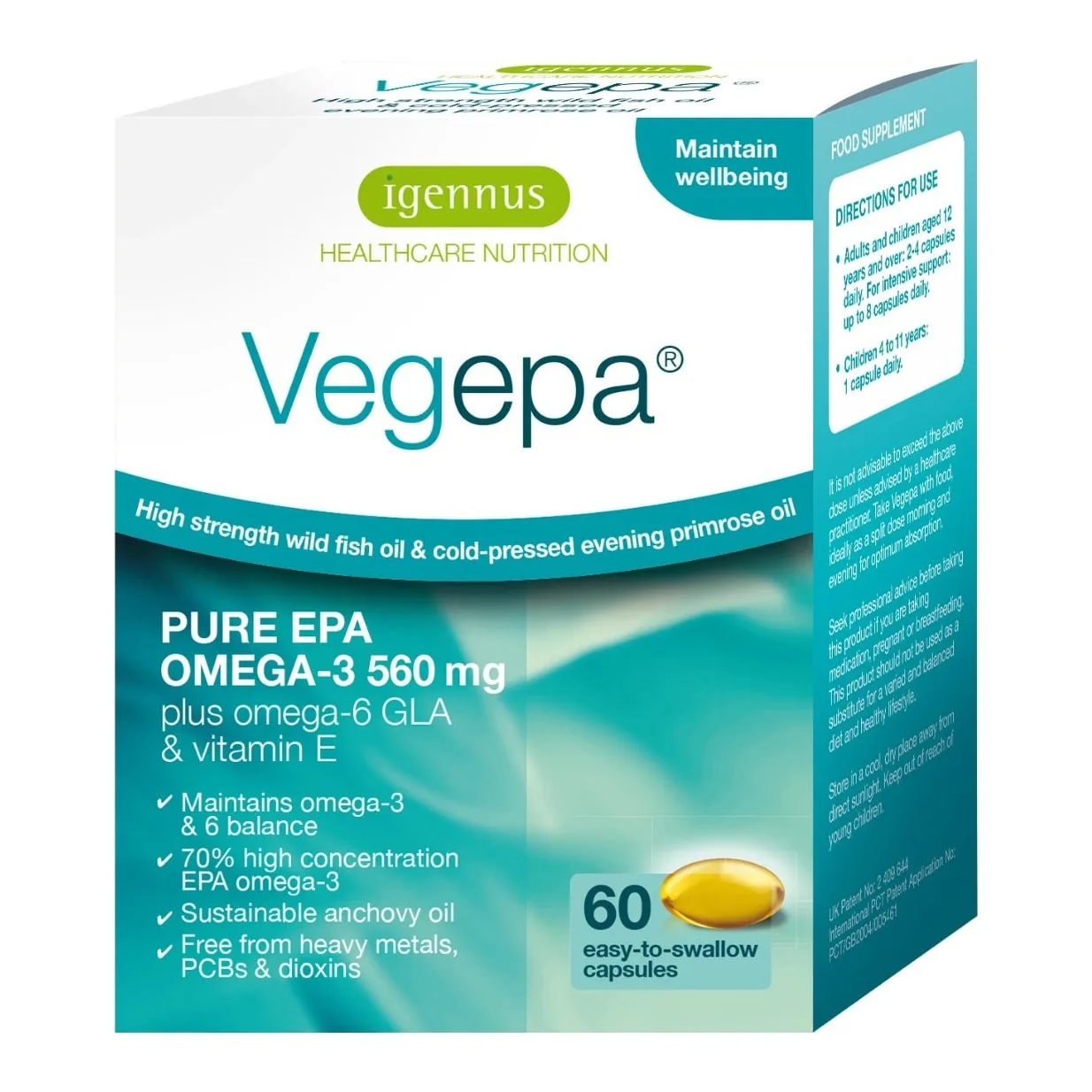
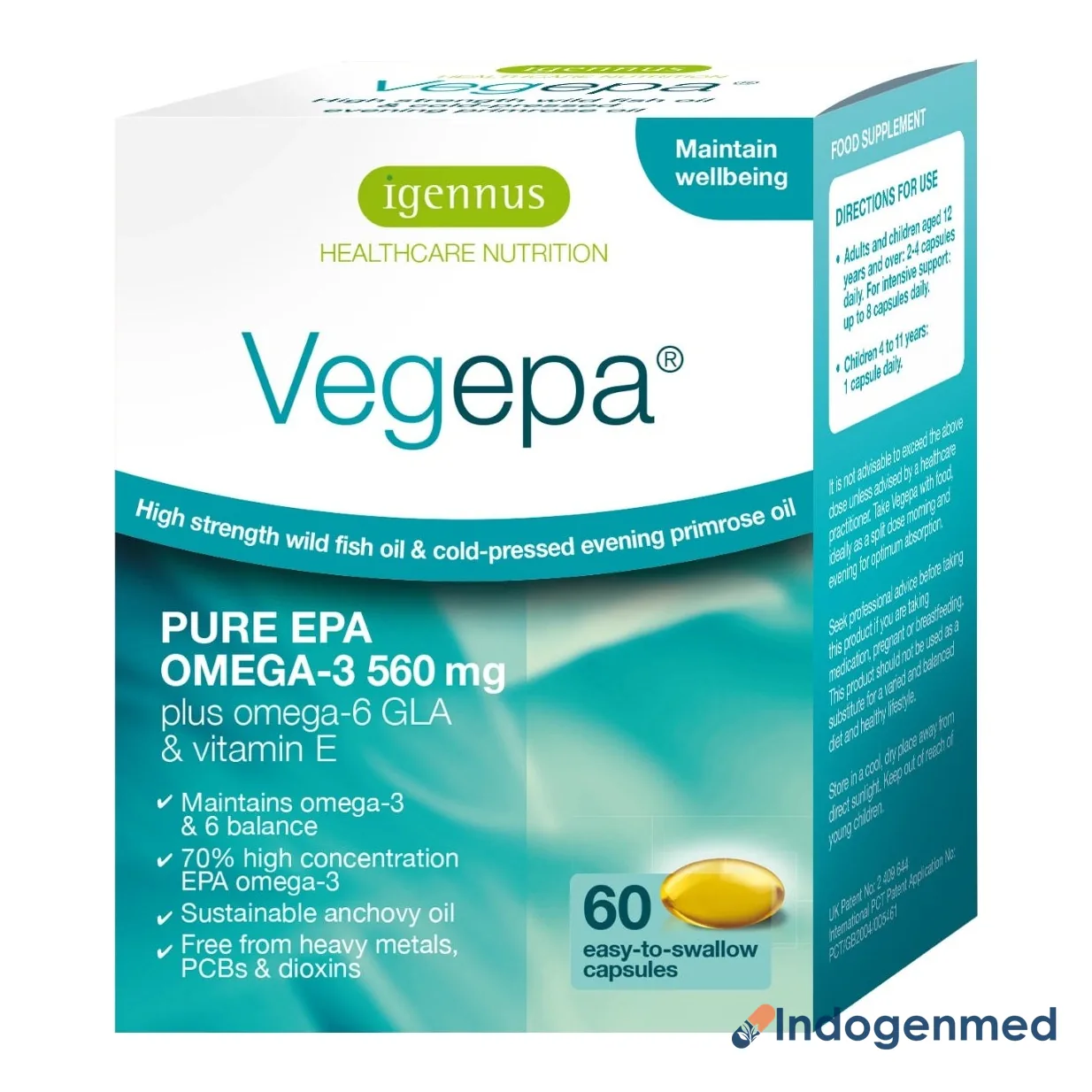
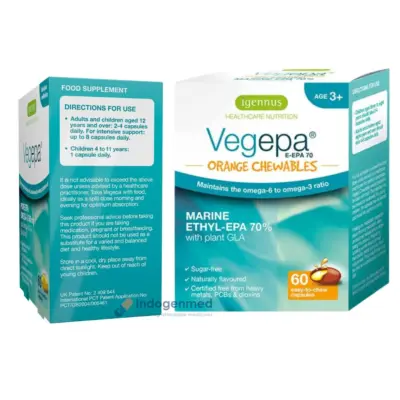
What Is Vegepa Omega 560 mg Capsules?
Vegepa Omega 560 mg Capsules contain a high-EPA (eicosapentaenoic acid) omega-3 formulation providing 280 mg of ultra-pure EPA per capsule in combination with 80 mg of cold-pressed evening primrose oil (providing gamma-linolenic acid, GLA). Unlike standard fish oil products that combine EPA and DHA in roughly equal proportions, Vegepa is specifically enriched in EPA — the omega-3 fatty acid with the strongest evidence for cardiovascular risk reduction, anti-inflammatory activity, and neurological benefit — while including GLA to further support membrane fluidity and anti-inflammatory pathways. Each capsule provides 280 mg EPA from fish oil plus 80 mg GLA from evening primrose oil in a molecularly distilled, pharmaceutical-grade formulation.
EPA and GLA are complementary anti-inflammatory omega fatty acids that work synergistically through shared and complementary pathways. EPA competes with arachidonic acid for cyclooxygenase and lipoxygenase enzyme pathways, reducing synthesis of pro-inflammatory eicosanoids (prostaglandins, leukotrienes) and generating anti-inflammatory resolvins and protectins. GLA is converted to dihomo-gamma-linolenic acid (DGLA), which produces the anti-inflammatory prostaglandin E1 (PGE1) and competitively inhibits arachidonic acid metabolism. Together they provide broad-spectrum reduction of inflammatory mediator load in a range of inflammatory and cardiovascular conditions.
Mechanism of Action
EPA and Its Anti-Inflammatory Cascades
Eicosapentaenoic acid (EPA, 20:5n-3) is incorporated into cell membrane phospholipids in place of arachidonic acid (AA, 20:4n-6). When cell membranes are disrupted by inflammatory stimuli, the balance between EPA and AA in the membrane determines which class of eicosanoids is produced. EPA-derived eicosanoids (the 3-series prostaglandins, 5-series leukotrienes) are substantially less pro-inflammatory than the AA-derived 2-series prostaglandins and 4-series leukotrienes. In addition, EPA is the substrate for the synthesis of E-series resolvins and protectins — specialised pro-resolving mediators (SPMs) that actively promote the resolution of inflammation, reduce neutrophil recruitment, and facilitate macrophage clearance of inflammatory debris.
GLA and Prostaglandin E1 Synthesis
Gamma-linolenic acid (GLA, 18:3n-6) from evening primrose oil is elongated to dihomo-gamma-linolenic acid (DGLA, 20:3n-6). DGLA is the direct precursor of prostaglandin E1 (PGE1) — a vasodilatory, anti-aggregatory, anti-inflammatory prostaglandin that opposes the pro-inflammatory prostaglandin E2 (PGE2) derived from arachidonic acid. DGLA also competitively inhibits the conversion of arachidonic acid by cyclooxygenase and lipoxygenase, further reducing synthesis of pro-inflammatory AA-derived eicosanoids. This dual mechanism — producing anti-inflammatory PGE1 while reducing pro-inflammatory eicosanoid synthesis — underpins the anti-inflammatory utility of GLA supplementation.
Cardiovascular Effects of High-EPA Formulations
High-dose EPA (as icosapent ethyl) has demonstrated statistically significant and clinically meaningful cardiovascular event reduction in statin-treated patients with elevated triglycerides and established cardiovascular disease or high cardiovascular risk (REDUCE-IT trial, Bhatt 2019). The mechanisms include: triglyceride reduction (EPA reduces hepatic VLDL synthesis and increases triglyceride clearance); anti-aggregatory effects on platelets; anti-arrhythmic membrane stabilisation; plaque stabilisation through EPA incorporation into arterial wall phospholipids; and reduction in inflammatory markers (CRP, IL-6). The REDUCE-IT results support EPA as an independent cardiovascular therapeutic rather than merely a nutritional supplement in high-risk patients.
Indications
Cardiovascular Risk Reduction
Vegepa Omega 560 mg is used as a nutritional supplement to support cardiovascular health — reducing triglycerides, reducing platelet aggregation, and providing anti-inflammatory effects in the arterial wall. It is used alongside dietary modification, statin therapy, and other evidence-based cardiovascular risk reduction strategies in patients with hypertriglyceridaemia, metabolic syndrome, or established cardiovascular disease. High-dose EPA has been shown to reduce major adverse cardiovascular events (MACE) in statin-treated patients with elevated triglycerides in the REDUCE-IT trial.
Inflammatory Conditions
The combined EPA + GLA formulation supports the management of chronic inflammatory conditions where omega-6/omega-3 imbalance contributes to the inflammatory load. These include rheumatoid arthritis (omega-3 supplementation reduces joint tenderness and morning stiffness), inflammatory bowel disease (EPA reduces mucosal inflammation), and atopic dermatitis / eczema (GLA supplementation has shown benefit in improving skin barrier function and reducing itch). Vegepa is not a substitute for anti-inflammatory drug therapy but provides complementary nutritional support.
Neurological and Cognitive Support
EPA plays an important role in neuronal membrane function and neuroinflammatory regulation. High-EPA formulations have been studied in depression, attention deficit hyperactivity disorder (ADHD), and cognitive decline. Meta-analyses of omega-3 supplementation in depression show statistically significant benefit for EPA-dominant (EPA ≥60% of total omega-3) formulations compared to DHA-dominant or balanced EPA+DHA preparations. Vegepa’s high-EPA composition is aligned with the omega-3 formulation profile showing the strongest evidence in this area.
Evening Primrose Oil and Hormonal / Skin Applications
Evening primrose oil (EPO) providing GLA has been used in premenstrual syndrome, mastalgia (cyclical breast pain), and menopausal symptoms. GLA supports membrane phospholipid composition and prostaglandin balance, which may contribute to improvement of premenstrual and menopausal symptoms. EPO is also used for eczema and atopic dermatitis — supplementation may improve skin barrier integrity, reduce transepidermal water loss, and reduce pruritus in some patients.
Dosage and Administration
Standard adult dose: 4 capsules daily (providing 1120 mg EPA + 320 mg GLA), taken as 2 capsules twice daily with meals. The standard 4-capsule daily dose is based on the dosing used in clinical studies on the EPA + GLA combination.
Cardiovascular indication (high-dose EPA): Higher doses of pure EPA (up to 4 g/day as icosapent ethyl) are used in pharmacological cardiovascular risk reduction — this exceeds the standard Vegepa supplementation dose. Consult a physician for pharmaceutical-grade high-dose EPA in this context.
Administration: Take with meals to maximise absorption (omega-3 fatty acids are absorbed from the small intestine in the presence of dietary fat) and to minimise fishy burping. Swallow capsules whole with water.
Duration: Beneficial effects on lipids, inflammation markers, and clinical outcomes take 8–12 weeks to manifest. Supplementation should be maintained for a minimum of 3 months before assessing response.
Children: Not recommended for children without medical supervision.
Contraindications
- Known allergy to fish, fish oil, or evening primrose oil.
- Known hypersensitivity to any excipient in the capsule formulation.
- Allergy to gamma-linolenic acid or related botanical ingredients.
Warnings and Precautions
Anticoagulants and antiplatelet agents: EPA and GLA both reduce platelet aggregation. At high doses (≥3 g/day EPA+DHA combined), omega-3 supplementation may prolong bleeding time and increase the risk of clinically significant bleeding when combined with anticoagulants (warfarin, DOACs) or antiplatelet agents (aspirin, clopidogrel). Monitor INR in patients taking warfarin if high-dose omega-3 supplementation is started. The doses in Vegepa at standard intake are unlikely to produce clinically significant anticoagulation in most patients, but caution is warranted perioperatively and with concurrent anticoagulation.
Fish allergy: Vegepa is derived from fish oil and is not suitable for patients with clinically significant fish allergy. Patients with seafood allergy should discuss suitability with their physician before starting omega-3 fish oil supplementation.
Pregnancy and breastfeeding: Omega-3 supplementation during pregnancy and breastfeeding is generally considered safe and may provide benefit for fetal neurodevelopment. However, fish oil products may contain trace contaminants — only molecularly distilled, pharmaceutical-grade omega-3 preparations should be used in pregnancy. Consult a healthcare provider before starting supplementation during pregnancy.
Glycaemic effects: High-dose omega-3 supplementation has occasionally been associated with modest increases in fasting blood glucose in patients with type 2 diabetes — monitor glycaemic control in diabetic patients starting high-dose omega-3 therapy.
Adverse Effects
- Common: Fishy odour/taste, fishy burping (eructation), nausea — minimised by taking with food and refrigerating capsules.
- Uncommon: Loose stools, diarrhoea (at high doses), dyspepsia.
- Rare: Prolonged bleeding time (at very high doses), mild increase in LDL cholesterol (noted with some EPA+DHA preparations, less significant with EPA-only products).
Drug Interactions
- Anticoagulants (warfarin, acenocoumarol): Additive antiplatelet/anticoagulant effect — monitor INR with high-dose omega-3 supplementation.
- Antiplatelet agents (aspirin, clopidogrel, dipyridamole): Combined antiplatelet effect — increased bleeding risk perioperatively at high omega-3 doses.
- Antihypertensive drugs: Omega-3 supplementation has mild blood-pressure-lowering effect — may augment antihypertensive therapy; monitor blood pressure.
- Other lipid-lowering drugs (statins, fibrates): No significant pharmacokinetic interaction; combined use is clinically appropriate and evidence-based for cardiovascular risk reduction.
Storage
Store below 25°C in a cool, dry place away from direct sunlight. Refrigeration (2–8°C) is recommended to minimise oxidation and preserve freshness of omega-3 fatty acids. Keep out of reach of children. Do not use after the expiry date printed on the packaging. Discard if the capsules develop a strongly rancid odour.
Related Products
For standard EPA + DHA omega-3 supplementation, see Omega 620 mg Capsules. For omega-3 combined with selenium supplementation, see Omega S 620 mg Capsules. For weight management alongside metabolic syndrome, see Obelit 120 mg Tablets (orlistat).
References
- National Library of Medicine MedlinePlus. Omega-3 Fatty Acids. Available at: https://medlineplus.gov/druginfo/meds/a607065.html
- Mayo Clinic. Fish Oil (Oral Route). Available at: https://www.mayoclinic.org
- Bhatt DL, Steg PG, Miller M, et al. Cardiovascular risk reduction with icosapent ethyl for hypertriglyceridemia (REDUCE-IT). N Engl J Med. 2019;380(1):11–22. PubMed PMID: 30415628
- Skulas-Ray AC, Wilson PWF, Harris WS, et al. Omega-3 fatty acids for the management of hypertriglyceridemia: a science advisory from the American Heart Association. Circulation. 2019;140(12):e673–e691. PubMed PMID: 31422671
- Furse S, de la Serna JL. Lipid composition of biological membranes: implications for structure and function. Biochim Biophys Acta Biomembr. 2021;1863(3):183470. PubMed PMID: 33130120

Reviews
There are no reviews yet.