Description
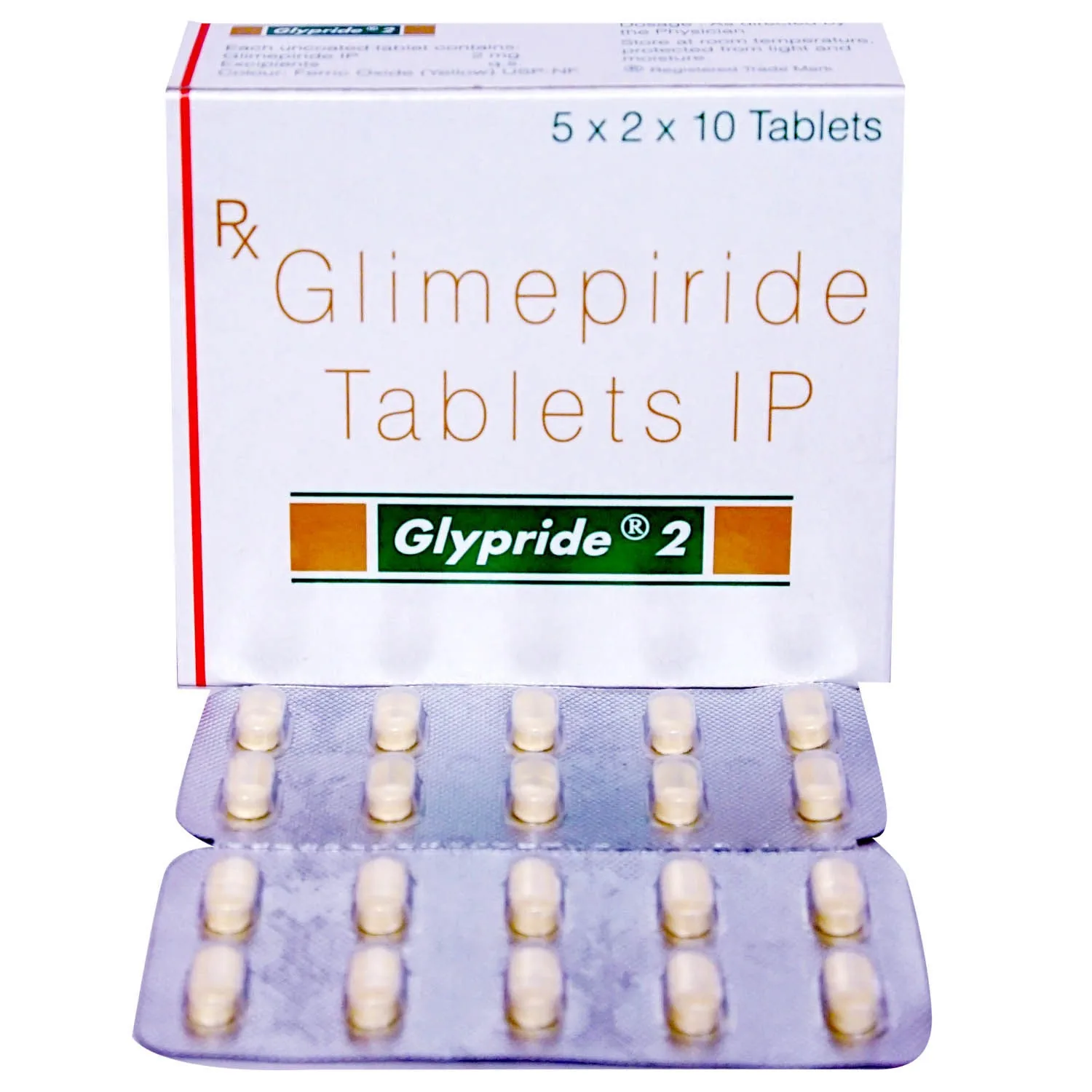
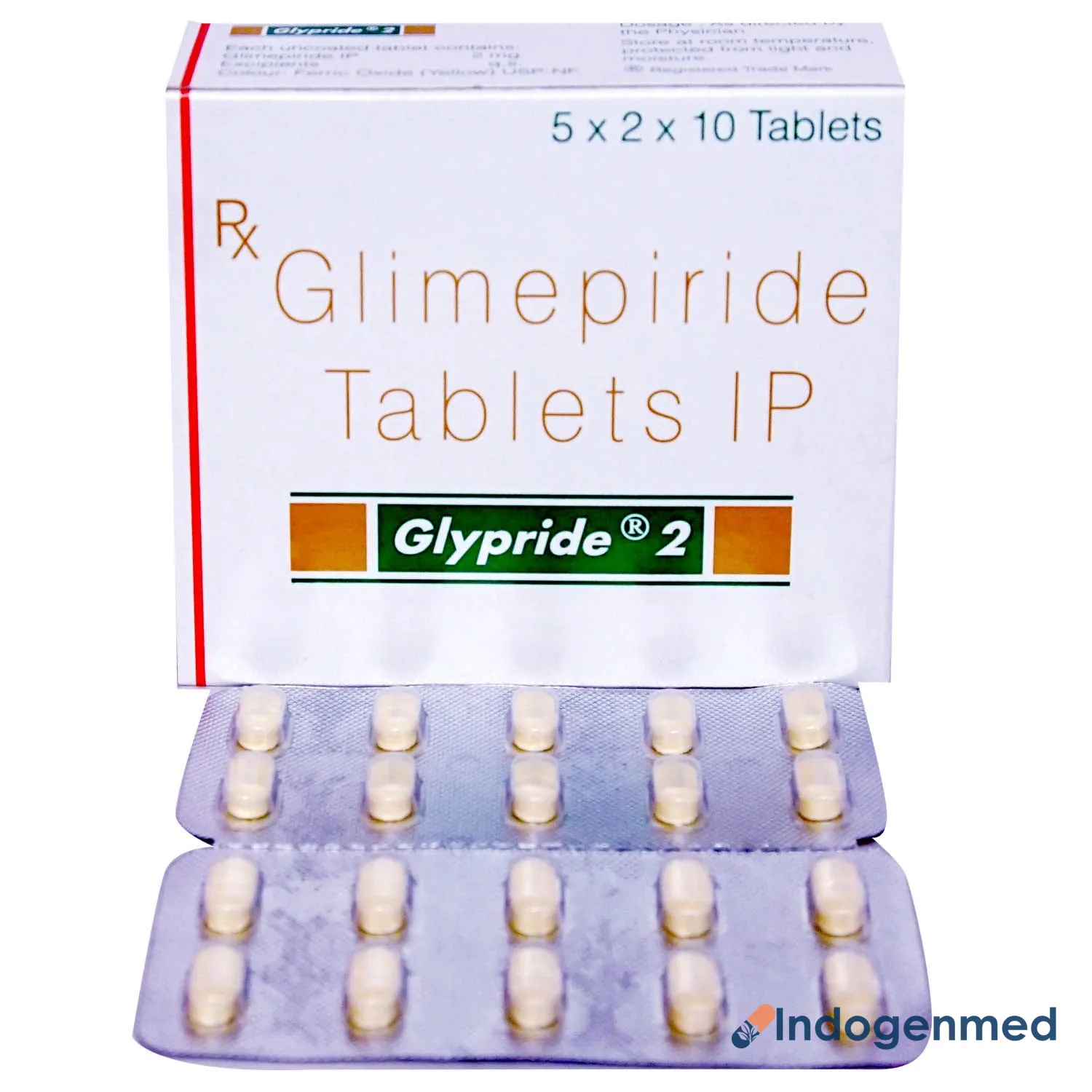
Glypride 2 Tablet — Glimepiride 2 mg
Glypride 2 Tablet contains glimepiride 2 mg as the active ingredient. Glimepiride is a third-generation sulphonylurea oral antidiabetic used in the management of type 2 diabetes mellitus in adults. The 2 mg strength is a commonly prescribed starting or early titration dose, appropriate for patients newly initiated on glimepiride monotherapy or for those transitioning from a lower 1 mg dose who require modest escalation of glycaemic control. Glimepiride lowers blood glucose primarily by stimulating pancreatic insulin secretion and secondarily by enhancing peripheral insulin sensitivity.
Composition of Glypride 2 Tablet
Each tablet of Glypride 2 contains:
- Glimepiride — 2 mg (active ingredient)
- Typical inactive ingredients: lactose monohydrate, microcrystalline cellulose, povidone, croscarmellose sodium, magnesium stearate; film coat: hypromellose, polyethylene glycol, titanium dioxide (tablets are characteristically colour-coded — green for 2 mg in some brands to distinguish from other strengths)
Glimepiride is a sulphonyl-urea derivative with the chemical name 1-[[4-[2-(3-ethyl-4-methyl-2-oxo-3-pyrroline-1-carboxamido)ethyl]phenyl]sulfonyl]-3-(trans-4-methylcyclohexyl)urea. Molecular formula: C24H34N4O5S, molecular weight 490.62 g/mol.
How Glimepiride Works — Mechanism of Action
Glimepiride reduces blood glucose through two complementary mechanisms: direct pancreatic stimulation of insulin secretion and extrapancreatic improvement of insulin sensitivity.
Pancreatic Mechanism — KATP Channel Blockade
Glimepiride binds selectively to the sulphonylurea receptor 1 (SUR1) protein, which forms part of the ATP-sensitive potassium (KATP) channel complex on pancreatic beta-cell membranes. Binding closes these channels, blocking the efflux of potassium ions from the beta cell. The resulting membrane depolarisation opens voltage-dependent calcium channels (L-type VDCCs), and the resulting rise in intracellular calcium triggers fusion of insulin secretory granules with the cell membrane — releasing insulin into the portal circulation.
What distinguishes glimepiride from earlier sulphonylureas (glibenclamide/glyburide, chlorpropamide) is its dissociation kinetics: glimepiride binds and unbinds the SUR1 receptor more rapidly and with lower binding affinity, resulting in a more glucose-dependent pattern of insulin release. This reduces the risk of excessive insulin release during fasting or between meals, which translates into a lower incidence of hypoglycaemia compared with older agents in the class.
Extrapancreatic Mechanism — Peripheral Insulin Sensitisation
Glimepiride exerts meaningful extrapancreatic effects, increasing insulin sensitivity in skeletal muscle and adipose tissue. The key mechanisms include:
- Upregulation and translocation of GLUT4 transporters to the plasma membrane of skeletal muscle and fat cells, facilitating glucose uptake independent of additional insulin secretion
- Glycogen synthase activation in skeletal muscle, increasing glycogen synthesis and glucose disposal
- Modest reduction in hepatic glucose production (gluconeogenesis and glycogenolysis)
These combined actions allow glimepiride to achieve effective glycaemic control at lower insulin concentrations than might be required with purely pancreatic-targeted agents, contributing to its relatively favourable weight profile among sulphonylureas.
Pharmacokinetics
Absorption
Glimepiride is rapidly and completely absorbed from the gastrointestinal tract following oral administration. Oral bioavailability is virtually 100%. Peak plasma concentrations are achieved in approximately 2 to 3 hours. Food has no clinically meaningful effect on the extent of absorption, though it may slightly delay the rate; glimepiride is conventionally taken with or just before the first main meal of the day to coordinate its insulin-stimulating effect with carbohydrate intake.
Distribution
Glimepiride is extensively bound to plasma proteins, with protein binding exceeding 99%, primarily to albumin. This high protein binding means relatively few drug interactions arise from competition for protein binding sites, since displacement from albumin rarely produces clinically significant changes at standard doses. Volume of distribution is approximately 8.8 litres.
Metabolism
Glimepiride is completely metabolised in the liver by CYP2C9. The principal metabolite is cyclohexyl hydroxy methyl glimepiride (M1), which retains approximately one-third of the parent compound’s pharmacological activity. M1 is further oxidised to M2 (cyclohexyl carboxy methyl glimepiride), an inactive metabolite. Genetic polymorphisms in CYP2C9 (poor metabolisers) and concurrent CYP2C9 inhibitors can substantially raise glimepiride plasma concentrations.
Elimination
Approximately 60% of an administered dose is eliminated in urine (as M1 and M2 metabolites) and 40% in faeces. The plasma elimination half-life of glimepiride is approximately 5 to 8 hours, supporting its once-daily dosing schedule. The glucose-lowering effect persists for approximately 24 hours after a single dose. Accumulation in patients with renal impairment requires careful attention to dose selection.
Uses of Glypride 2 Tablet
Glypride 2 Tablet is indicated for:
- Type 2 diabetes mellitus in adults: As monotherapy when diet and exercise alone are insufficient and when metformin is contraindicated or not tolerated. As add-on therapy to metformin when monotherapy with either agent alone does not achieve HbA1c target. The 2 mg dose is the standard starting or early-escalation dose, suitable for newly initiated patients or those stepping up from 1 mg.
- Combination therapy: Glimepiride 2 mg can be combined with metformin, pioglitazone, DPP-4 inhibitors, or SGLT-2 inhibitors to achieve complementary glycaemic control via different mechanisms. It may also be used with basal insulin in selected patients, though this combination requires careful hypoglycaemia monitoring.
- Bridging to dose escalation: In patients titrating from glimepiride 1 mg toward 4 mg, the 2 mg dose represents an intermediate step, allowing gradual escalation with monitoring for hypoglycaemia and blood glucose response at each interval.
Dosage and Administration
Starting Dose
- For patients initiating glimepiride therapy: 1 mg once daily is the conventional starting dose in most guidelines
- For patients who are initiating at a slightly higher level based on clinical assessment (e.g., HbA1c 8–9%): 2 mg once daily may be used as the starting dose under physician guidance
Standard Dosing with Glypride 2
- 2 mg once daily taken with or just before the first main meal of the day
- Dose titration in increments of 1–2 mg every 1–2 weeks based on blood glucose and HbA1c response
- Maximum dose: 6–8 mg per day (varies by guideline)
- Doses above 4–6 mg rarely provide substantial additional benefit; combination therapy is preferred at that stage
Renal Impairment
Glimepiride is contraindicated in severe renal impairment (eGFR below 30 mL/min/1.73 m²). In moderate renal impairment, begin at 1 mg once daily and titrate with caution; the extended half-life due to reduced metabolite clearance increases hypoglycaemia risk. Regular renal function monitoring is essential in all patients with diabetes.
Hepatic Impairment
Glimepiride is contraindicated in severe hepatic impairment. In moderate hepatic disease, reduce the dose and monitor closely, as impaired CYP2C9 metabolism prolongs glimepiride action.
Elderly Patients
Initiate at 1 mg and titrate cautiously. Hypoglycaemia in elderly patients is a serious risk — it may be prolonged, undetected, or present atypically as falls or confusion. Many clinicians prefer agents with lower hypoglycaemia risk (DPP-4 inhibitors, SGLT-2 inhibitors) in elderly patients.
Administration Notes
Glypride 2 Tablets should be swallowed whole with a sufficient quantity of fluid, with or immediately before the first main meal of the day. If a meal is skipped, the tablet dose should also be skipped to avoid hypoglycaemia. Never take glimepiride on an empty stomach with no intention to eat.
Side Effects of Glypride 2 Tablet
Common Side Effects
- Hypoglycaemia — the most clinically significant adverse effect. At 2 mg, the risk is lower than at higher doses but remains present, especially with missed meals, excess exercise, or concurrent interacting drugs. Symptoms include sweating, tremor, palpitations, anxiety, hunger, dizziness, confusion, and in severe cases, unconsciousness or seizures
- Gastrointestinal upset: Nausea, vomiting, abdominal discomfort — usually mild and transient at initiation
- Weight gain — class effect of sulphonylureas; glimepiride produces somewhat less weight gain than older agents in this class
- Headache and dizziness
Uncommon and Rare Side Effects
- Allergic reactions: Rash, urticaria, pruritus — usually mild. Rarely: Stevens-Johnson syndrome, toxic epidermal necrolysis (discontinue immediately if severe skin reactions develop)
- Haematological: Thrombocytopenia, agranulocytosis, haemolytic anaemia — rare
- Hepatotoxicity: Elevated liver enzymes, cholestatic jaundice — rare
- Hyponatraemia: SIADH — rare class effect
- Visual disturbance: Transient blurred vision due to rapid changes in blood glucose affecting lens hydration
Precautions and Warnings
Hypoglycaemia
Patient education about hypoglycaemia recognition and management is mandatory before initiating glimepiride. Fast-acting glucose (glucose tablets, fruit juice, sugar) should always be available. The 2 mg dose carries a moderate risk; risk increases with dose escalation, irregular meals, alcohol intake, strenuous unplanned exercise, drug interactions, and in elderly or renally impaired patients.
G6PD Deficiency
Sulphonylureas can cause haemolytic anaemia in patients with glucose-6-phosphate dehydrogenase (G6PD) deficiency. Consider an alternative agent.
Surgical Procedures
Withhold glimepiride around planned surgery, particularly if fasting is required. Switch to insulin if prolonged fasting or significant physiological stress is anticipated.
Alcohol
Alcohol can enhance the hypoglycaemic effect of glimepiride, especially on an empty stomach. Advise patients to take alcohol only with food and in moderation.
Pregnancy and Breastfeeding
Glimepiride is contraindicated in pregnancy and breastfeeding. Switch to insulin for the management of diabetes in pregnant or breastfeeding women.
Drug Interactions
- CYP2C9 inhibitors: Fluconazole, miconazole, clarithromycin, sulfonamides, amiodarone — increase glimepiride exposure and hypoglycaemia risk
- CYP2C9 inducers: Rifampicin, carbamazepine, St John’s Wort — reduce glimepiride plasma levels and may impair glycaemic control
- NSAIDs: Protein binding displacement and CYP2C9 competition may enhance glimepiride effect; monitor blood glucose
- ACE inhibitors and ARBs: May enhance insulin sensitivity; monitor for hypoglycaemia
- Beta-blockers: Blunt adrenergic warning symptoms of hypoglycaemia (tachycardia, tremor); sweating remains as the main detectable warning sign
- Corticosteroids: Antagonise the hypoglycaemic effect; blood glucose may deteriorate during steroid courses
- Thiazide and loop diuretics: May impair insulin secretion and reduce glycaemic control
- Warfarin (coumarin anticoagulants): Potential bidirectional interaction; monitor INR when glimepiride is started or the dose is changed
- Other antidiabetic agents: Additive glucose-lowering effects when combined with insulin, GLP-1 receptor agonists, or SGLT-2 inhibitors; dose adjustment may be needed
Contraindications
- Type 1 diabetes mellitus
- Diabetic ketoacidosis
- Severe renal impairment (eGFR below 30 mL/min/1.73 m²)
- Severe hepatic impairment
- Known hypersensitivity to glimepiride, other sulphonylureas, or sulphonamides
- Pregnancy and breastfeeding
Storage Instructions
Store Glypride 2 Tablets below 30°C. Keep protected from moisture and light. Store in original packaging. Keep out of reach of children. Do not use beyond the expiry date stated on the blister pack or container.
Related Products
Patients managing type 2 diabetes may also find the following products at IndoGenMed useful:
- Glypride 4 Tablet — Glimepiride 4 mg, for patients requiring dose escalation beyond 2 mg for adequate glycaemic control
- Hipres 50 Tablet — Atenolol 50 mg (beta-blocker interaction with glimepiride requires patient awareness of masked hypoglycaemia symptoms)
- Metolar 100 Tablet — Metoprolol succinate 100 mg, another beta-blocker commonly used in diabetic patients with hypertension or cardiovascular disease
- Lipicard Capsule — Fenofibrate 200 mg for dyslipidaemia, a common co-morbidity in type 2 diabetes
- Naprosyn 250 Mg Tablet — Naproxen NSAID (monitor blood glucose when used concurrently with glimepiride)
References
- U.S. Food and Drug Administration. Amaryl (glimepiride) Tablets — Prescribing Information. Sanofi-Aventis. Available at: https://www.accessdata.fda.gov/drugsatfda_docs/label/2009/020496s021lbl.pdf
- MedlinePlus (U.S. National Library of Medicine). Glimepiride. Available at: https://medlineplus.gov/druginfo/meds/a699055.html
- Mayo Clinic. Glimepiride (Oral Route) — Precautions. Available at: https://www.mayoclinic.org/drugs-supplements/glimepiride-oral-route/precautions/drg-20073153
- Electronic Medicines Compendium (UK EMC). Glimepiride 2 mg Tablets — Summary of Product Characteristics. Available at: https://www.medicines.org.uk/emc/search?q=glimepiride+2
- National Center for Biotechnology Information (NCBI). Glimepiride — PubChem Compound Summary (CID 3476). Available at: https://pubchem.ncbi.nlm.nih.gov/compound/Glimepiride
- StatPearls (NCBI Bookshelf). Glimepiride. Available at: https://www.ncbi.nlm.nih.gov/books/NBK559178/



Reviews
There are no reviews yet.