Description
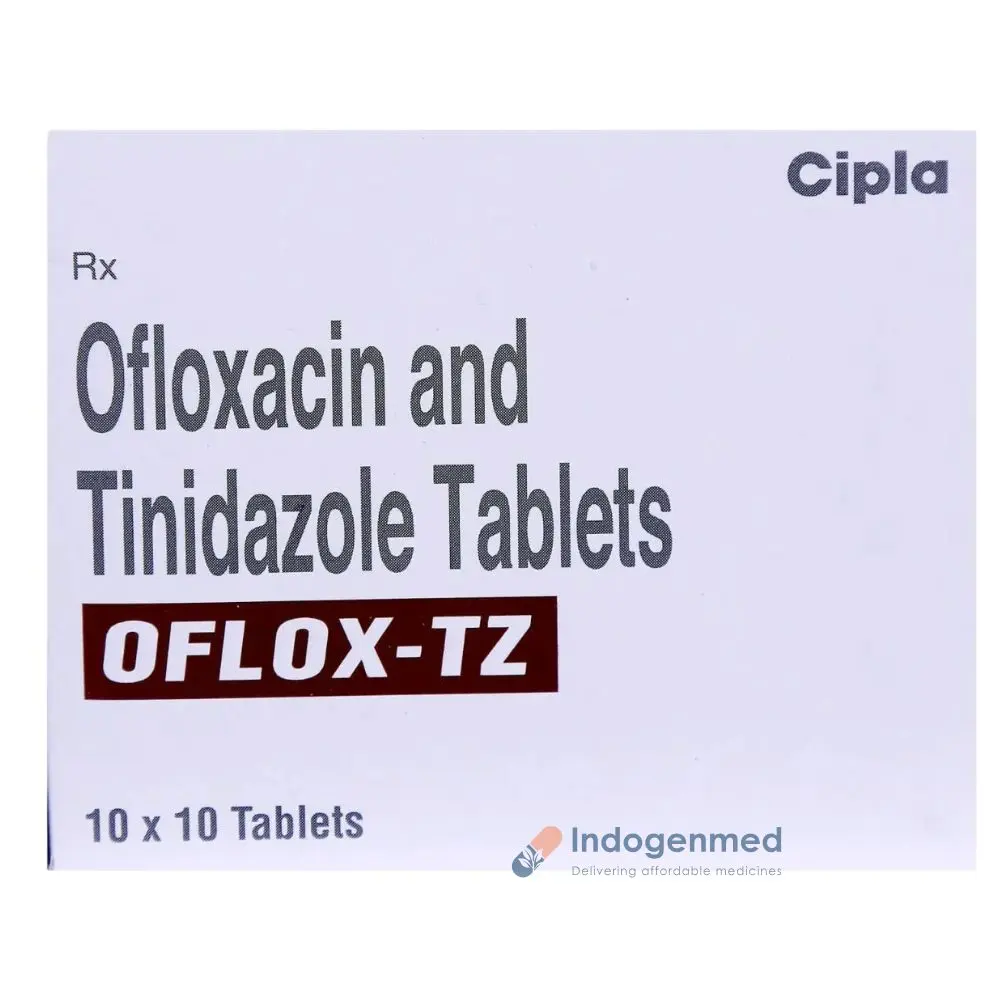
What Is Oflox TZ Tablets?
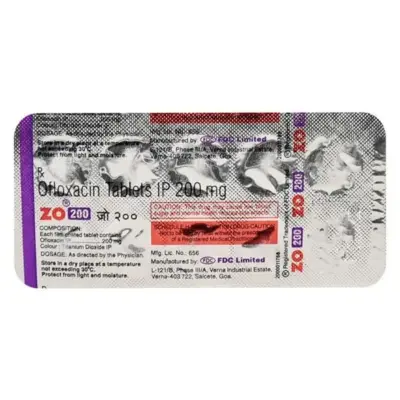
Oflox TZ Tablets is a fixed-dose combination containing ofloxacin 200 mg and tinidazole 200 mg per tablet. The standard pack provides 3 tablets (total ofloxacin 600 mg + tinidazole 600 mg) for a single-day course, though dosing instructions depend on the specific indication. This combination pairs ofloxacin — a second-generation fluoroquinolone antibiotic with broad-spectrum activity against aerobic gram-negative and gram-positive bacteria — with tinidazole, a nitroimidazole antiprotozoal and antibacterial with potent activity against anaerobic bacteria and protozoa (Giardia, Trichomonas, Entamoeba). Together, the two agents cover a wide spectrum of pathogens responsible for mixed infections of the gastrointestinal tract and reproductive tract.
The rationale for combining a fluoroquinolone with a nitroimidazole is to provide concurrent aerobic and anaerobic coverage in conditions where both types of organisms are commonly implicated — particularly in infectious diarrhoea, pelvic inflammatory disease, intra-abdominal infections, and traveller’s diarrhoea. Tinidazole offers superior pharmacokinetics to metronidazole (longer half-life, once-daily or twice-daily dosing) and improved tolerability, while ofloxacin provides reliable activity against enteric pathogens such as Escherichia coli, Shigella, Salmonella, and Campylobacter jejuni.
Mechanism of Action
Ofloxacin: DNA Gyrase and Topoisomerase IV Inhibition
Ofloxacin inhibits two essential bacterial type II topoisomerases: DNA gyrase (topoisomerase II, primarily the target in gram-negative bacteria) and topoisomerase IV (primarily the target in gram-positive bacteria). These enzymes are essential for DNA replication, transcription, repair, and recombination. By forming a stable ternary complex with the enzyme-DNA strand, ofloxacin prevents the re-ligation step of the topoisomerase catalytic cycle, causing irreversible double-strand DNA breaks and rapid bactericidal killing. Ofloxacin is rapidly bactericidal and concentration-dependent — meaning higher peak concentrations relative to MIC correlate with better killing efficacy.
Tinidazole: DNA Damage in Anaerobes and Protozoa
Tinidazole is a pro-drug that undergoes reductive activation only in anaerobic or microaerophilic organisms. In such organisms, the nitro group of tinidazole is reduced by ferredoxin-linked electron transport proteins (particularly pyruvate:ferredoxin oxidoreductase in protozoa and anaerobic bacteria) to generate cytotoxic radical anion intermediates. These reactive nitrogen species cause strand breaks in the pathogen’s DNA, disrupting both replication and transcription and leading to organism death. Aerobic bacteria cannot activate tinidazole, which is why tinidazole has no activity against aerobic bacteria — making its combination with ofloxacin essential for mixed infection management.
Indications
Infectious Diarrhoea and Gastroenteritis
The combination is effective in the treatment of acute infectious diarrhoea caused by mixed bacterial and protozoal pathogens. Ofloxacin covers gram-negative enteropathogens (E. coli, Shigella, Salmonella, Campylobacter) while tinidazole covers Giardia lamblia, Entamoeba histolytica, and anaerobic intestinal bacteria. Together, they are useful in empiric treatment of moderate-to-severe traveller’s diarrhoea where both organisms may be implicated.
Giardiasis
Tinidazole is a first-line single-dose agent for Giardia intestinalis (Giardia lamblia) infection, which causes chronic diarrhoea, bloating, and malabsorption. The ofloxacin component provides additional antibacterial cover against co-occurring bacterial dysentery, making the combination appropriate in settings where concurrent bacterial and protozoal infections are common.
Amoebiasis
Tinidazole is effective against Entamoeba histolytica — the causative agent of amoebic dysentery and amoebic liver abscess. Combined with ofloxacin for mixed infections or those with risk of secondary bacterial superinfection, Oflox TZ is used in the treatment of intestinal and invasive amoebiasis.
Pelvic Inflammatory Disease (PID)
Pelvic inflammatory disease involves mixed aerobic (Neisseria gonorrhoeae, Chlamydia trachomatis) and anaerobic pathogens (Bacteroides fragilis, Prevotella spp.) ascending from the lower genital tract. Ofloxacin provides coverage for Neisseria and Chlamydia (fluoroquinolone activity), while tinidazole covers anaerobes. This combination is used as part of outpatient PID management regimens — though local fluoroquinolone resistance in Neisseria gonorrhoeae is an important consideration.
Urinary Tract Infections with Mixed Flora
Ofloxacin is effective for uncomplicated and complicated urinary tract infections caused by susceptible gram-negative pathogens. The combination is particularly useful when anaerobic or mixed gram-negative/anaerobic UTI is suspected.
Dosage and Administration
Infectious diarrhoea / gastroenteritis: Typically ofloxacin 200 mg + tinidazole 600 mg twice daily for 3–5 days, or as directed by the prescribing physician.
Giardiasis: Tinidazole 2 g single dose (may be given as ofloxacin + tinidazole combination for concurrent bacterial coverage).
Amoebiasis: Tinidazole 600–800 mg twice daily for 5 days for intestinal amoebiasis; for amoebic liver abscess, 800 mg three times daily for 5 days.
Pelvic inflammatory disease (outpatient): Ofloxacin 400 mg twice daily plus metronidazole/tinidazole 500 mg twice daily for 14 days (CDC PID guidelines).
Administration: Take with food to reduce gastrointestinal side effects. Swallow whole with plenty of water. Avoid taking with milk or antacids within 2 hours of fluoroquinolone dose.
Avoid antacids: Aluminium- and magnesium-containing antacids, iron supplements, and dairy products reduce fluoroquinolone absorption — separate by at least 2 hours.
Renal impairment: Reduce ofloxacin dose if eGFR <50 ml/min/1.73m² — ofloxacin is renally excreted. Tinidazole dose is unchanged.
Children: Fluoroquinolones are generally avoided in children under 18 (risk of arthropathy). Use only when benefits outweigh risks and no alternative is available.
Contraindications
- Known hypersensitivity to ofloxacin, any fluoroquinolone, tinidazole, any nitroimidazole, or any excipient.
- History of tendon disorders related to fluoroquinolone use.
- Myasthenia gravis — fluoroquinolones may exacerbate neuromuscular blockade.
- First trimester of pregnancy (tinidazole). Avoid fluoroquinolones in pregnancy if alternatives exist.
- Breastfeeding — both ofloxacin and tinidazole are excreted in breast milk; breastfeeding should be suspended during treatment.
- Children and growing adolescents (unless no alternative) — fluoroquinolone arthropathy risk.
- QT interval prolongation or concurrent use of QT-prolonging drugs — ofloxacin prolongs QT interval.
Warnings and Precautions
Tendinopathy and tendon rupture: Fluoroquinolones are associated with an increased risk of tendinitis and tendon rupture — particularly of the Achilles tendon — especially in patients over 60, those on corticosteroids, or those with renal/transplant conditions. Discontinue immediately if tendon pain, swelling, or inflammation develops.
CNS effects: Ofloxacin can cause CNS adverse effects including seizures, dizziness, and psychiatric reactions. Use with caution in patients with known or suspected CNS disorders or those at risk of seizures.
QT prolongation: Ofloxacin prolongs the cardiac QT interval. Avoid concurrent use of antiarrhythmics class IA and III, tricyclic antidepressants, macrolides, or antipsychotics.
Peripheral neuropathy: Fluoroquinolones are associated with peripheral neuropathy; discontinue immediately if symptoms of neuropathy develop.
Clostridium difficile: As with all antibiotics, ofloxacin use may predispose to C. difficile-associated diarrhoea. Evaluate patients who develop diarrhoea during or after treatment.
Disulfiram-like reaction (tinidazole): Tinidazole inhibits acetaldehyde dehydrogenase — concurrent alcohol consumption causes a disulfiram-like reaction (flushing, nausea, palpitations). Avoid alcohol during treatment and for 72 hours after the last dose.
Adverse Effects
- Common: Nausea, vomiting, diarrhoea, abdominal discomfort, metallic taste (tinidazole), headache, dizziness.
- Uncommon: Rash, pruritus, insomnia, agitation, elevated liver enzymes, photosensitivity (ofloxacin — avoid prolonged sun exposure).
- Rare: Tendon rupture, QT prolongation and arrhythmias, seizures, peripheral neuropathy, haemolytic anaemia, agranulocytosis, severe skin reactions (SJS, TEN), hypoglycaemia, pseudomembranous colitis.
Drug Interactions
- Antacids, sucralfate, iron, zinc, calcium: Reduce ofloxacin absorption — separate by at least 2 hours.
- QT-prolonging agents: Additive QT prolongation risk with antiarrhythmics, macrolides, antipsychotics, TCAs — avoid combination.
- Warfarin: Both ofloxacin and tinidazole may enhance anticoagulant effect — monitor INR closely.
- NSAIDs: May increase risk of fluoroquinolone-induced seizures.
- Cyclosporin: Ofloxacin may increase cyclosporin levels — monitor.
- Alcohol: Disulfiram-like reaction with tinidazole — avoid completely during treatment and 72 hours after.
- Antiepileptics: Ofloxacin may lower seizure threshold; adjust antiepileptic management accordingly.
Storage
Store below 30°C in a cool, dry place away from direct sunlight and moisture. Keep in original packaging. Keep out of reach of children. Do not use after the expiry date printed on the packaging.
Related Products
Patients being treated for pelvic inflammatory disease or mixed infections may also require additional antibacterials depending on culture results. For uncomplicated urinary tract infections amenable to fluoroquinolone monotherapy, see Moxif 400 mg Tablets (moxifloxacin). For concurrent candidiasis following antibiotic therapy, appropriate antifungal products are available in our Antifungal category. For amoebiasis requiring dedicated antiprotozoal therapy, explore further options in our Antiprotozoal category.
References
- Electronic Medicines Compendium (EMC). Ofloxacin 200 mg Film-Coated Tablets — Summary of Product Characteristics. Available at: https://www.medicines.org.uk/emc
- National Library of Medicine MedlinePlus. Ofloxacin. Available at: https://medlineplus.gov
- National Library of Medicine MedlinePlus. Tinidazole. Available at: https://medlineplus.gov
- Mayo Clinic. Ofloxacin (Oral Route). Available at: https://www.mayoclinic.org
- Workowski KA, Bolan GA. Sexually Transmitted Diseases Treatment Guidelines, 2015 — CDC. MMWR Recomm Rep. 2015;64(RR-03):1–137. PubMed PMID: 26042815
Reviews
There are no reviews yet.