Description
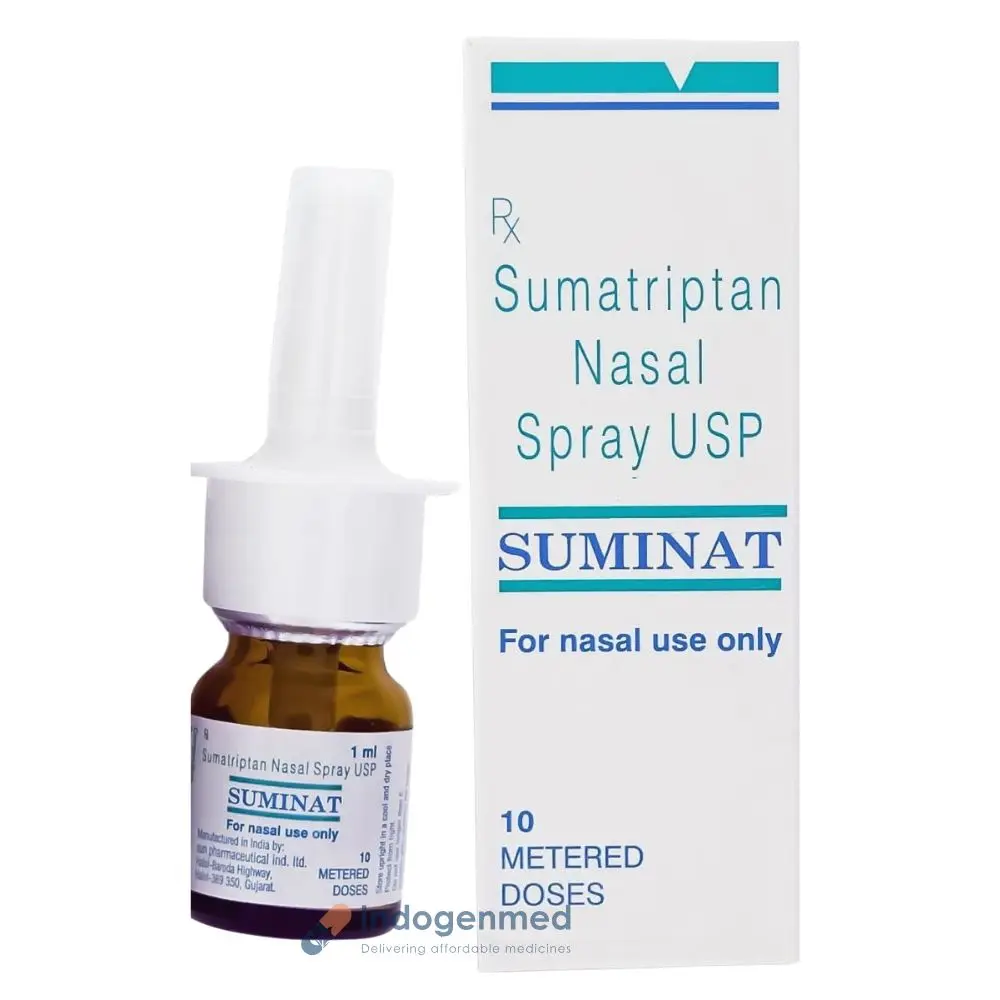
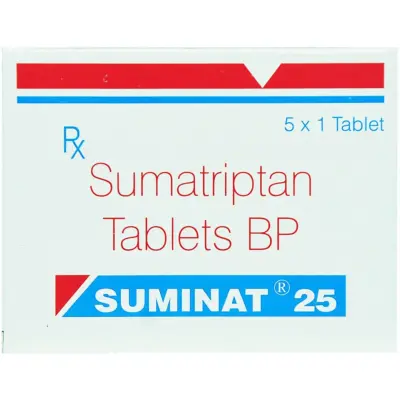
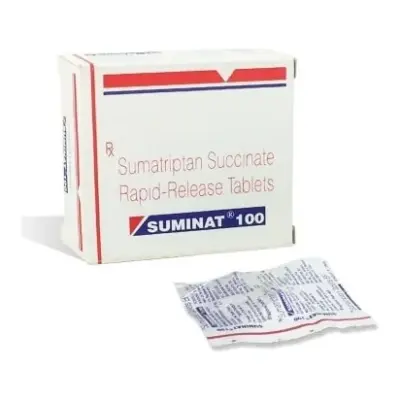
Suminat Nasal 20 Mcg/Dose Nasal Spray – Sumatriptan for Acute Migraine
Suminat Nasal 20 Mcg/Dose Nasal Spray is a prescription medicine manufactured by Sun Pharmaceutical Industries Ltd, one of India’s largest pharmaceutical companies. Each single-dose nasal spray device delivers sumatriptan 20 mg (20,000 mcg) in 0.1 ml of aqueous buffered solution. Sumatriptan belongs to a pharmacological class known as triptans (selective serotonin 5-HT₁ receptor agonists) and is specifically designed for the acute treatment of migraine headache attacks. The intranasal route of administration offers a practical advantage for patients who experience nausea or vomiting during a migraine attack, as it bypasses the need for oral ingestion.
Suminat Nasal is the Indian brand equivalent of the originator product Imigran Nasal Spray (GlaxoSmithKline). It is used for migraine with or without aura and is not intended for migraine prevention or for the treatment of other headache types.
Composition
Each single-dose unit of Suminat Nasal 20 Mcg/Dose contains:
- Sumatriptan: 20 mg per 0.1 ml solution (active ingredient)
- Excipients: potassium dihydrogen phosphate, dipotassium hydrogen phosphate, sulphuric acid (for pH adjustment), sodium hydroxide (for pH adjustment), purified water
The solution is buffered to approximately pH 5.5. The spray device is intended for single use only. Each unit dose device is individually sealed in a blister and should be used immediately once removed from the packaging.
How Suminat Nasal Works (Mechanism of Action)
Sumatriptan is a selective agonist at the 5-HT₁D (serotonin-1D) receptor subtype. It has no clinically relevant activity at the other serotonin receptor subtypes (5-HT₂ through 5-HT₇) or at adrenergic, dopaminergic, muscarinic, or histaminergic receptors at therapeutic concentrations.
The mechanism by which sumatriptan relieves migraine involves two complementary actions:
- Cranial vasoconstriction: Sumatriptan constricts the dilated blood vessels in the carotid arterial circulation that are characteristic of migraine attacks. This vascular constriction is selective for the cranial circulation and does not significantly affect cerebral blood flow or cause generalised arterial constriction at therapeutic doses.
- Trigeminal inhibition: Sumatriptan inhibits the activity of trigeminal nerve fibres that mediate the transmission of migraine pain signals and that release vasoactive neuropeptides (such as CGRP and substance P) responsible for neurogenic inflammation and sensitisation.
These two actions together — constricting dilated cranial vessels and suppressing trigeminal pain signalling — interrupt the migraine attack at a pathophysiological level. Clinical response typically begins within 15 minutes of administering a 20 mg intranasal dose, making this formulation one of the faster-acting triptan delivery systems available.
Indications and Uses
Suminat Nasal 20 Mcg/Dose is indicated for:
- Acute treatment of migraine headache attacks with or without aura in adults (18 years and over) and in adolescents (12–17 years) on the advice of a specialist
Suminat Nasal is NOT indicated for:
- Prophylaxis (prevention) of migraine attacks
- Hemiplegic migraine (migraine with temporary paralysis of one side)
- Basilar migraine (migraine originating from the brainstem)
- Ophthalmoplegic migraine (migraine with temporary eye movement paralysis)
- Cluster headache or other types of headache
- Children under 12 years of age
Sumatriptan should only be prescribed when a clear diagnosis of migraine has been established. The first dose should ideally be administered under medical supervision if the diagnosis is uncertain, to exclude serious underlying neurological conditions.
Dosage and Administration
Always use Suminat Nasal exactly as directed by your doctor.
Adults (18 Years and Over)
- Recommended dose: 20 mg (one spray device) into one nostril at the onset of a migraine attack
- Some patients may respond adequately to 10 mg (half a device is not practical; a 10 mg formulation may be prescribed instead)
- If there is no response: Do not take a second dose for the same attack. The attack may be treated with paracetamol, aspirin, or a non-steroidal anti-inflammatory drug (NSAID)
- If symptoms recur after an initial response: A second 20 mg dose may be given at least 2 hours after the first dose
- Maximum dose: Two doses (40 mg total) in any 24-hour period
Adolescents (12–17 Years)
- Use only on the recommendation of a specialist or physician with significant experience in treating adolescent migraine
- Recommended dose: 10 mg into one nostril (a 10 mg formulation should be used)
- Same rules as for adults regarding non-response and recurrence
- Maximum: Two 10 mg doses in 24 hours
Special Populations
- Children under 12: Not recommended — insufficient safety and efficacy data
- Elderly (over 65): Not recommended — no clinical experience in this population
- Renal impairment: No specific dose adjustment required; use with caution
- Hepatic impairment: Mild to moderate — use with caution (systemic exposure may approximately double compared to subjects with normal liver function); severe hepatic impairment — contraindicated
How to Use the Nasal Spray
- Blow your nose gently before using the spray
- Remove the device from the sealed blister and hold it between your thumb and two fingers
- Close one nostril by pressing gently with one finger
- Insert the nozzle into the other nostril
- Breathe in gently through the nose and press the plunger firmly to release the spray
- Remove the device and breathe gently through the nose for 10 to 20 seconds — do not sniff forcefully
- Discard the device after use — it is intended for a single dose only
Suminat Nasal is equally effective whether given at the very first sign of migraine or later in the attack, so there is no need to wait to see if the headache becomes severe before using it.
Side Effects
The most common side effect is an unpleasant taste (dysgeuria), which results from the nasal spray solution draining down the back of the throat. Most side effects are mild, transient, and resolve without treatment.
Very Common (affects more than 1 in 10 users)
- Unpleasant taste / bitter taste after administration
Common (affects 1 in 10 to 1 in 100 users)
- Nervous system: Dizziness, drowsiness, paraesthesia (tingling or pins and needles), hypoaesthesia (reduced sensation)
- Cardiovascular: Transient, mild increase in blood pressure
- Vascular: Flushing (skin redness and warmth)
- Respiratory/nasal: Nasal irritation or burning, throat irritation, nosebleed (epistaxis), difficulty breathing (dyspnoea)
- Gastrointestinal: Nausea and vomiting
- General: Sensations of heaviness, pressure, heat, cold, or tightness (can affect any part of the body including the chest, throat, neck, and limbs); muscle ache (myalgia); pain; weakness; fatigue
Rare (affects 1 in 1,000 to 1 in 10,000 users)
- Breast pain
Very Rare
- Minor liver function test abnormalities
Frequency Not Known
- Anaphylaxis and severe hypersensitivity reactions
- Seizures (epileptic attacks)
- Tremor, dystonia, nystagmus
- Visual disturbances, including rare reports of permanent vision loss
- Cardiac effects: bradycardia, tachycardia, arrhythmias, angina, myocardial infarction, coronary artery vasospasm — these have been reported rarely and mostly in patients with pre-existing cardiovascular risk factors
- Hypotension, Raynaud’s phenomenon
- Ischaemic colitis, diarrhoea, dysphagia
- Neck stiffness, joint pain (arthralgia)
- Anxiety; excessive sweating (hyperhidrosis)
Important Note on Chest Symptoms
Following use of sumatriptan, some patients experience transient chest pain, tightness, or pressure, which may also involve the throat. If these symptoms are severe or persist, do not take further doses and seek medical attention promptly to exclude a cardiac cause.
Precautions and Warnings
Diagnosis Must Be Confirmed
Suminat Nasal should only be used when a clear diagnosis of migraine has been established. It is not suitable for headaches that may represent a serious underlying neurological condition. If a patient’s migraine symptoms are atypical, a physician should re-evaluate the diagnosis before continuing treatment.
Cardiovascular Risk
Sumatriptan causes coronary vasoconstriction and must not be used in patients with established cardiovascular disease (see Contraindications). Patients with cardiovascular risk factors — including heavy smokers, nicotine replacement therapy users, postmenopausal women, men over 40, and those with hypertension, hypercholesterolaemia, obesity, or a family history of coronary artery disease — should undergo cardiovascular evaluation before starting treatment. Serious cardiac events, including myocardial infarction, have been reported rarely in patients without known cardiovascular disease and in adolescents.
Blood Pressure
Transient increases in blood pressure have been observed. Suminat Nasal should be used with caution in patients with mild controlled hypertension and is contraindicated in moderate or severe hypertension or in uncontrolled mild hypertension.
Serotonin Syndrome
Life-threatening serotonin syndrome has been reported when triptans are used together with selective serotonin reuptake inhibitors (SSRIs) or serotonin-norepinephrine reuptake inhibitors (SNRIs). Symptoms include agitation, hallucinations, rapid heart rate, fever, excessive sweating, shaking, muscle twitching, diarrhoea, and loss of coordination. If serotonin syndrome is suspected, discontinue sumatriptan and seek immediate medical attention.
Medication Overuse Headache
Using headache medications — including triptans — on more than 10 days per month for more than 3 months can paradoxically worsen headache frequency and lead to medication overuse headache (MOH). This should be suspected in patients with frequent or daily headaches despite treatment. MOH is managed by gradual withdrawal of the overused medication under medical supervision.
Seizure Risk
Sumatriptan should be used with caution in patients with a history of epilepsy or other conditions that lower the seizure threshold.
Sulphonamide Allergy
Sumatriptan contains a sulphonamide group. Patients with known sulphonamide allergy may theoretically be at risk of hypersensitivity, though the evidence for clinically significant cross-reactivity is limited. Caution is warranted.
Hepatic and Renal Impairment
Use with caution in mild to moderate hepatic impairment. Contraindicated in severe hepatic impairment. No specific renal dose adjustment is required, but use with caution in significant renal impairment.
Pregnancy and Breastfeeding
Data from over 1,000 first-trimester exposures in humans do not indicate an increased risk of congenital malformations. However, Suminat Nasal should be used in pregnancy only when the expected benefit to the mother clearly outweighs the potential risk to the fetus. Sumatriptan is excreted in breast milk. To minimise infant exposure, avoid breastfeeding for 12 hours after taking sumatriptan and discard any expressed milk collected during that period.
Driving and Operating Machinery
Migraine itself and the effects of sumatriptan (dizziness, drowsiness, fatigue) may impair the ability to drive or operate machinery. Patients should assess their own response before undertaking these activities.
Drug Interactions
Tell your doctor about all medicines you are taking before starting Suminat Nasal.
Contraindicated Combinations
- Ergotamine, dihydroergotamine, or other ergot derivatives: Contraindicated. Combined use risks prolonged vasospasm. Wait at least 24 hours after stopping an ergot before using sumatriptan. After sumatriptan, wait at least 6 hours before taking an ergot.
- Other triptans / 5-HT₁ agonists (e.g., zolmitriptan, rizatriptan, naratriptan): Contraindicated during the same attack. Wait at least 24 hours after sumatriptan before using another triptan.
- Monoamine oxidase inhibitors (MAOIs) (e.g., phenelzine, tranylcypromine, selegiline, moclobemide): Contraindicated. Sumatriptan must not be used during MAOI treatment or within 2 weeks of stopping an MAOI.
Interactions Requiring Caution
- SSRIs (e.g., fluoxetine, sertraline, citalopram) and SNRIs (e.g., venlafaxine, duloxetine): Risk of serotonin syndrome. If co-prescription is clinically necessary, monitor the patient closely for symptoms of serotonin syndrome.
- St John’s Wort (Hypericum perforatum): Herbal serotonergic supplement; may increase the risk of undesirable serotonergic effects. Avoid concurrent use.
No Clinically Significant Interaction
No pharmacokinetic or pharmacodynamic interaction has been demonstrated between sumatriptan and propranolol, flunarizine, pizotifen, or alcohol.
Contraindications
Suminat Nasal 20 Mcg/Dose must NOT be used in patients with:
- Hypersensitivity to sumatriptan or any excipient
- Ischaemic heart disease (angina, previous myocardial infarction), coronary vasospasm (Prinzmetal’s angina), or peripheral vascular disease
- History of stroke (CVA) or transient ischaemic attack (TIA)
- Severe hepatic impairment
- Moderate or severe hypertension, or mild uncontrolled hypertension
- Concurrent use of ergotamine, ergot derivatives, or other triptans
- Concurrent use of MAOIs, or within 2 weeks of stopping an MAOI
- Children under 12 years of age
- Elderly patients over 65 years (no clinical data available)
Storage Instructions
- Do not store above 30°C
- Do not freeze
- Keep the device in its sealed blister, preferably in the original carton, to protect from light
- Keep out of reach and sight of children
- Do not use after the expiry date printed on the pack
- Shelf life: 3 years from date of manufacture
- The spray device is for single use only — discard after use even if solution remains
Related Products
Patients managing migraines and other neurological or related conditions may also find the following IndoGenMed product pages relevant:
- Roxid 150 Mg Tablet (Roxithromycin) – Macrolide Antibiotic
- Nicardia CD 30 Tablet (Nifedipine 30 mg) – Extended-Release Calcium Channel Blocker
- Concor 5 Mg Tablet (Bisoprolol 5 mg) – Beta-Blocker
- Skin Lite 20 Gm Cream – Topical Depigmentation Cream
- Supatret 15 Gm 0.1% Gel (Tretinoin 0.1%) – Topical Retinoid
References
- GlaxoSmithKline UK. Imigran 20 mg Nasal Spray — Summary of Product Characteristics. Electronic Medicines Compendium (UK EMC); last updated 27 October 2025. Available at: medicines.org.uk/emc/product/7609
- GlaxoSmithKline. Imigran 10 mg and 20 mg Nasal Spray — Patient Information Leaflet. UK EMC. Available at: medicines.org.uk/emc/files/pil.2214.pdf
- MedlinePlus (U.S. National Library of Medicine). Sumatriptan Nasal Spray. Available at: medlineplus.gov/druginfo/meds/a601116.html
- Dechant KL, Clissold SP. Sumatriptan: a review of its pharmacodynamic and pharmacokinetic properties, and therapeutic efficacy in the acute treatment of migraine and cluster headache. Drugs. 1992;43(5):776–798. doi: 10.2165/00003495-199243050-00009

Reviews
There are no reviews yet.