Description
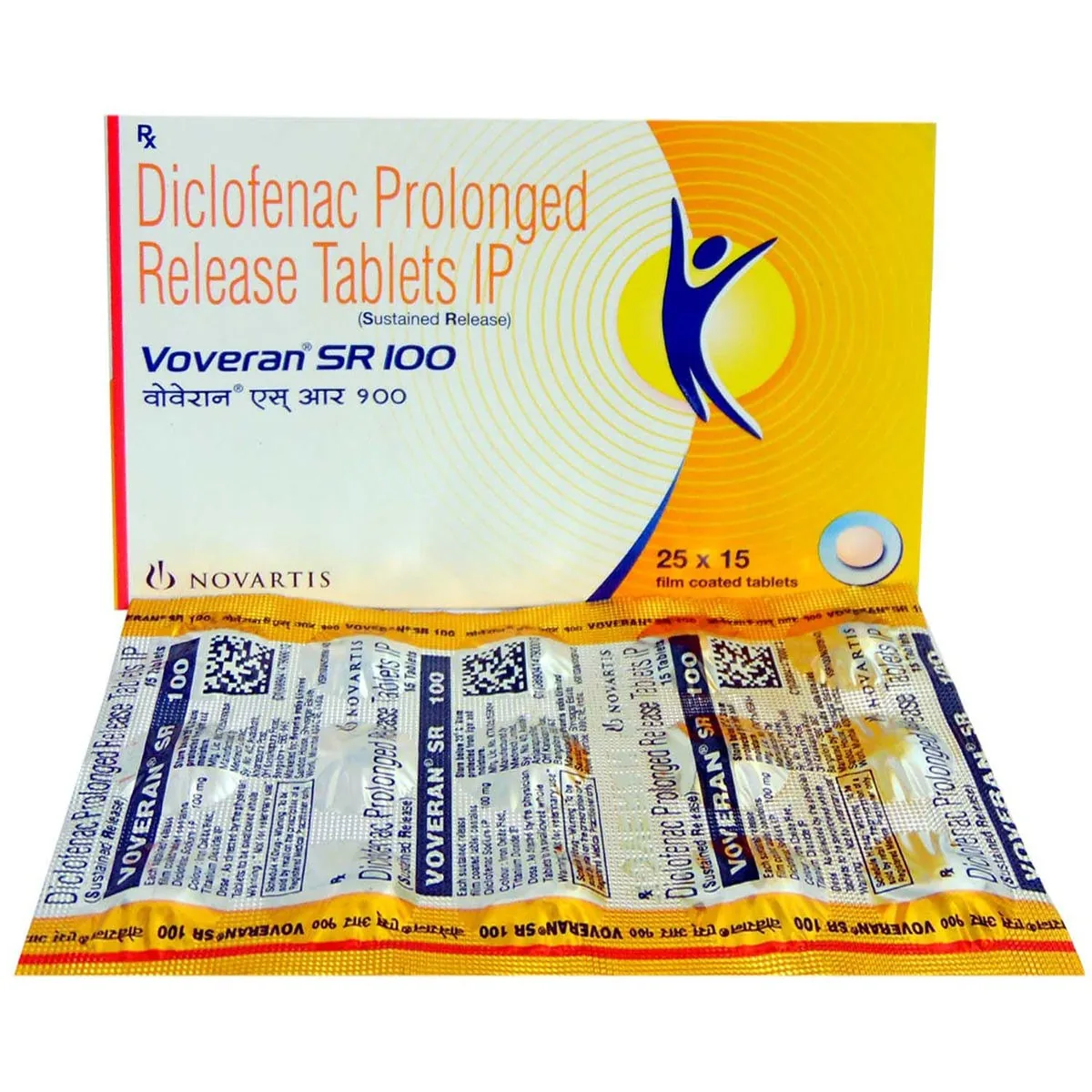
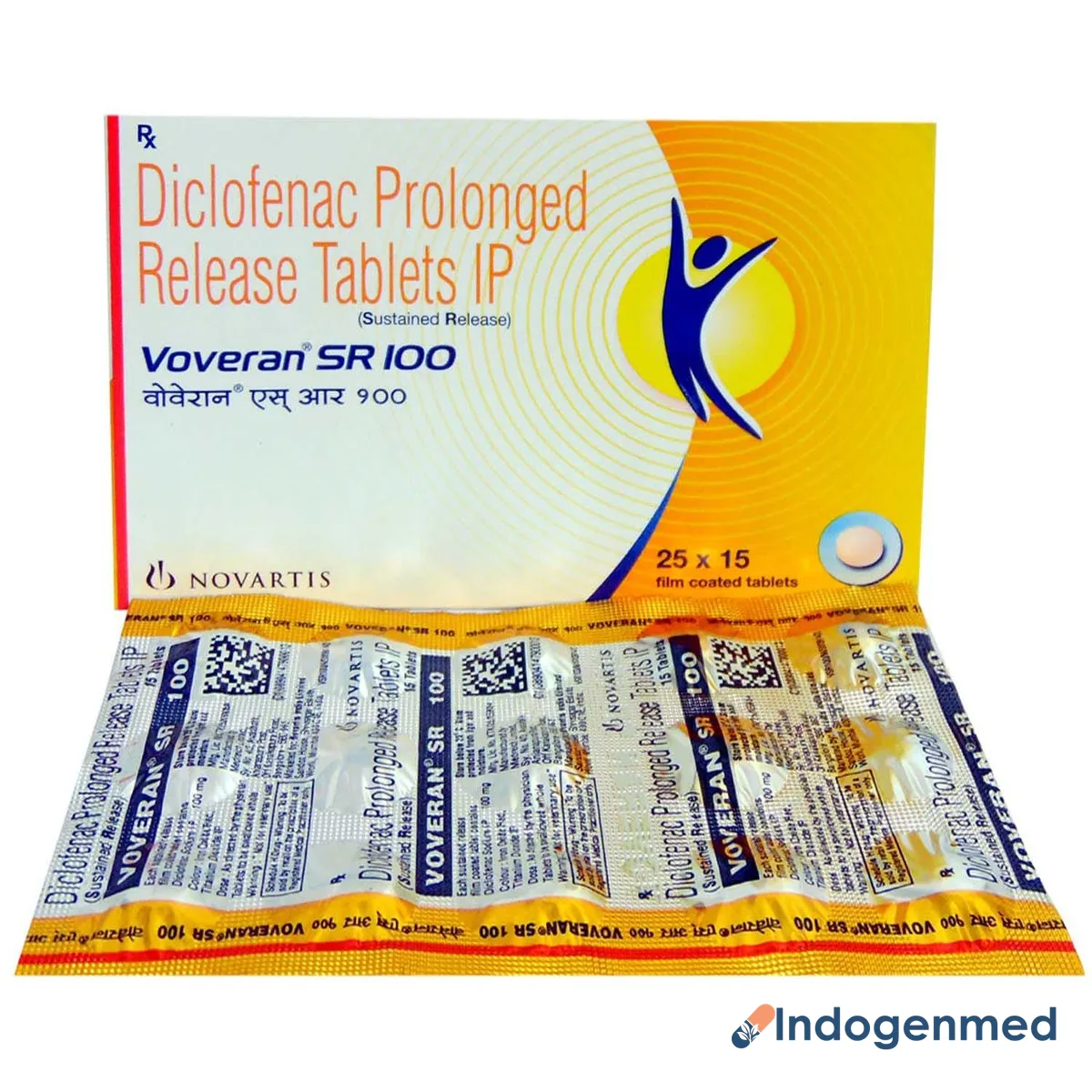
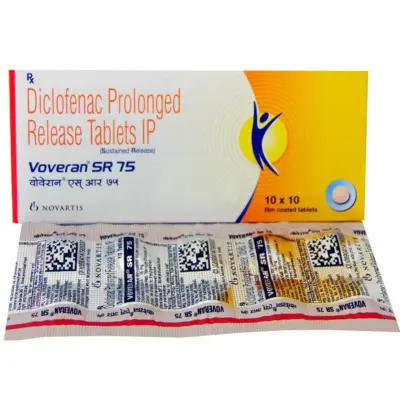
Voveran SR 100 Mg Tablets
Voveran SR 100 Mg Tablets contain diclofenac sodium 100 mg in a sustained-release formulation. Diclofenac is a non-steroidal anti-inflammatory drug (NSAID) used to relieve pain, reduce inflammation, and lower fever. The sustained-release (SR) formulation allows twice-daily dosing and maintains more consistent therapeutic blood levels compared with immediate-release diclofenac, reducing dosing frequency while providing sustained pain relief.
Composition
| Active Ingredient | Strength |
|---|---|
| Diclofenac Sodium (Sustained Release) | 100 mg per tablet |
About the Manufacturer
Voveran is manufactured by Novartis India Limited, the Indian subsidiary of Novartis AG, a leading global pharmaceutical company. Voveran is one of the most well-known diclofenac brands in India and has been available for decades.
Mechanism of Action
Diclofenac inhibits the enzyme cyclo-oxygenase (COX-1 and COX-2), reducing the biosynthesis of prostaglandins that mediate pain, inflammation, and fever. It has preferential selectivity for COX-2 at therapeutic doses. By reducing prostaglandin levels in inflamed tissues, diclofenac decreases pain sensitivity (analgesia), reduces swelling and redness (anti-inflammatory effect), and lowers elevated body temperature (antipyretic effect).
Indications
- Osteoarthritis and rheumatoid arthritis
- Ankylosing spondylitis
- Acute musculoskeletal pain, sprains, and strains
- Post-operative pain and inflammation
- Acute gout
- Dysmenorrhoea (painful menstruation)
- Headache, dental pain, and other mild-to-moderate pain conditions
Dosage & Administration
- Adults: 75–100 mg SR once or twice daily; maximum 150 mg/day
- Use the lowest effective dose for the shortest duration necessary to control symptoms
- Swallow SR tablets whole with water; do not crush or chew
- Take with or after food to reduce gastrointestinal side effects
Special Populations
- Elderly: Start at lowest effective dose; increased risk of GI bleeding, cardiovascular events, and renal impairment
- Renal impairment: Avoid in severe renal impairment (eGFR <30 mL/min/1.73m²)
- Hepatic impairment: Use with caution in mild-to-moderate impairment; avoid in severe disease
- Pregnancy: Avoid in first and third trimesters; use only on specialist advice in second trimester; NSAIDs after 20 weeks may cause foetal renal dysfunction
- Children: Not recommended in children under 14 years at this strength
Precautions
- All NSAIDs including diclofenac increase the risk of serious cardiovascular events (myocardial infarction, stroke); risk increases with longer duration and higher doses
- Use with a gastroprotective agent (e.g. a proton pump inhibitor) in patients at risk of GI bleeding
- Monitor renal function in patients who are dehydrated, have heart failure, or are on diuretics or ACE inhibitors
- Use with caution in patients with asthma; NSAIDs may precipitate bronchospasm in aspirin-sensitive asthma
Contraindications
- Hypersensitivity to diclofenac or any NSAID (including aspirin-induced asthma or urticaria)
- Active peptic ulcer or GI bleeding
- Severe heart failure (NYHA Class III–IV)
- Severe renal or hepatic impairment
- Third trimester of pregnancy
- Established ischaemic heart disease, peripheral arterial disease, or cerebrovascular disease
Side Effects
- Common: Nausea, dyspepsia, abdominal pain, diarrhoea, headache, dizziness
- Less common: Elevated liver enzymes, oedema, hypertension, skin rash
- Rare: Peptic ulcer, GI haemorrhage, serious hepatic reactions, renal failure, Stevens-Johnson syndrome
- Cardiovascular: Risk of myocardial infarction and stroke is increased with long-term NSAID use, particularly at higher doses
Drug Interactions
- Anticoagulants (warfarin, heparin): Increased bleeding risk; monitor INR
- Antihypertensives and diuretics: NSAIDs may reduce antihypertensive effect and increase risk of renal impairment
- Methotrexate: NSAIDs reduce methotrexate renal clearance; toxicity risk; avoid combination at high methotrexate doses
- Lithium: NSAIDs reduce lithium excretion; monitor lithium levels
- SSRIs and corticosteroids: Additive GI bleeding risk
Storage
Store below 25°C in a dry place, protected from light and moisture. Keep out of the reach of children. Do not use after the expiry date on the packaging.
Related Products
- Voveran SR 75 Mg Tablets – lower-strength diclofenac SR for milder pain
- Indocap SR 75 Mg Capsules – indomethacin SR for inflammatory pain
- Cobix 200 Mg Capsules – celecoxib COX-2 selective NSAID
Frequently Asked Questions
- What is Voveran SR 100 Mg used for?
- Voveran SR 100 Mg is used to relieve pain and inflammation in conditions such as arthritis, musculoskeletal injuries, post-operative pain, gout, and dysmenorrhoea.
- What does SR mean in Voveran SR?
- SR stands for Sustained Release. The tablet releases diclofenac slowly over a prolonged period, maintaining more consistent blood levels and enabling twice-daily dosing.
- Can I take Voveran SR if I have a stomach ulcer?
- No. Voveran SR is contraindicated in active peptic ulcer disease or GI bleeding. If you have a history of stomach ulcers, discuss with your doctor before using any NSAID.
- Is Voveran SR safe for the heart?
- All NSAIDs carry a risk of cardiovascular events, particularly with long-term use at higher doses. Voveran SR should not be used in patients with established heart disease, and the lowest effective dose for the shortest time should always be used.
- What is the maximum dose of Voveran SR?
- The maximum recommended daily dose is 150 mg of diclofenac. Exceeding this increases the risk of serious side effects without additional benefit for most patients.
References
- NHS – Diclofenac
- MedlinePlus – Diclofenac
- FDA – Diclofenac Sodium Prescribing Information
- EMA – Diclofenac-containing Medicinal Products
Disclaimer: This page is for informational purposes only and does not constitute medical advice. Voveran SR 100 Mg Tablets should be used at the lowest effective dose for the shortest time necessary, as prescribed by your doctor. If you experience chest pain, black stools, severe stomach pain, or signs of an allergic reaction, seek immediate medical attention.
Reviews
There are no reviews yet.