Description
What Is Voveran GE 50 mg Tablets?
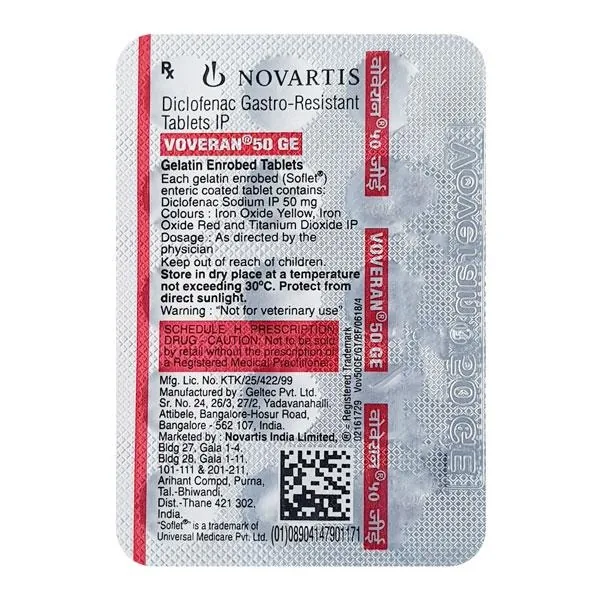
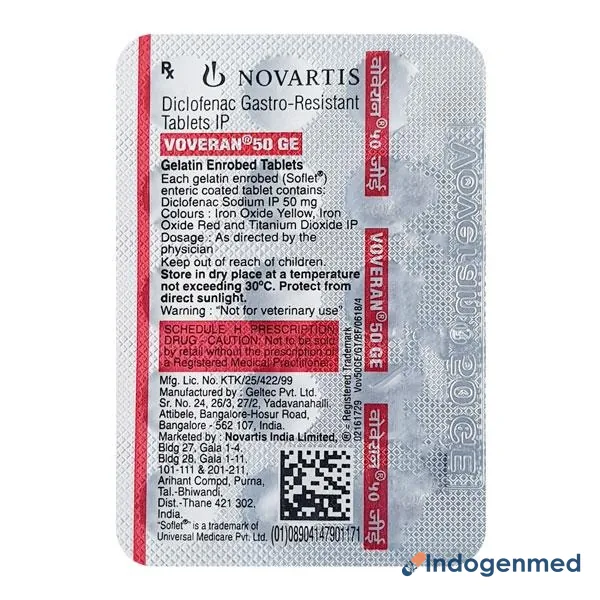
Voveran GE 50 mg Tablets contain diclofenac sodium 50 mg in a gastro-resistant (enteric-coated) formulation. The gastro-resistant coating prevents the tablet from dissolving in the acidic environment of the stomach, releasing the drug in the small intestine instead. This reduces the risk of direct gastric mucosal irritation and upper gastrointestinal adverse effects compared with immediate-release diclofenac sodium tablets. Diclofenac sodium is a non-steroidal anti-inflammatory drug (NSAID) of the phenylacetic acid class. It is one of the most widely prescribed NSAIDs globally and is included on the WHO List of Essential Medicines. Voveran is Novartis’s established Indian brand name for diclofenac; the GE suffix denotes the gastro-resistant enteric formulation. It is indicated for pain, inflammation, and fever across a broad range of conditions.
Mechanism of Action
Diclofenac exerts its pharmacological effects primarily through inhibition of cyclo-oxygenase (COX) enzymes — specifically COX-1 and COX-2 — which catalyse the conversion of arachidonic acid to prostaglandin H2, the precursor of prostaglandins, prostacyclin, and thromboxane A2. Diclofenac is a relatively balanced COX-1/COX-2 inhibitor with modest COX-2 selectivity compared with traditional NSAIDs, though less selective than coxibs. Its therapeutic effects arise from:
- Anti-inflammatory: Reduced synthesis of prostaglandins (particularly PGE2 and PGI2), which mediate vasodilation, increased vascular permeability, and sensitisation of nociceptors at sites of inflammation
- Analgesic: Peripheral and central reduction of prostaglandin-mediated pain sensitisation (peripheral and central sensitisation). Diclofenac also inhibits arachidonic acid release from cell membranes, reducing substrate availability for the entire eicosanoid pathway
- Antipyretic: Inhibition of PGE2 synthesis in the hypothalamus, which is responsible for resetting the thermoregulatory set-point upward during fever
Additional mechanisms contributing to diclofenac’s potency include inhibition of lipoxygenase enzymes (reducing leukotriene formation), blockade of thromboxane-prostanoid receptors, decreased arachidonic acid release, and activation of the nitric oxide/cGMP antinociceptive pathway — effects not shared by all NSAIDs.
Indications
- Musculoskeletal pain and inflammation: Rheumatoid arthritis, osteoarthritis, ankylosing spondylitis, acute gout, non-articular rheumatism (tendinitis, bursitis, periarthritis)
- Acute pain: Post-operative pain, dental pain, renal colic (reduces ureteric spasm via prostaglandin inhibition), dysmenorrhoea (primary and secondary)
- Migraine: Diclofenac is effective for mild-to-moderate migraine attacks, particularly when taken early at headache onset. It is used as an NSAID alternative or complement to triptans in patients who do not need or cannot take triptans
- Fever: Reduction of fever of various origins, including infection-related fever where NSAID use is appropriate
- Soft tissue injuries: Sprains, strains, sports injuries
Dosage and Administration
Standard Dosing in Adults
- Pain and inflammation (general): 50 mg two to three times daily with meals; maximum 150 mg/day for most indications
- Rheumatoid arthritis / osteoarthritis: 50 mg two to three times daily; modified-release formulations (Voveran SR 75 mg, 100 mg) preferred for once- or twice-daily convenience in chronic conditions
- Dysmenorrhoea: 50 mg three times daily starting at the onset of symptoms; may require a loading dose of 100 mg on the first day
- Renal colic: 50–100 mg orally; injectable diclofenac is more commonly used for acute renal colic
- Migraine: 50 mg at onset; may repeat after 2 hours if needed; maximum 100 mg for a migraine attack
- Children ≥14 years: 50 mg two to three times daily; not recommended in children under 14 years for most indications
Administration Notes
- Swallow tablets whole — do not crush, chew, or break gastro-resistant tablets; crushing destroys the enteric coating and exposes the stomach to direct diclofenac contact
- Take with or immediately after food to further minimise gastrointestinal risk
- Use the lowest effective dose for the shortest duration consistent with treatment goals
Pharmacokinetics
- Absorption: Gastro-resistant tablets are designed to dissolve in the small intestine; Tmax is delayed to approximately 2–4 hours compared with 1–2 hours for immediate-release diclofenac. Oral bioavailability approximately 50–60% due to hepatic first-pass metabolism
- Distribution: More than 99% protein-bound (primarily to albumin); distributes into synovial fluid, achieving high local concentrations in inflamed joints. Volume of distribution approximately 1.4 L/kg
- Metabolism: Extensive hepatic metabolism via CYP2C9 (major) and CYP3A4 (minor) to hydroxylated metabolites, which undergo glucuronide and sulphate conjugation. Metabolites are largely inactive
- Elimination: Terminal half-life approximately 1–2 hours; approximately two-thirds excreted in urine as conjugated metabolites, one-third in bile/faeces
Contraindications
- Hypersensitivity to diclofenac, aspirin, or any NSAID (risk of NSAID cross-hypersensitivity including aspirin-sensitive asthma)
- Active gastrointestinal ulcer, bleeding, or perforation
- Severe hepatic failure (Child-Pugh C)
- Severe renal impairment (eGFR <15 mL/min/1.73m²) or risk of acute kidney injury
- Severe heart failure (NYHA Class III–IV)
- Third trimester of pregnancy — NSAIDs can cause premature closure of the ductus arteriosus and impair uterine contraction
- Established ischaemic heart disease, peripheral arterial disease, or cerebrovascular disease (or following coronary artery bypass surgery) — elevated cardiovascular risk class effect
Warnings and Precautions
- Gastrointestinal risk: All NSAIDs increase the risk of serious GI adverse events including ulceration, bleeding, and perforation. Gastro-resistant formulation reduces but does not eliminate this risk (systemic prostaglandin inhibition impairs mucosal defence). Co-prescribe a proton pump inhibitor (PPI) in patients with GI risk factors (age >65, previous peptic ulcer, anticoagulant use, corticosteroid use, smoking, alcohol)
- Cardiovascular risk: All NSAIDs — including diclofenac — increase the risk of serious cardiovascular events (myocardial infarction, stroke). Diclofenac at 150 mg/day carries cardiovascular risk similar to COX-2 selective inhibitors. Use the lowest effective dose and shortest duration; avoid in patients with established cardiovascular disease
- Renal effects: NSAIDs reduce renal prostaglandin synthesis, impairing renal blood flow autoregulation. Risk of acute kidney injury is highest in volume-depleted patients, the elderly, those with pre-existing renal or hepatic disease, and those taking diuretics or ACE inhibitors/ARBs (triple whammy combination)
- Hepatotoxicity: Diclofenac is associated with a higher rate of hepatotoxicity than most other NSAIDs; transaminase elevations occur in up to 15% of patients. Serious hepatic reactions (hepatitis, hepatic failure) are rare but reported. Monitor LFTs during prolonged use; discontinue if significant elevation occurs
- Skin reactions: Rare serious skin reactions including Stevens-Johnson syndrome and toxic epidermal necrolysis have been reported; discontinue at first sign of rash
- Aspirin-sensitive asthma: Patients with the aspirin-sensitive asthma triad (nasal polyps, asthma, NSAID hypersensitivity) may experience severe bronchospasm with diclofenac
Adverse Effects
- Very common (>10%): Headache; gastrointestinal symptoms (nausea, dyspepsia, abdominal pain, diarrhoea)
- Common (1–10%): Vomiting; flatulence; anorexia; elevated liver transaminases; dizziness; rash
- Uncommon: Gastric or duodenal ulcer; GI bleeding; oedema; hypertension; palpitations; tinnitus
- Rare: GI perforation; haematemesis; melena; hepatitis; renal impairment; agranulocytosis; serious skin reactions; anaphylaxis; MI; stroke
Drug Interactions
- Anticoagulants (warfarin, heparins, DOACs): NSAIDs impair platelet aggregation and may displace warfarin from protein binding; significantly increased bleeding risk; monitor INR closely and avoid if possible
- Aspirin (low-dose): Diclofenac may compete with aspirin for COX-1 binding and reduce its antiplatelet cardioprotective effect; use cautiously in patients on antiplatelet aspirin
- ACE inhibitors, ARBs, diuretics: Triple whammy — concurrent NSAID + ACEi/ARB + diuretic markedly increases acute kidney injury risk; avoid in vulnerable patients
- Lithium and methotrexate: NSAIDs reduce renal clearance; significantly increased lithium and methotrexate toxicity; monitor levels and reduce doses
- Ciclosporin and tacrolimus: Additive nephrotoxicity; use with extreme caution
- Corticosteroids: Additive GI ulceration risk; PPI co-prescription is mandatory
- SSRIs and SNRIs: Additive GI bleeding risk (serotonin impairs platelet aggregation); PPI co-prescription advised
- CYP2C9 inhibitors (fluconazole, amiodarone): May increase diclofenac plasma concentrations
Storage
Store Voveran GE 50 mg Tablets below 25°C in a dry place, protected from moisture and direct sunlight. Keep in the original blister pack. Keep out of reach of children. Do not use after the expiry date printed on the pack.
Related Products
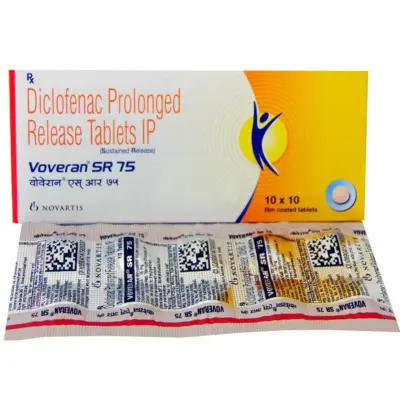
- Voveran SR 75 mg Tablets (diclofenac sodium 75 mg modified-release — once-daily sustained-release for chronic arthritis)
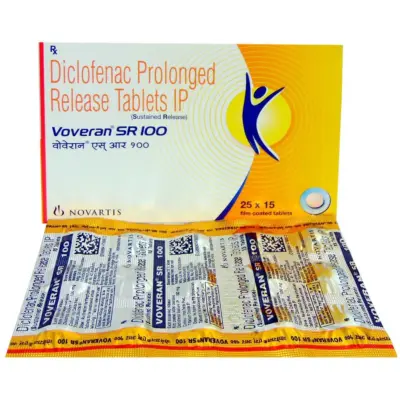
- Voveran SR 100 mg Tablets (diclofenac sodium 100 mg modified-release — higher-strength SR formulation for chronic inflammatory conditions)
- Voveran 1% Gel (diclofenac diethylamine 1% topical gel — for localised musculoskeletal pain with minimal systemic absorption)
- Suminat 25 mg Tablets (sumatriptan 25 mg — triptan for moderate-to-severe migraine where NSAIDs are insufficient)
- Razo-D 30+20 mg Tablets (rabeprazole 20 mg + domperidone 30 mg — PPI+prokinetic combination; co-prescription with diclofenac recommended to protect gastric mucosa)
References
- DailyMed. Diclofenac sodium delayed-release tablets — prescribing information. U.S. National Library of Medicine. Available at: https://dailymed.nlm.nih.gov/dailymed/
- Electronic Medicines Compendium (EMC). Voltarol 50 mg gastro-resistant tablets (diclofenac sodium) — Summary of Product Characteristics. Available at: https://www.medicines.org.uk/emc/
- MedlinePlus. Diclofenac. U.S. National Library of Medicine. Available at: https://medlineplus.gov/druginfo/meds/a689009.html
- Mayo Clinic. Diclofenac (Oral Route) — Side Effects. Available at: https://www.mayoclinic.org/
- Gan TJ. Diclofenac: an update on its mechanism of action and safety profile. Current Medical Research and Opinion. 2010;26(7):1715–1731. Available at: https://pubmed.ncbi.nlm.nih.gov/20470236/
Reviews
There are no reviews yet.