Description
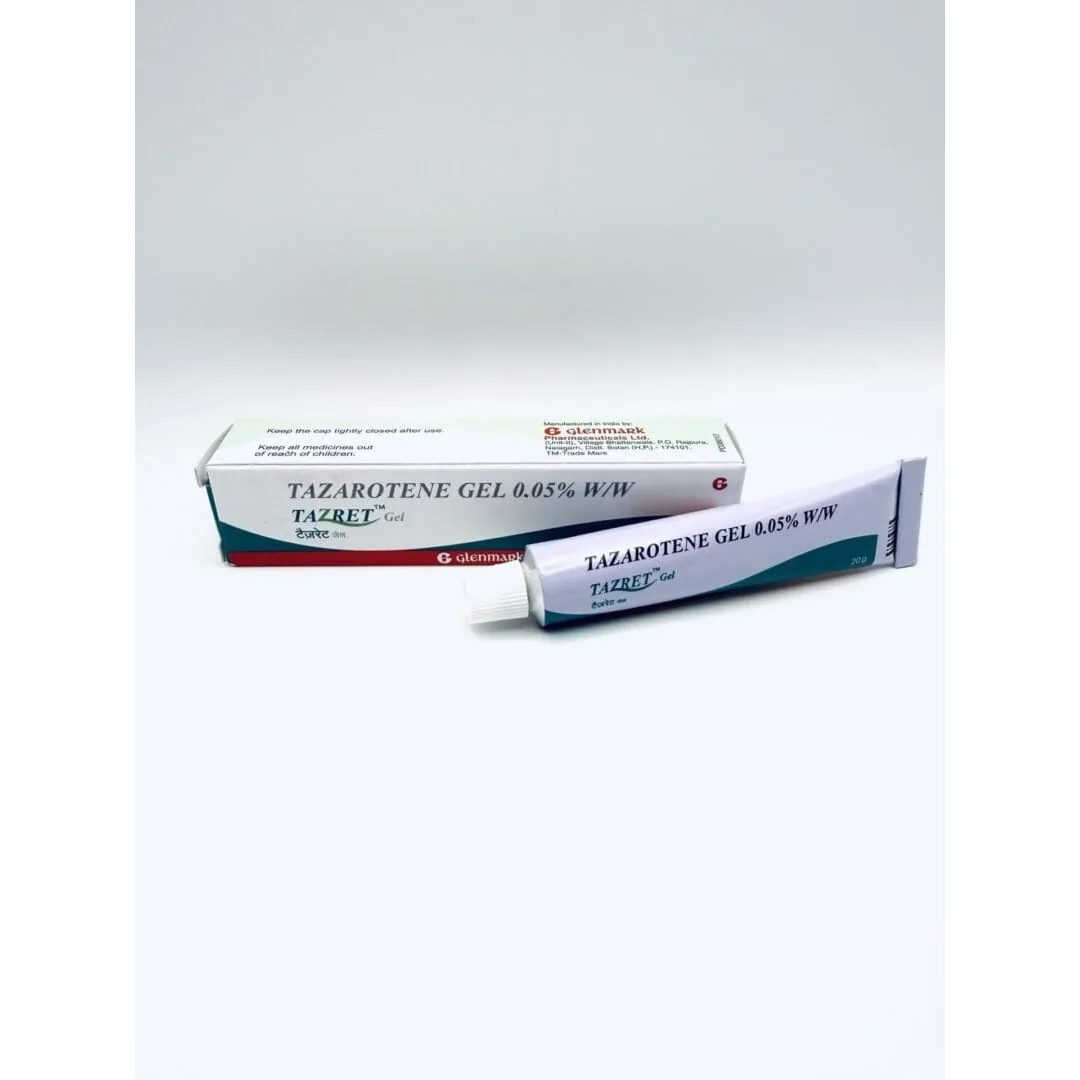
What Is Tazret 0.05% 20 gm Gel?
Tazret 0.05% 20 gm Gel contains tazarotene 0.05% — a third-generation, receptor-selective topical retinoid used for the treatment of acne vulgaris, plaque psoriasis of the skin, and photoaged skin. Tazarotene is a prodrug that is hydrolysed in the skin to its active carboxylate metabolite, tazarotenic acid, which selectively activates retinoid receptors RAR-β and RAR-γ in the epidermis and dermis. This receptor selectivity distinguishes tazarotene from earlier retinoids such as tretinoin and isotretinoin, and is associated with strong anti-proliferative and differentiation-normalising effects in conditions driven by abnormal keratinocyte proliferation.
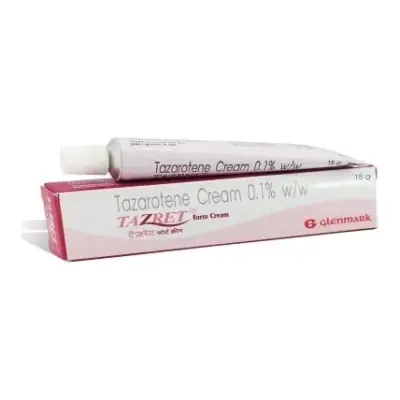
Tazret 0.05% Gel is formulated as an aqueous gel — a vehicle well suited to acne-prone and oily skin types, providing retinoid activity with a lighter texture than cream formulations. The 0.05% concentration is the standard starting strength; a 0.1% concentration is available for patients who tolerate the lower strength but require greater efficacy, particularly in plaque psoriasis. The 20 g tube provides sufficient product for localised treatment of acne or limited plaque psoriasis.
Mechanism of Action
Retinoid Receptor Activation (RAR-β and RAR-γ)
Tazarotenic acid (the active metabolite of tazarotene) binds selectively to retinoic acid receptors RAR-β and RAR-γ, with minimal activity at RAR-α. These nuclear receptors are ligand-activated transcription factors that regulate the expression of genes involved in keratinocyte proliferation, differentiation, and cornification. Activation of RAR-β and RAR-γ in keratinocytes normalises the disordered proliferation and differentiation seen in acne and psoriasis — reducing abnormal scaling, correcting follicular hyperkeratinisation, and restoring normal skin barrier formation. The selective receptor profile reduces some of the irritancy associated with less-selective retinoids, though tazarotene remains among the more irritating topical retinoids and skin tolerance measures are important.
Anti-Inflammatory Effects
In addition to its effects on keratinocyte differentiation, tazarotenic acid modulates inflammatory gene expression by suppressing pro-inflammatory cytokines and reducing the expression of inflammatory mediators in the skin. In psoriatic plaques, tazarotene reduces epidermal thickening (acanthosis), normalises the expression of differentiation markers (involucrin, filaggrin, loricrin), and reduces the density of activated inflammatory cells in the dermis.
Comedolytic and Anti-Acne Activity
In acne vulgaris, tazarotene acts as a comedolytic agent — it normalises follicular epithelial differentiation and reduces follicular hyperkeratinisation, thereby preventing microcomedone formation (the precursor of all acne lesions). It also reduces non-inflammatory comedones (blackheads and whiteheads) and, through its anti-inflammatory properties, reduces inflammatory papules and pustules. Its effects are complementary to and synergistic with topical antibiotics (clindamycin, erythromycin) and benzoyl peroxide.
Indications
Acne Vulgaris
Tazret 0.05% Gel is indicated for the topical treatment of mild-to-moderate acne vulgaris — comedonal, inflammatory, and mixed-pattern acne on the face, chest, and back. As a monotherapy it reduces total lesion counts; in combination regimens it is used alongside topical antimicrobials (clindamycin or benzoyl peroxide) and sometimes with oral antibiotics in more severe disease. Tazarotene reduces both non-inflammatory (comedonal) and inflammatory acne lesions and helps prevent new microcomedone formation.
Plaque Psoriasis
Tazarotene 0.05%–0.1% gel is indicated for the treatment of stable, mild-to-moderate plaque psoriasis covering up to 20% of the body surface area (localised to limited areas). It reduces plaque thickness, scaling, and erythema, and maintains remission when used proactively. Combination with a potent topical corticosteroid (applied at different times of day) enhances efficacy and reduces the local irritancy of tazarotene monotherapy — a commonly used approach in clinical practice.
Photoageing (Facial Wrinkling, Hyperpigmentation)
Tazarotene cream (not gel) has regulatory approval in some countries for the treatment of facial fine wrinkling, mottled hyperpigmentation, and benign facial lentigines associated with photodamage. The gel formulation is not primarily used for this indication due to its drying effect on dry or aged skin, but the retinoid activity of tazarotenic acid reduces fine wrinkles and pigmentary irregularity through collagen remodelling and epidermal normalisation.
Dosage and Administration
Acne vulgaris: Apply a thin layer of Tazret 0.05% Gel to affected areas of the face (and trunk if affected) once daily at bedtime. Use a pea-sized amount for the entire face. Avoid eyes, mouth, angles of the nose, and mucous membranes.
Plaque psoriasis: Apply a thin layer once daily in the evening to psoriatic plaques only — avoid uninvolved skin, which is more susceptible to irritation. Use for up to 12 weeks.
Application technique: Apply to clean, completely dry skin. Wait at least 20–30 minutes after washing before applying — moisture on the skin increases penetration and risk of irritation. Apply with fingertips and rub in gently. Wash hands thoroughly after application.
Tolerability titration: For patients with sensitive skin, initial every-other-night application reduces irritation during the adaptation phase. Frequency can be increased to nightly once tolerance is established (usually within 2–4 weeks).
Combination use: When combining with a topical corticosteroid (psoriasis) or topical antibiotic (acne), apply the two agents at different times (e.g., tazarotene at bedtime, corticosteroid or antibiotic in the morning) to reduce the risk of interaction and irritation.
Sun protection: Apply broad-spectrum sunscreen (SPF ≥30) every morning during tazarotene treatment — retinoids increase UV sensitivity of the skin.
Contraindications
- Known hypersensitivity to tazarotene or any excipient.
- Pregnancy — tazarotene is teratogenic (Pregnancy Category X, US). Women of childbearing potential must use reliable contraception and have a negative pregnancy test before starting treatment. Must not be used during pregnancy under any circumstances.
- Breastfeeding — tazarotene may be excreted in breast milk; avoid use.
- Application to eczematous, sunburned, or acutely inflamed skin — risk of excessive irritation and absorption.
- Children under 12 years for acne; under 18 years for psoriasis (insufficient safety data).
Warnings and Precautions
Teratogenicity: Tazarotene is a retinoid and teratogenic in animal studies. Women of childbearing potential must use adequate contraception and start treatment only when pregnancy is excluded. Prescribers should discuss contraceptive requirements before initiating therapy. If pregnancy occurs during treatment, stop tazarotene immediately and refer to obstetric care.
Local skin reactions: Erythema, burning, peeling, pruritus, and stinging are common — particularly during the first 2–4 weeks of therapy. These effects usually diminish with continued use as skin tolerance develops. Patients should be informed of likely initial irritation and encouraged to continue at a reduced frequency if severe.
Sun sensitivity: Tazarotene increases photosensitivity. Avoid excessive sun exposure, tanning beds, and UV phototherapy during treatment. Daily sunscreen use is mandatory during daylight hours.
Avoid contact with eyes and mucous membranes: Contact causes severe irritation. If accidental contact occurs, rinse immediately with water.
Avoid on skin folds and periorbital areas: Increased absorption in skin folds — apply with care or avoid on eyelids, angles of the nose, and other skin fold areas.
Adverse Effects
- Very common: Application site erythema, peeling, dryness, burning sensation, pruritus — particularly during the first month of treatment.
- Common: Stinging, skin discomfort, desquamation, contact dermatitis, increased photosensitivity.
- Uncommon: Oedema at application site, skin discolouration, hypertrichosis.
- Rare: Systemic retinoid toxicity is very unlikely with topical application at recommended doses; however, avoid use over large body surface areas to minimise systemic absorption.
Drug Interactions
- Other topical retinoids (tretinoin, adapalene, isotretinoin): Avoid concurrent use — additive irritancy with no established benefit of combining retinoids.
- Photosensitising agents (thiazide diuretics, fluoroquinolones, tetracyclines, sulfonamides, phenothiazines): Systemic photosensitisers may compound tazarotene-related UV sensitivity — advise patients to be especially careful with sun protection.
- Topical products with high alcohol content, strong astringents, or abrasive cleansers: Increase local irritancy — avoid concurrent use on tazarotene-treated areas.
- Topical corticosteroids (psoriasis combination): Clinically useful combination; reduces tazarotene irritancy. Apply at different times of day.
- Oral isotretinoin: Contraindicated — combined systemic and topical retinoid use greatly increases mucocutaneous toxicity.
Storage
Store below 30°C. Do not freeze. Keep the tube tightly closed. Keep out of reach of children. Keep away from heat and open flame — the gel vehicle may be flammable. Do not use after the expiry date printed on the tube.
Related Products
For management of bacterial superinfection of acne lesions, see T-Bact 7.5 gm Cream (mupirocin 2%). For potent topical corticosteroid treatment of severe psoriatic plaques, see Topinate 30 gm 0.05% Cream (clobetasol propionate 0.05%). For calcineurin inhibitor-based treatment of atopic dermatitis, see Tacroz 0.1% 10 gm Ointment (tacrolimus).
References
- Electronic Medicines Compendium (EMC). Zorac 0.05% Gel — Summary of Product Characteristics. Available at: https://www.medicines.org.uk/emc
- National Library of Medicine MedlinePlus. Tazarotene Topical. Available at: https://medlineplus.gov/druginfo/meds/a601011.html
- Mayo Clinic. Tazarotene (Topical Route). Available at: https://www.mayoclinic.org
- Lebwohl M, Ast E, Callen JP, et al. Once-daily tazarotene gel versus twice-daily fluocinonide cream in the treatment of plaque psoriasis. J Am Acad Dermatol. 1998;38(5):705–711. PubMed PMID: 9591793
- Shalita AR, Chalker DK, Griffith RF, et al. Tazarotene gel is safe and effective in the treatment of acne vulgaris: a multicenter, double-blind, vehicle-controlled study. Cutis. 1999;63(6):349–354. PubMed PMID: 10388580
Reviews
There are no reviews yet.